Opening a Nail Salon: A Professional Survival Guide
Opening a nail salon involves securing a commercial lease, obtaining state board licensure, and investing in professional nail equipment and ventilation systems. Successful owners prioritize cash flow management and cost control during the first year to ensure the business reaches its break-even point while maintaining strict sanitation and service standards.
Estimating Nail Salon Startup Costs
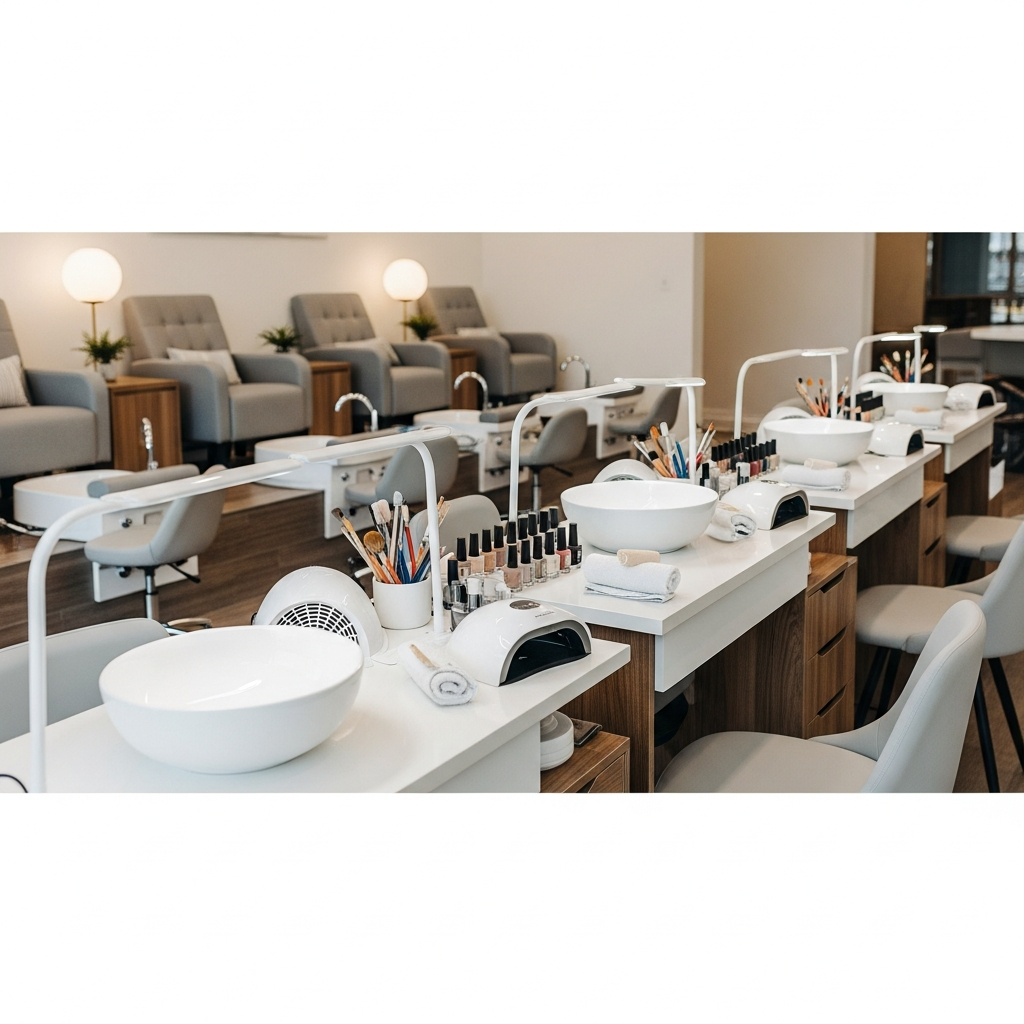
Opening a professional nail business requires significant upfront capital for lease deposits and specialized plumbing. You must budget for ergonomic nail desks, high-quality LED lamps, and source-capture ventilation systems to meet safety codes.
Initial inventory for professional nail lacquers, gels, and monomer can range from $5,000 to $15,000. It is vital to maintain a cash reserve to cover at least six months of commercial rent and utility payments.
Furniture costs often surprise new owners. Professional pedicure thrones with pipeless technology are essential for sanitation but represent a major investment. Quality seating for both the nail technician and the client is necessary for long-term physical health.
Essential Legal and Regulatory Requirements
Every U.S. nail salon must comply with State Board of Cosmetology regulations. This includes specific square footage requirements, mandatory sanitation stations, and displayed practitioner licenses. Failure to meet these standards can result in immediate fines or closure.
You must obtain a general business license and a specific salon facility license. Liability insurance is a non-negotiable expense that protects the business from claims related to chemical exposure or accidental injury during nail services.
Understanding local zoning laws is critical before signing a commercial lease. Some areas have strict rules regarding chemical storage and waste disposal specifically for the nail industry. Always verify that the building’s HVAC system can handle nail service fumes.
Managing Cash Flow in the First Year
The first year of a nail business is often a fight for liquidity. Owners must track every dollar spent on disposable nail files, buffers, and towels. These small “back-bar” costs can quickly erode profit margins if not monitored closely.
Controlling Back-Bar Inventory Expenses
Waste is the biggest enemy of a new nail salon. Implementing strict measurements for liquid and powder application prevents product loss. Standardizing service protocols ensures every nail technician uses the same amount of product per client.
Bulk purchasing of essential nail supplies can reduce costs, but only if those items have a long shelf life. Avoid over-investing in trendy nail art colors that may lose popularity before the bottle is half-finished.
Achieving the Break-Even Point
Your break-even point is reached when nail service revenue covers all fixed and variable monthly expenses. Calculate how many manicures and pedicures are required daily just to pay the rent. Monitoring this number daily helps you adjust staffing levels.
Common First-Year Pitfalls to Avoid
Many new owners fail by over-staffing before the client base is established. It is safer to start with fewer nail technicians and increase hours as the appointment book fills. High turnover in the first year can also damage the salon’s reputation.
Neglecting the physical maintenance of nail tools and equipment is another common mistake. Dull nippers or failing UV lamps result in poor service quality and client dissatisfaction. Consistent maintenance schedules prevent expensive emergency replacements.
Finally, avoid competing solely on price. A nail salon that charges too little cannot afford high-quality sanitation products or fair wages. Focus on service consistency and professional nail execution to build a loyal, recurring client base.
