Implementing SOPs for Professional Nail Salon Operations
A professional nail salon operation relies on standardized procedures to maintain service quality and technician efficiency throughout the business day. Implementing structured nail protocols ensures every client receives identical results regardless of the staff member assigned, while simultaneously controlling product waste and protecting the salon’s profit margins.
The Importance of Standardized Nail Service Workflows
Consistency is the foundation of a successful nail business. Without specific guidelines, technicians may use varying amounts of product or skip essential preparation steps, leading to service breakdown or lifting.
Establishing a uniform nail preparation sequence ensures that every enhancement or gel application adheres correctly. This reduces the time spent on complimentary repairs and increases overall client satisfaction and retention rates.
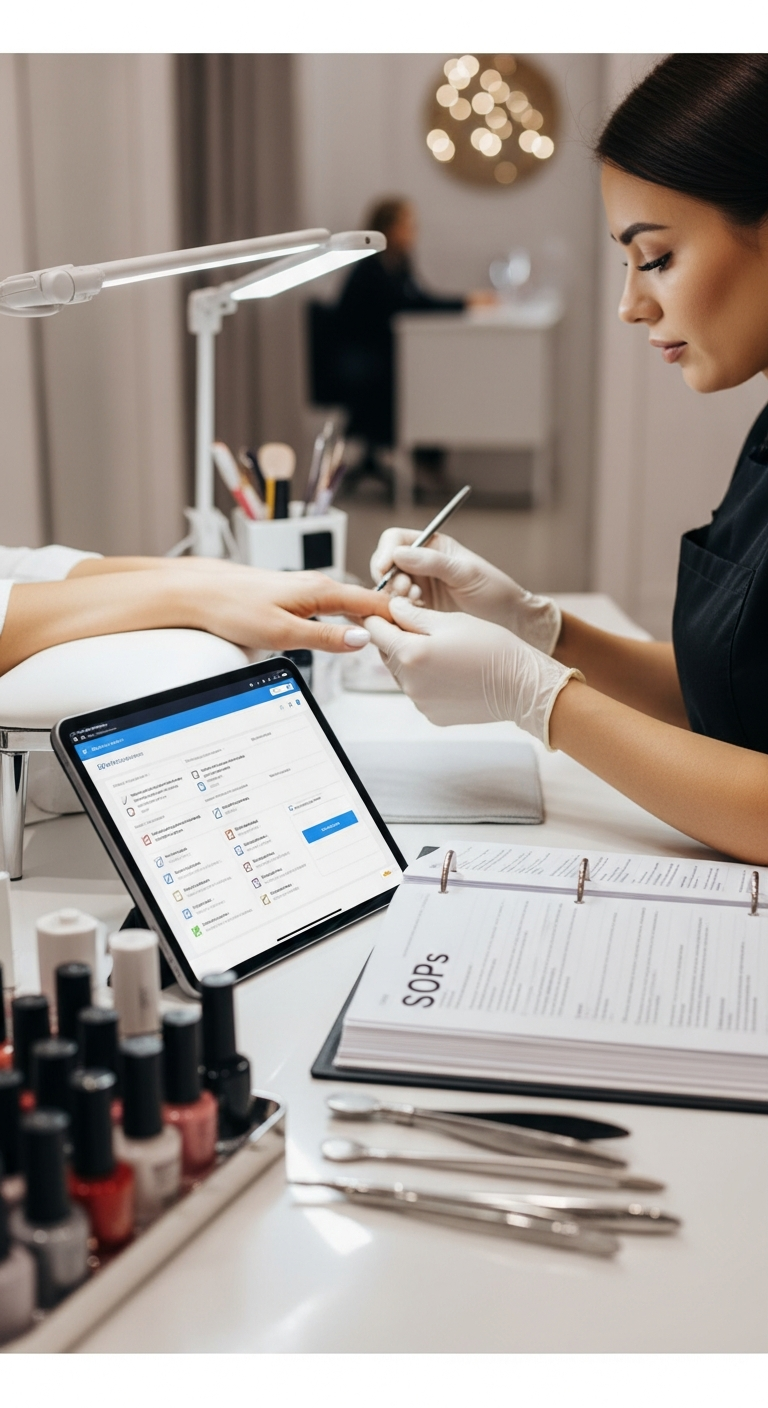
Standardized workflows also help in training new hires. When every nail technician follows the same technical steps, management can easily identify where performance gaps exist and provide targeted corrective training.
Managing Technician Performance and Accountability
Effective nail salon management requires clear expectations regarding service timing and technical execution. Owners must set realistic time blocks for each service to ensure the schedule remains profitable.
Monitoring the duration of a full set or a fill helps identify technicians who may need additional skill development. Overly long service times reduce the number of clients served and negatively impact daily revenue goals.
Accountability is maintained through regular quality checks. Managers should inspect the finished nail work for proper apex placement, cuticle cleanliness, and polish application to ensure the salon’s brand standards are met.
Inventory Control and Product Waste Reduction
Product costs significantly impact the profitability of a nail salon. Standard operating procedures should dictate the exact amount of liquid, powder, or gel used for specific services to prevent over-usage.
Implementing a checkout system for professional nail supplies allows owners to track consumption patterns. This data helps in identifying if certain technicians are wasting expensive chemicals or disposables during their shifts.
Regular inventory audits prevent overstocking and ensure that essential items like files, buffers, and monomers are always available. This systematic approach stabilizes the salon’s overhead and improves cash flow management.
Daily Closing and Sanitation Protocols
A professional nail environment must adhere to strict sanitation standards to comply with state regulations. Closing procedures should include the deep cleaning of all workstations and the sterilization of metal implements.
Technicians must be responsible for their individual nail stations, ensuring all dust is removed and surfaces are disinfected between every client. This practice maintains a professional appearance and protects public health.
End-of-day checklists ensure that the facility is ready for the next morning. This includes restocking supplies, disposing of trash, and cleaning foot basins according to local board requirements.
Revenue Tracking and Cost Management
Tracking the daily performance of each nail station is vital for understanding the salon’s financial health. Owners should review service totals and product sales to evaluate technician productivity and commission structures.
Analyzing the cost per service helps in setting competitive yet profitable pricing. By understanding the direct expenses involved in each nail treatment, owners can adjust their menus to reflect current market labor rates.
Consistent financial monitoring allows for better decision-making regarding staffing levels and marketing investments. A data-driven approach to nail salon management ensures long-term stability and growth in a demanding industry.
