Perfecting Acrylic Nail Ratio for Professional Results
The acrylic nail liquid-to-powder ratio is the specific balance of monomer and polymer required to create a stable bead for nail enhancements. Achieving a medium-wet consistency ensures proper chemical bonding, optimal structural strength, and prevents common issues like lifting, brittleness, or excessive product shrinkage during the curing process.
Why Acrylic Nail Ratio Matters for Retention
Mastering the ratio is the foundation of long-lasting nail enhancements. When the monomer and polymer are balanced, the chemical reaction creates a dense, flexible molecular chain.
Properly mixed acrylic bonds securely to the natural nail plate. This prevents air pockets and moisture from entering, which are the primary causes of premature lifting.
Incorrect ratios lead to service breakdowns. Technicians must understand how their specific brand of monomer reacts with the polymer powder to ensure structural integrity.
Troubleshooting Common Acrylic Ratio Mistakes
Technical errors in bead consistency often stem from brush preparation or environment. Recognizing these mistakes is essential for maintaining professional salon standards.
Identifying a Wet Acrylic Bead
A wet bead contains too much monomer and looks shiny or runny. It often floods the cuticle area, increasing the risk of skin irritation and product overexposure.
Excessive monomer causes significant shrinkage as the product cures. This creates tension on the natural nail, leading to painful pulling or total enhancement failure.
Consequences of a Dry Acrylic Bead
A dry bead appears dull, frosted, or contains visible bits of unpolymerized powder. It lacks the necessary liquid to create a smooth, self-leveling surface on the nail.
Dry beads result in brittle nails that are prone to cracking and breaking. They also trap air bubbles, which compromise the clarity and strength of the enhancement.
Best Practices for Professional Bead Control
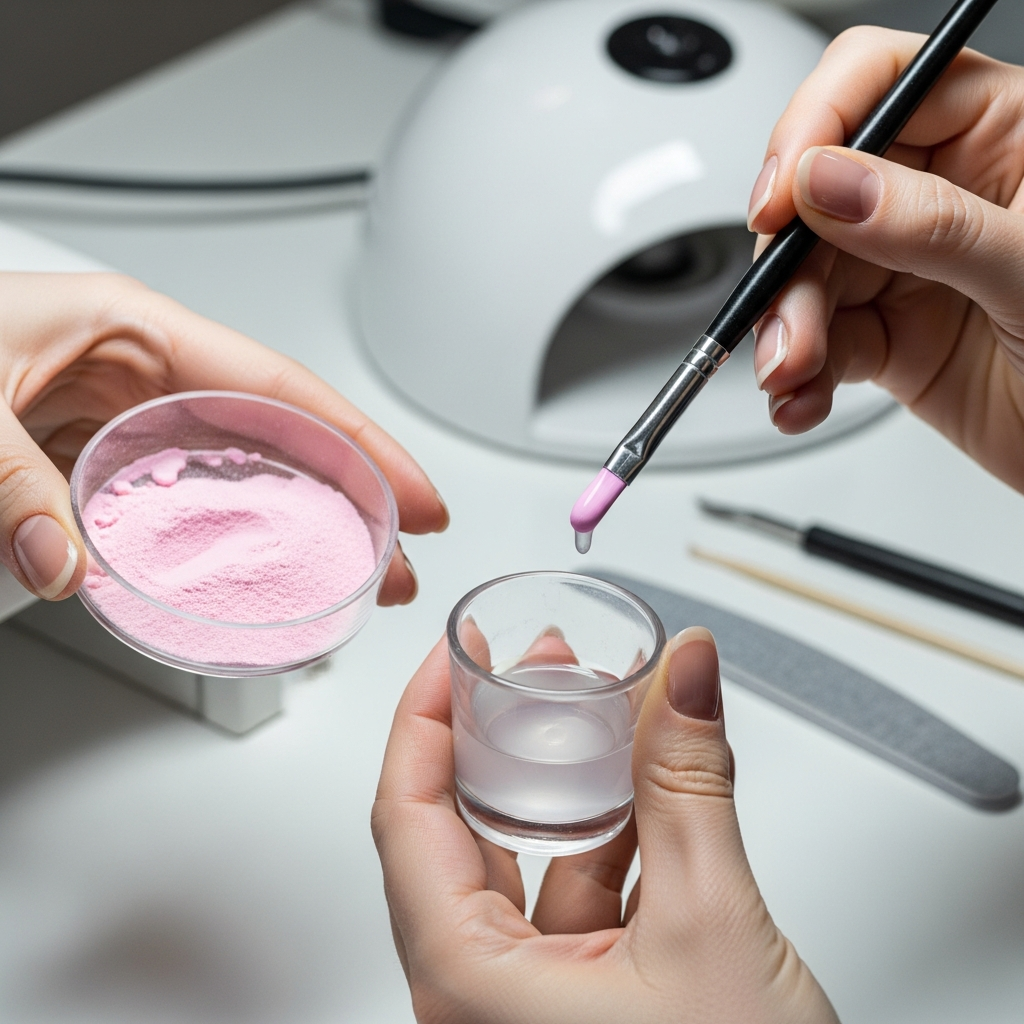
Consistent execution requires a disciplined approach to liquid management. Follow these technical steps to ensure every nail enhancement meets professional durability standards:
- Burp the brush: Submerge the brush fully in the monomer to remove trapped air.
- Wipe the edge: Control the amount of liquid by dragging the brush against the dappen dish.
- The three-point pick-up: Lightly tap the brush tip into the powder to form a smooth bead.
- Wait for the gloss: Let the bead polymerize for a few seconds before placing it on the nail.
Ensuring Client Safety and Durability
Proper nail prep combined with a perfect ratio ensures the enhancement remains stable for three to four weeks. This reduces the need for aggressive repairs during fill-in appointments.
Technicians should monitor the room temperature, as heat speeds up the curing process. Adjusting the ratio to be slightly wetter in warm environments helps maintain workability.
Consistency in technique leads to faster service times and higher client satisfaction. Precision in ratio control defines the expertise of a professional nail technician.
