Mastering Professional Nail Prep for Long-Term Retention
Professional nail prep is the systematic process of cleaning, dehydrating, and etching the natural nail plate to ensure maximum adhesion for enhancements. Proper nail preparation involves removing the cuticle from the plate, refining the surface with a high-grit buffer, and applying pH balancing dehydrators to prevent lifting and premature product failure.
The Technical Steps of Mechanical Preparation
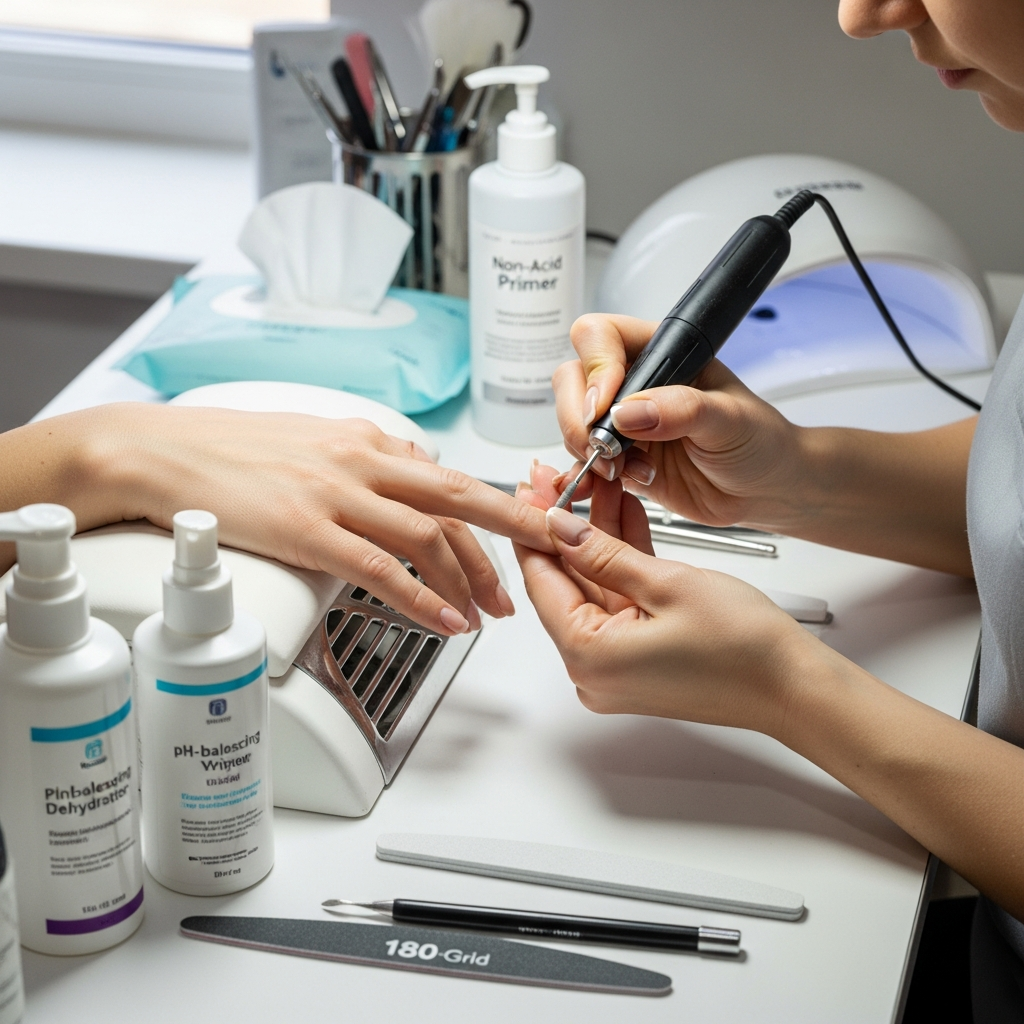
Mechanical preparation focuses on removing non-living tissue from the nail plate surface. Technicians must use a pusher or a fine-grit diamond bit to clear the eponychium area thoroughly.
This step ensures the product bonds directly to the keratin layers of the nail rather than skin. Any remaining debris or tissue will cause the enhancement to lift within days of application.
Consistency in the etching process creates the necessary surface “teeth” for the bond. Use a 180-grit file or buffer to remove the natural shine without thinning the actual nail plate.
Chemical Dehydration and pH Balancing Standards
Once the nail is physically prepped, chemical cleaning removes surface oils and residual moisture. Scrubbing the plate with a lint-free wipe and high-percentage isopropyl alcohol is the professional standard.
Apply a dedicated dehydrator to temporarily strip moisture from the upper layers of the nail. This creates a dry environment that allows the primer to penetrate the keratin more effectively.
Choose between acid and non-acid primers based on the client’s specific nail health. Non-acid primers act like double-sided tape, while acid primers create microscopic pores for a mechanical grip.
Preventing Common Retention Mistakes
- Avoid Flooding: Keep the product at least a hairline distance away from the proximal nail fold to prevent air pockets.
- Consistent Pressure: Apply even pressure during the buffing stage to avoid creating deep grooves or dangerous thin spots in the plate.
- Contaminant Control: Ensure every tool used during the prep phase is fully sanitized to prevent introducing oils or dust back onto the plate.
Refining the Structure for Maximum Durability
After the prep is complete, the focus shifts to the apex and side wall reinforcement. Proper structure supports the nail enhancement against daily wear and mechanical impact.
A well-placed apex absorbs shock and prevents the natural nail from snapping under pressure. This is critical for long-length extensions or heavy-duty builder gel and acrylic work.
Finish by checking the side walls for symmetry and appropriate thickness. Thin side walls lead to cracks, while bulky edges can lead to snagging and premature lifting of the product.
