Optimizing Nail Salon Operations for Peak Efficiency
Nail salon operations encompass the management of daily workflows, staff scheduling, and service protocols to maintain professional standards and profitability. Effective management requires implementing standard operating procedures for every nail service, tracking supply costs, and ensuring strict adherence to state sanitation requirements across all workstations.
Standardizing Daily Nail Salon Workflows
A consistent workflow ensures that every client receives the same high-quality nail service regardless of the technician. Establishing a step-by-step protocol for setup, service execution, and station breakdown reduces downtime between appointments.
Technicians must follow a specific sequence for preparing natural nails, applying enhancements, and finishing services. This uniformity builds client trust and stabilizes the duration of each nail appointment across the entire team.
Management should provide clear checklists for opening and closing duties. These tasks include restocking nail lacquer displays, disinfecting common areas, and preparing chemical solutions for the day’s services.
Staff Scheduling and Station Performance
Effective scheduling balances technician availability with peak demand periods to maximize salon revenue. Management must analyze historical booking data to determine when additional nail technicians are needed on the floor.
Assigning specific stations and responsibilities helps maintain order during busy shifts. Clear communication regarding shift rotations and break times prevents service interruptions and maintains a professional atmosphere for clients.
Performance tracking allows owners to identify which technicians excel at specific nail techniques. This data helps in delegating complex services to the most skilled staff members while identifying areas for internal training.
Revenue Tracking and Supply Cost Control
Monitoring the cost of professional products like monomer, polymer, and gel polishes is essential for maintaining healthy profit margins. Waste reduction strategies help control overhead costs without compromising the quality of the nail service.
Daily revenue tracking should categorize income by service type and technician performance. This data allows owners to identify high-performing nail services and adjust pricing based on labor and material costs.
Inventory management must be conducted weekly to prevent overstocking or shortages of essential nail supplies. Maintaining an organized stockroom ensures that technicians always have the tools necessary to perform their duties efficiently.
Compliance with U.S. Nail Sanitation Standards
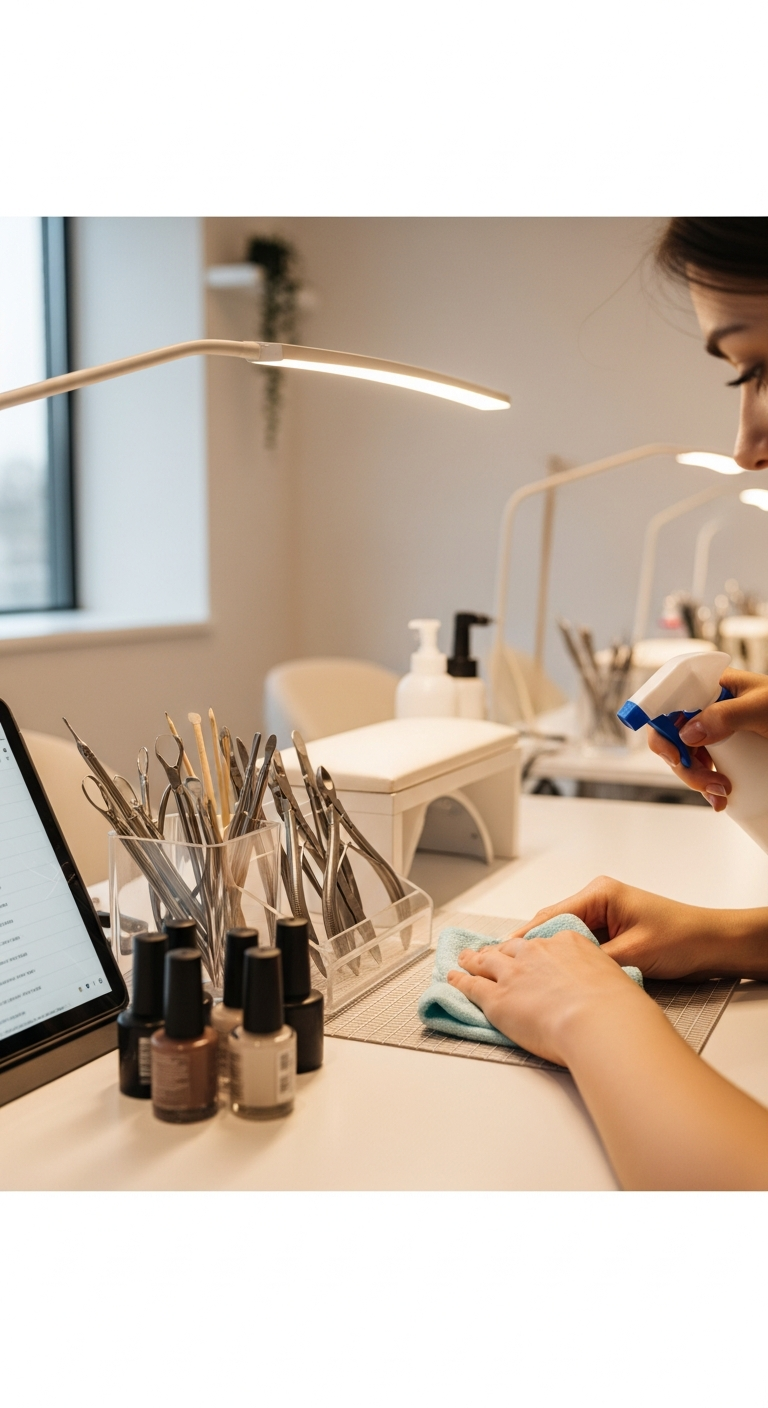
Adhering to state board regulations is a non-negotiable aspect of nail salon operations. Every station must be equipped with the necessary EPA-registered disinfectants and sterilized tools required for professional nail care.
Management should implement daily sanitation logs to track the cleaning of pedicure basins and the sterilization of metal implements. Maintaining these records protects the salon license and ensures a safe environment for every client.
Regular internal audits of technician stations help ensure that files, buffers, and other single-use items are disposed of correctly. Consistent enforcement of these safety standards is vital for the long-term reputation of the nail salon.
