Mastering Professional Nail Prep for Long-Term Retention
Professional nail prep is the process of cleaning, dehydrating, and etching the natural nail plate to ensure maximum adhesion of enhancements. Proper preparation removes surface oils and debris, creating a mechanical bond that prevents lifting and extends the durability of gel, acrylic, and dip powder services in professional salons.
The Impact of Cuticle Management on Adhesion
Effective cuticle work is the foundation of any long-lasting nail service.
Technicians must distinguish between the eponychium and the true cuticle.
The true cuticle is non-living tissue that sticks to the nail plate.
If this tissue is not completely removed, the product will lift.
Use a professional-grade pusher to gently lift the proximal nail fold.
This allows for a clear view of the debris on the plate.
Non-Living Tissue Removal Techniques
- Dry Prep: Using an e-file with a diamond bit at low RPMs.
- Manual Prep: Utilizing a high-quality curette to scrape the surface.
- Side Wall Cleaning: Ensuring no debris remains in the lateral folds.
Surface Dehydration and pH Balancing
The natural nail plate contains oils and moisture that repel enhancements.
A professional nail technician must use a high-quality dehydrator.
This temporary state allows the primer to create a stronger bond.
Apply a pH balancer to restore the nail to a neutral state.
This step is critical for clients with naturally oily nail plates.
Avoid touching the prepped plate with fingers to prevent recontamination.
Mechanical Etching for Structural Stability
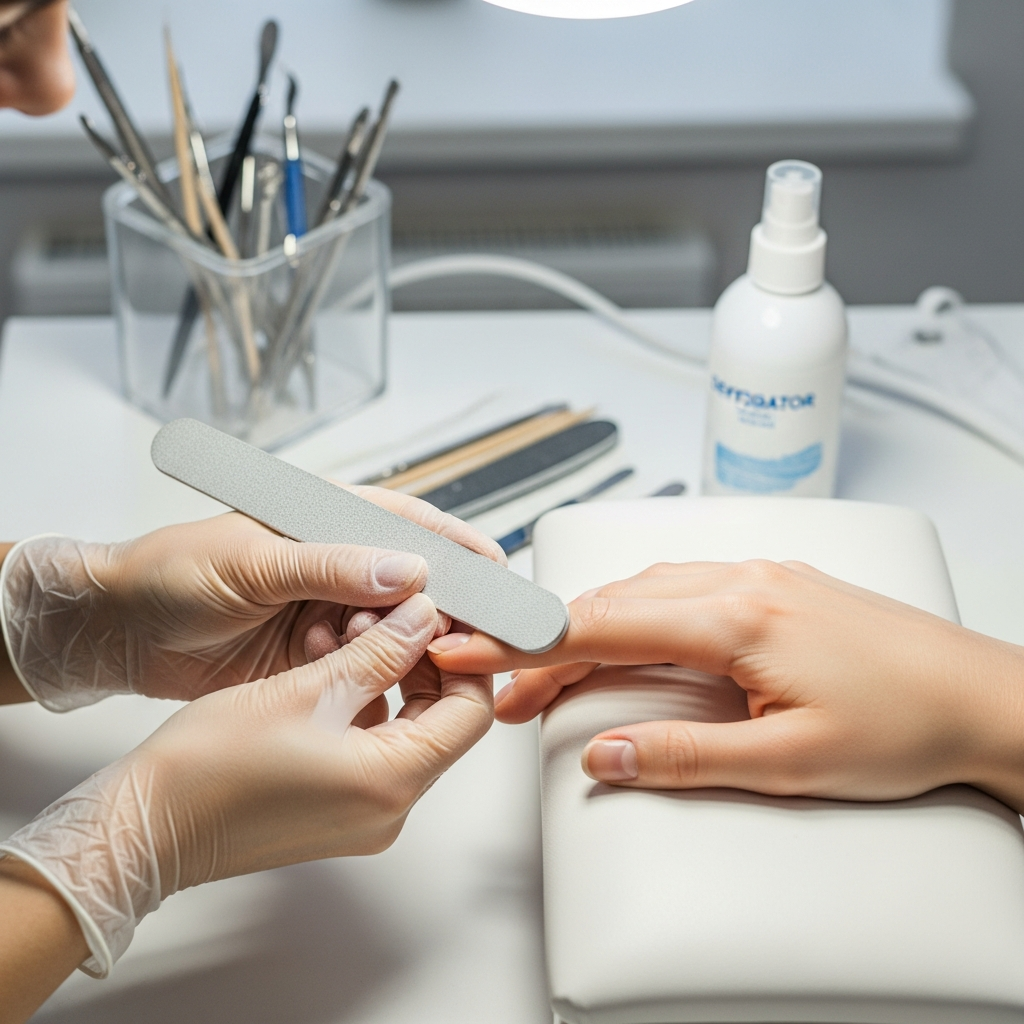
Mechanical etching creates microscopic grooves for the product to grip.
Use a 180-grit or 240-grit file to remove the natural shine.
Aggressive filing can thin the nail and cause heat spikes during curing.
Focus on the perimeter of the nail near the cuticle and side walls.
These areas are the most prone to lifting due to improper etching.
Ensure the dust is completely removed using a lint-free wipe.
Identifying and Correcting Common Prep Mistakes
Incomplete dust removal is a primary cause of service failure.
Residual dust acts as a barrier between the nail and the product.
Always use a stiff brush and 90% isopropyl alcohol to clean the surface.
Over-saturation of the nail plate with liquid cleansers can also cause issues.
Allow the cleaning agents to fully evaporate before applying primer.
Applying product to a damp nail leads to trapped moisture and potential mold.
Preventing Plate Damage During Execution
Maintaining the integrity of the natural nail is a professional standard.
Do not over-file the “white spots” or “rings of fire” on the plate.
These indicate the technician has filed through the protective dorsal layers.
Consistent pressure and correct tool angles prevent structural thinning.
A healthy nail plate provides the best surface for long-term retention.
Technicians should educate clients on proper aftercare to protect the work.
