Professional Nail Prep Techniques for Maximum Retention
Nail plate preparation is the systematic process of cleaning, dehydrating, and etching the natural nail surface to ensure optimal product adhesion. This professional technique involves removing the cuticle, eliminating surface oils, and creating a microscopic texture that allows gel, acrylic, or dip systems to bond securely without premature lifting or peeling.
Understanding the Foundation of Nail Adhesion
Product retention begins with the physical state of the natural nail plate. Professional technicians must ensure the surface is completely free of contaminants before application.
Any residual debris, oils, or moisture will create a barrier between the nail and the enhancement. This barrier is the primary cause of service failure in the first week.
Steps for Mechanical Nail Preparation
Removing Non-Living Tissue
Use a high-quality pusher to gently lift the eponychium and expose the true cuticle. This dead tissue is often invisible but remains tightly adhered to the nail plate.
Removing this thin layer of dead skin is critical for preventing proximal nail lifting. A clean proximal fold ensures the product can be applied closely and cleanly.
Etching the Surface Correctlу
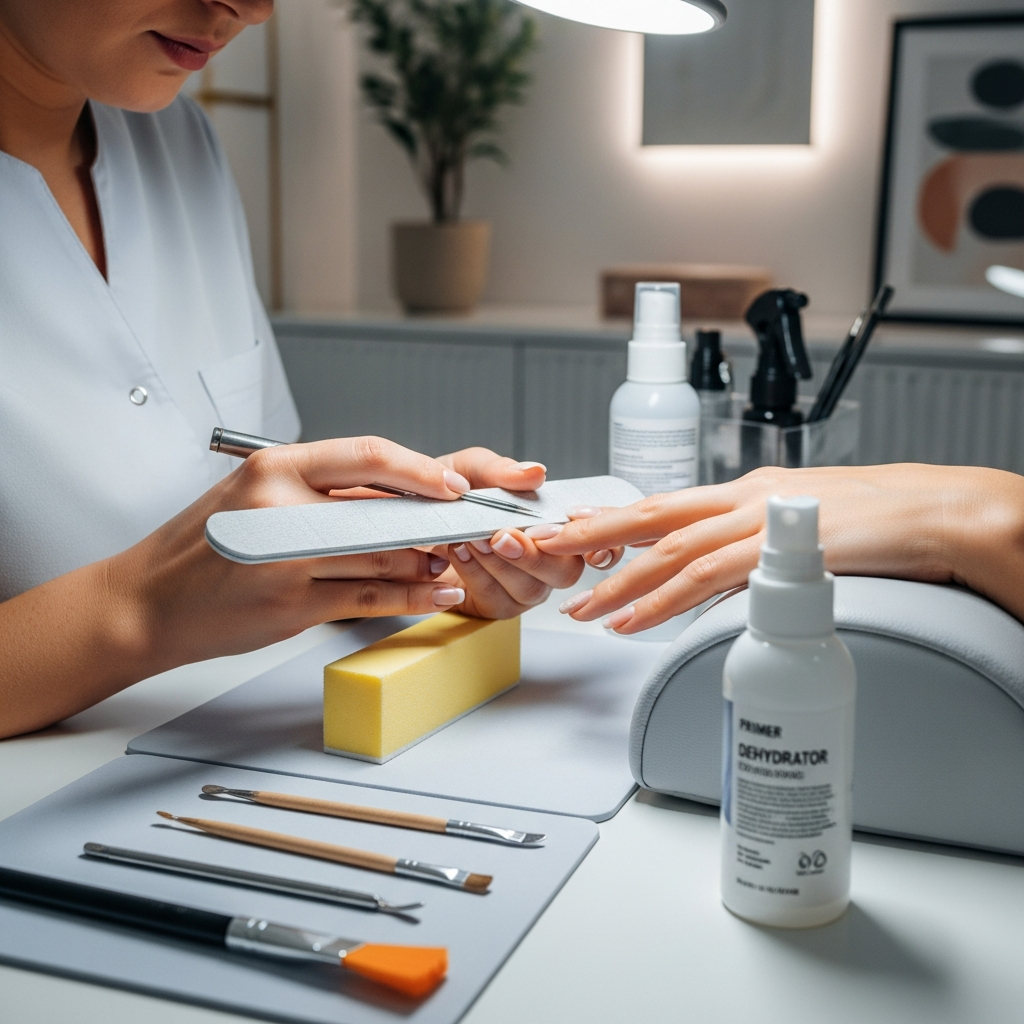
Use a 180-grit file or medium-grit buffer to remove the shine from the nail plate. The goal is not to thin the nail but to create a matte surface.
This process creates a microscopic texture for the chemical bond to anchor into the nail. Buffing in the direction of nail growth minimizes trauma to the keratin layers.
Chemical Preparation and Dehydration
After mechanical prep, apply a professional-grade dehydrator to remove surface moisture. This step temporarily shifts the pH of the nail for better bonding.
Follow with a primer or bonding agent specific to the nail system being applied. Acid-based primers provide a stronger bond for problematic oily nail types.
Best Practices for Professional Technicians
- Avoid touching the nail plate with fingers after dehydration.
- Ensure dust is fully removed from the lateral folds using a stiff nail brush.
- Match primer acidity to the specific requirements of the client’s nail condition.
- Check for pterygium growth which can cause lateral lifting if not removed.
Common Mistakes Leading to Nail Product Lifting
Over-filing the nail plate is a frequent error that leads to thin, flexible nails. A flexible base cannot support rigid enhancements, leading to cracking.
Inadequate dust removal is another technical failure. Dust trapped under the product prevents the chemical bond from reaching the actual nail surface.
