
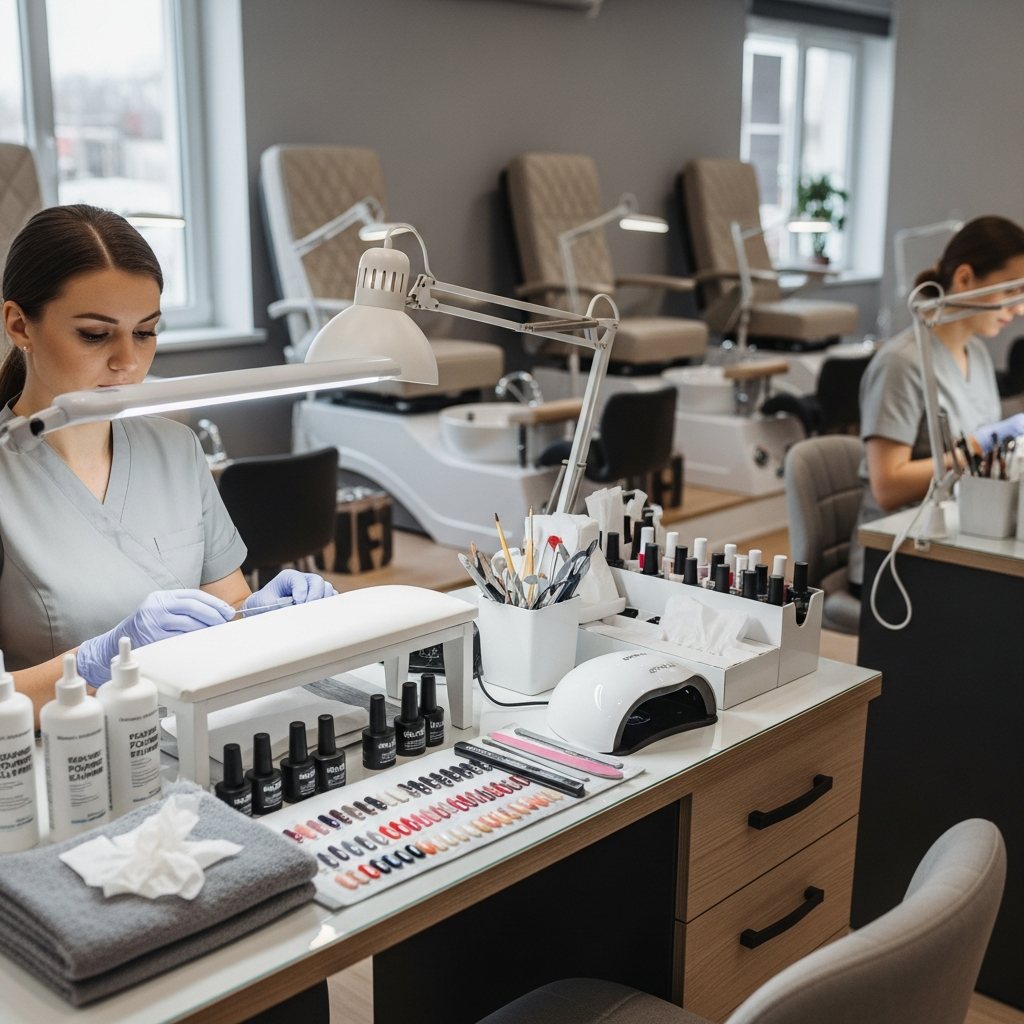
How to Start a Nail Salon: A First-Year Survival Guide
Opening a nail salon involves securing a commercial lease, obtaining state board licenses, and managing initial supply costs. Success depends on maintaining a strict break-even analysis and controlling overhead during the first twelve months. Most nail businesses survive by focusing on high-retention services and rigorous cost management within the first year of operation.
Essential Legal Setup for New Nail Salons
The first step in opening a nail business is ensuring full compliance with local and state regulations. Every U.S. state has specific requirements through their Board of Cosmetology regarding floor space and sanitation.
You must obtain a salon facility license and ensure every technician holds a valid individual nail license. Failure to display these documents can lead to immediate fines during your first year of operation.
Securing professional liability insurance is critical for protecting your assets from potential claims. Proper legal structuring, such as an LLC, helps separate your personal finances from your nail salon debts.
Managing Initial Nail Salon Startup Costs
Startup costs for a nail salon typically include lease deposits, professional ventilation systems, and specialized furniture. Budgeting for high-quality manicure tables and pedicure thrones is a significant upfront investment.
Ventilation is a non-negotiable expense due to chemical fumes and dust inherent in nail services. Modern state codes often require source-capture systems at every workstation to maintain professional safety standards.
Initial inventory should focus on essential professional products like monomer, polymer, and gel systems. Avoid overstocking hundreds of colors immediately; focus on a core palette of high-demand nail shades to preserve cash.
Build-out and Utility Requirements
Nail salons require specific plumbing and electrical configurations to handle pedicure basins and curing lamps. Hiring contractors familiar with nail salon builds can prevent costly mistakes during the renovation phase.
Inventory and Supply Management
Control your professional backbar supplies by measuring product usage per service. Excessive use of nail primers or top coats can quickly erode your profit margins during the critical first year.
First-Year Financial Survival Strategies
Financial survival in the nail industry requires a clear understanding of your daily break-even point. This is the minimum dollar amount you must earn each day to cover rent, utilities, and labor.
Monitor your liquid cash flow weekly to ensure you can cover recurring nail supply orders and payroll. Many new salons fail because they overspend on decor while neglecting their operational reserves.
Focus on client retention rather than just new customer acquisition to build a stable income. Repeat clients who return for regular nail maintenance provide the consistent revenue needed for long-term growth.
Calculating Your Break-Even Point
Add your fixed monthly costs and divide them by your average service price to find your target. This number tells you exactly how many nail sets or manicures your team must complete to stay solvent.
Minimizing Overhead and Waste
Reduce waste by training technicians on the proper measurement of nail chemicals and disposables. Even small savings on files, buffers, and towels can significantly impact your bottom line over several months.
Negotiate with professional nail distributors for bulk pricing on high-volume items like acetone and lint-free wipes. Keeping a lean inventory prevents capital from being locked up in unused products on the shelf.
