Optimizing Daily Nail Salon Operations and Workflows
Effective nail salon operations involve the systematic management of technician schedules, inventory usage, and service protocols to ensure consistent client outcomes. These operational workflows prioritize nail station efficiency, sanitation compliance, and time management to optimize daily revenue and maintain a professional environment for both staff and clientele.
Establishing Professional Nail Salon Workflows
A structured daily workflow is the foundation of a profitable nail business.
Each shift must begin with a comprehensive station check to ensure all nail
implements are sterilized and chemicals are properly labeled and filled.
The flow of a client through the salon must be seamless.
From the initial consultation to the final top coat application, every
nail technician should follow a timed sequence to prevent schedule delays.
Morning Preparation and Station Readiness
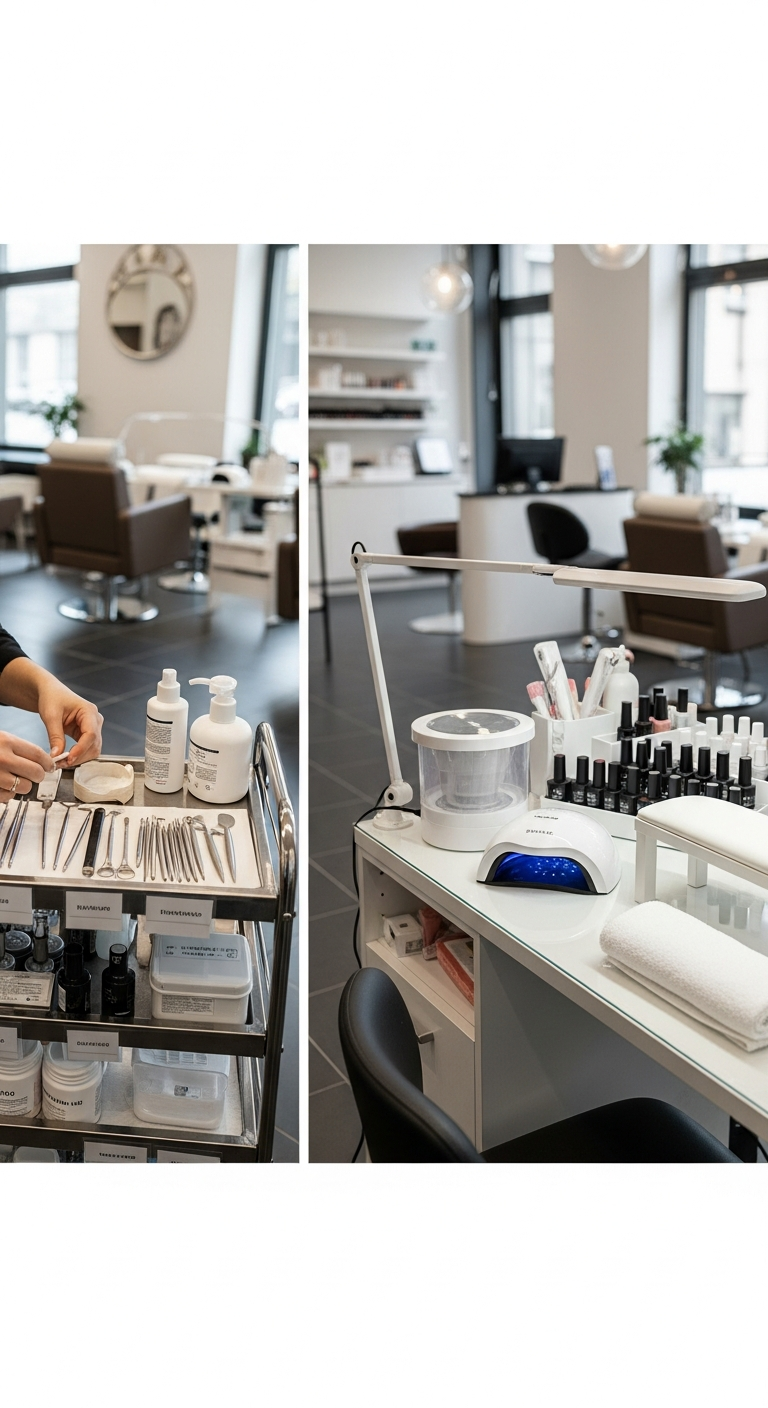
Opening procedures must include the preparation of disinfectant jars and
the organization of clean nail towels. Technicians should verify that
their electric files and UV lamps are fully functional before the first guest.
Maintaining a clean workspace between appointments is a non-negotiable standard.
Removing nail dust and sanitizing high-touch surfaces must be completed
within a five-minute window to keep the salon schedule on track.
Ensuring Service Consistency Through SOPs
Standard Operating Procedures (SOPs) ensure that every client receives the
same level of quality regardless of which nail technician performs the service.
This consistency builds brand trust and stabilizes the salon’s reputation.
Standardizing Nail Application Techniques
Every technician must follow the same steps for nail plate preparation and
product application. This reduces the risk of lifting or premature breakage,
which can lead to costly and time-consuming repair appointments.
Using a uniform filing technique and shape guide helps maintain a
professional look across all service types. Standardizing these steps
allows the salon to predict exact product costs for every service.
Staff Performance and Revenue Management
Monitoring the speed and quality of each nail technician is essential for
managing labor costs. Tracking the average time spent on a full set versus
a fill-in helps management optimize the daily booking calendar.
Labor Cost Control and Productivity
Labor is often the highest expense in a U.S. nail salon.
Managers must balance staff schedules against peak hours to ensure
maximum chair occupancy without overstaffing during slow morning periods.
Regular performance reviews should focus on both technical skill and
the ability to meet time benchmarks. Efficient nail services increase
the volume of daily appointments and improve the total shop revenue.
Inventory and Cost Tracking for Nail Supplies
Controlling the usage of monomers, polymers, and gel polishes prevents
waste and protects profit margins. Over-application of product is a common
internal operational problem that can lead to significant monthly losses.
Implementing a strict inventory checkout system ensures that all nail
supplies are accounted for. This practice helps managers identify
high-cost services and adjust pricing based on actual material consumption.
