Mastering Professional Nail Retention and Structure
Professional nail retention depends on meticulous cuticle clearing, surface dehydration, and correct apex placement. By removing the non-living tissue from the nail plate and applying product to support the stress area, technicians ensure enhancements resist lifting and withstand daily wear, providing a durable result for salon clients.
Essential Preparation for Long-Lasting Enhancements
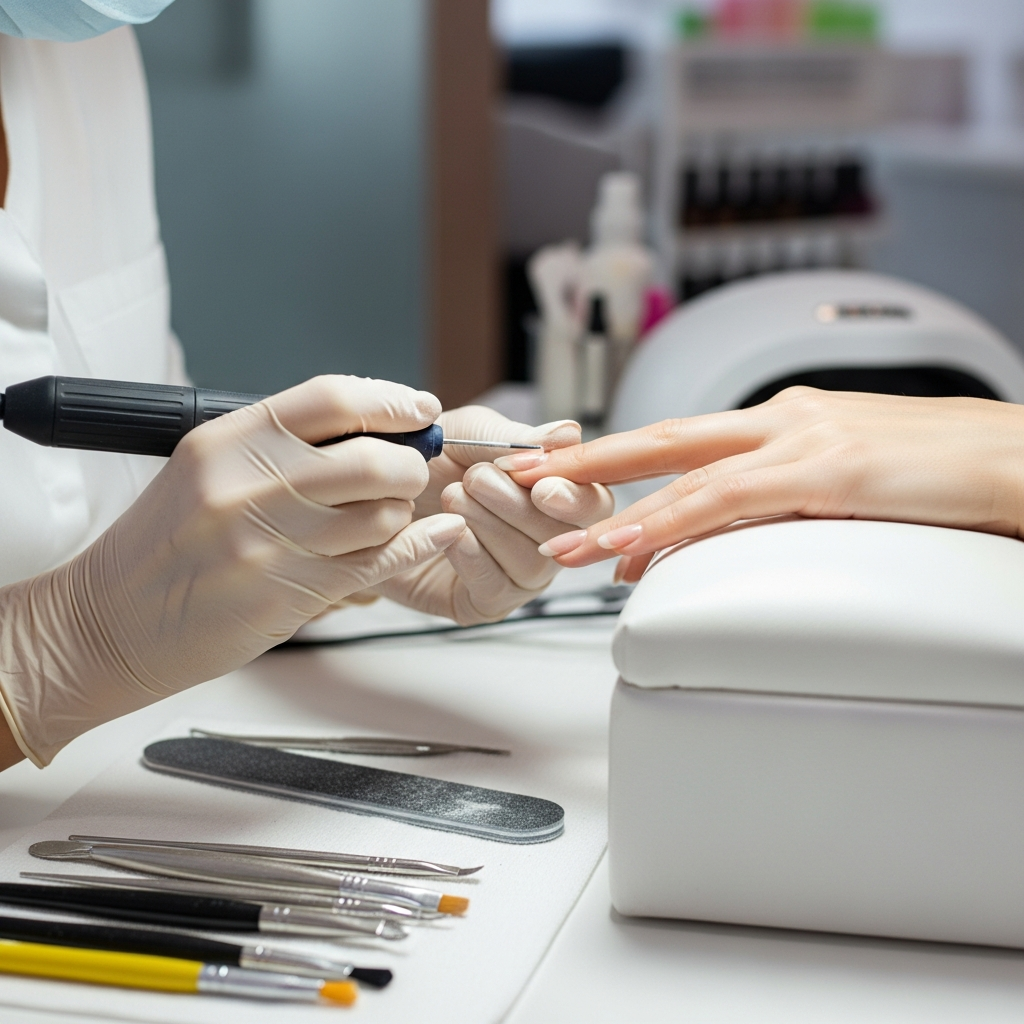
Successful product adhesion begins with a clean, dry surface. Any debris or oil left on the nail plate creates a barrier that causes premature lifting.
Technicians must focus on the proximal nail fold and lateral sidewalls. These areas often harbor hidden cuticle tissue that prevents gel or acrylic from bonding securely.
Mechanical vs. Chemical Preparation
Mechanical preparation involves using a high-quality nail file or e-file bit to gently remove shine. This creates a textured surface for the product to grip.
Chemical preparation uses dehydrators and primers to balance the pH of the nail. This step is critical for removing residual moisture and surface oils before application.
Building a Structurally Sound Apex
The apex is the thickest point of a nail enhancement, strategically placed over the stress area. Proper placement prevents the enhancement from snapping under pressure.
Without a correct apex, the nail becomes top-heavy or too thin at the growth zone. This imbalance leads to painful breaks or significant lifting at the free edge.
Identifying the Stress Area
The stress area is typically located where the natural nail meets the extension. Pressing on the free edge reveals a white “flash” where the most reinforcement is needed.
Applying the thickest layer of product here ensures the nail can absorb impact. As the enhancement grows out, the technician must rebalance the apex during fill appointments.
Common Technical Mistakes to Avoid
- Over-filing: Thinning the natural nail plate reduces the surface area available for bonding.
- Product Flooding: Letting gel or acrylic touch the skin leads to immediate lifting as the nail grows.
- Improper Curing: Using a lamp with incorrect wattage results in a soft, under-cured nail structure.
- Incorrect Tip Sizing: Using a nail tip that is too small creates tension and causes the side-walls to crack.
Refining Shape and Symmetry
Final filing defines the professional quality of the nail service. Technicians should check the side profile and the “C-curve” to ensure uniform thickness.
A consistent shape across all ten fingers requires a disciplined filing routine. Ensuring the nail sidewalls are parallel prevents a bulky or distorted appearance.
