Mastering Nail Preparation to Prevent Lifting
Nail lifting is prevented through meticulous plate preparation, including thorough cuticle removal, mechanical etching, and chemical dehydration. Proper nail prep ensures maximum adhesion for gel or acrylic enhancements by removing surface oils and debris that interfere with the bond between the natural nail and the professional product.
The Importance of Non-Living Tissue Removal
Successful nail enhancements require a clean surface free of invisible cuticle growth on the plate.
Use a diamond bit or pusher to clear the proximal nail fold and the lateral walls thoroughly.
Any remaining tissue on the nail plate acts as a barrier, causing premature service failure and lifting.
Mechanical Etching for Optimal Adhesion
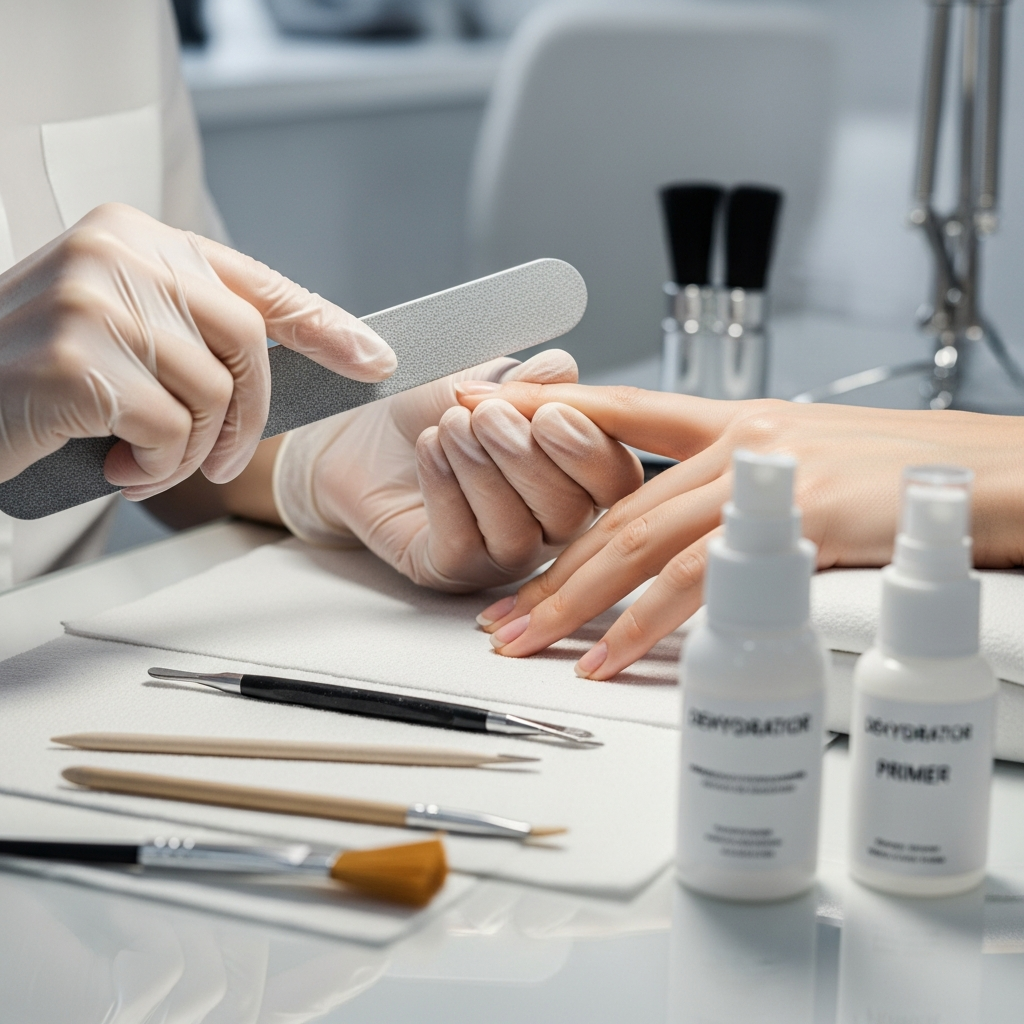
Use a 180-grit file or buffer to remove the natural shine from the entire nail surface.
Gently etch the plate to create a texture that the enhancement product can grip effectively.
Avoid over-filing, as thinning the nail plate reduces its structural integrity and overall bonding strength.
Chemical Dehydration and Priming
Apply a professional-grade dehydrator to remove moisture and oils from the prepared nail surface.
Follow with a high-quality primer or bonder specific to the nail system being applied to the client.
Ensure the primer does not touch the surrounding skin to avoid irritation and potential edge lifting.
Common Prep Mistakes to Avoid
- Touching the prepped nail with bare fingers after dehydration.
- Incomplete dust removal from the side walls before product application.
- Flooding the cuticle area with gel or acrylic during the overlay.
Refining Product Application for Durability
Leave a tiny margin between the product and the eponychium to ensure a seamless seal.
Taper the product application at the edges to prevent bulk that leads to snagging and lifting.
Proper nail structure and apex placement further reduce the mechanical stress that causes lifting at the free edge.
