Professional Nail Prep for Long-Lasting Gel Retention
Professional nail prep is the process of cleaning, dehydrating, and priming the natural nail plate to ensure maximum adhesion for enhancement products. Proper preparation prevents lifting, eliminates moisture-related bacterial growth, and creates a durable foundation for gel, acrylic, or dip systems by removing the invisible cuticle and surface oils.
Essential De-bonding Prevention Steps
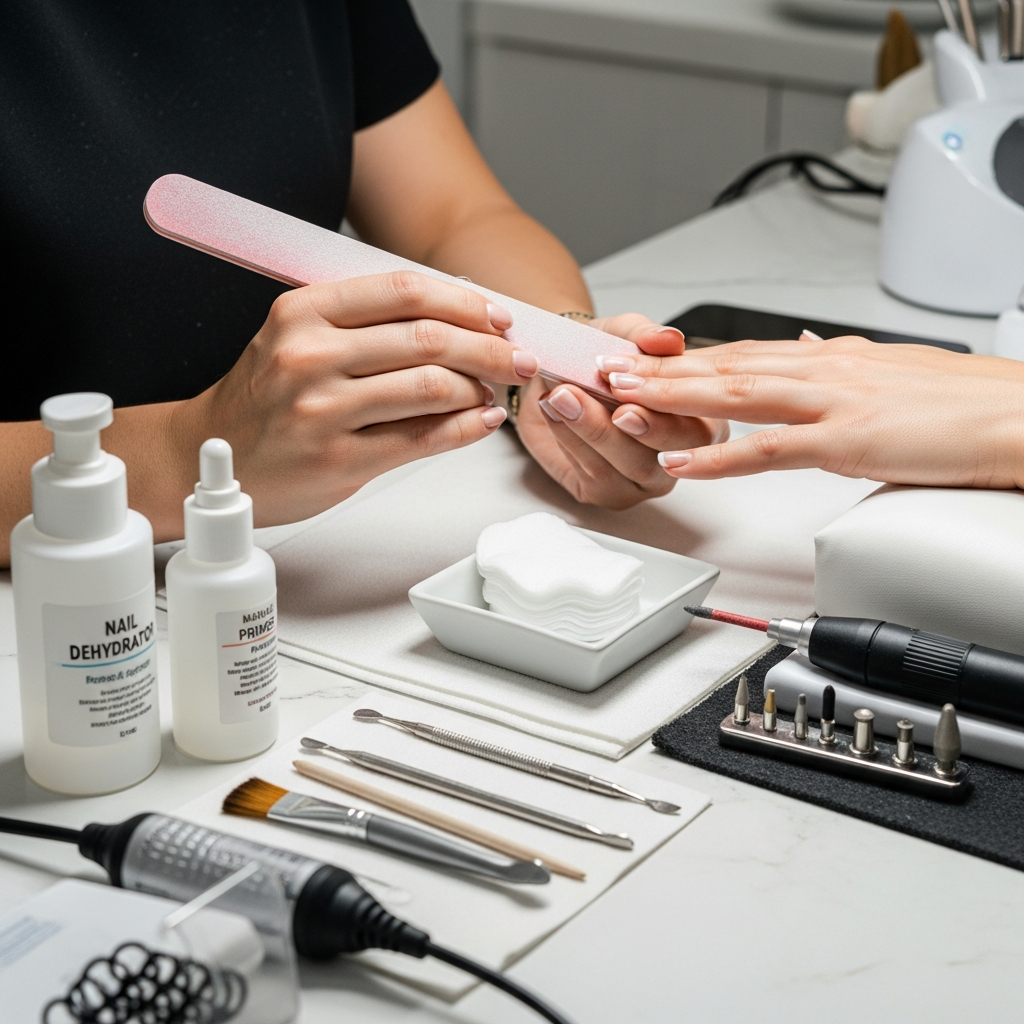
Start by performing a dry manicure to remove the non-living tissue from the nail plate. Use a 180-grit file or a fine-grit e-file bit to gently remove the surface shine.
Dust removal is critical before applying chemical dehydrators. Use a clean, lint-free wipe soaked in 99% isopropyl alcohol to clear all debris from the sidewalls and cuticle area.
Balancing pH Levels and Surface Tension
Chemical Dehydration and Priming
Apply a professional-grade nail dehydrator to temporarily shift the pH of the natural plate. This step ensures that any remaining oils are neutralized before the bonding agent is applied.
Follow with an acid-free primer to create a covalent bond between the natural keratin and the enhancement material. Allow the primer to remain slightly tacky for optimal adhesion.
Common Technical Prep Mistakes to Avoid
Over-filing the nail plate thins the keratin layers, which significantly weakens the bond and leads to premature lifting. Always use light pressure and consistent strokes.
Touching the prepped nail plate with bare fingers introduces skin oils back onto the surface. This contamination is a leading cause of service failure in professional salons.
Maintaining Client Safety and Plate Health
Ensure all tools undergo hospital-grade disinfection between clients to prevent cross-contamination. Avoid aggressive scraping of the eponychium to maintain the natural protective seal.
Consistently monitor the condition of the natural nail plate for thinning or damage. Professional technicians must prioritize long-term plate health over immediate aesthetic results.
