Mastering Nail Retention: Professional Prep Techniques
Professional nail lifting is prevented through meticulous natural nail plate preparation and precise product application. Effective techniques include thorough cuticle removal, dehydrating the nail plate, and maintaining a tiny margin between the product and skin. These steps ensure a secure chemical bond, preventing moisture intrusion and premature service failure in salon environments.
The Importance of Mechanical Nail Preparation
Mechanical preparation is the foundation of any long-lasting nail service.
Technicians must focus on removing all non-living tissue from the nail plate.
Even microscopic remnants of cuticle can cause product separation within days.
Removing Non-Living Tissue
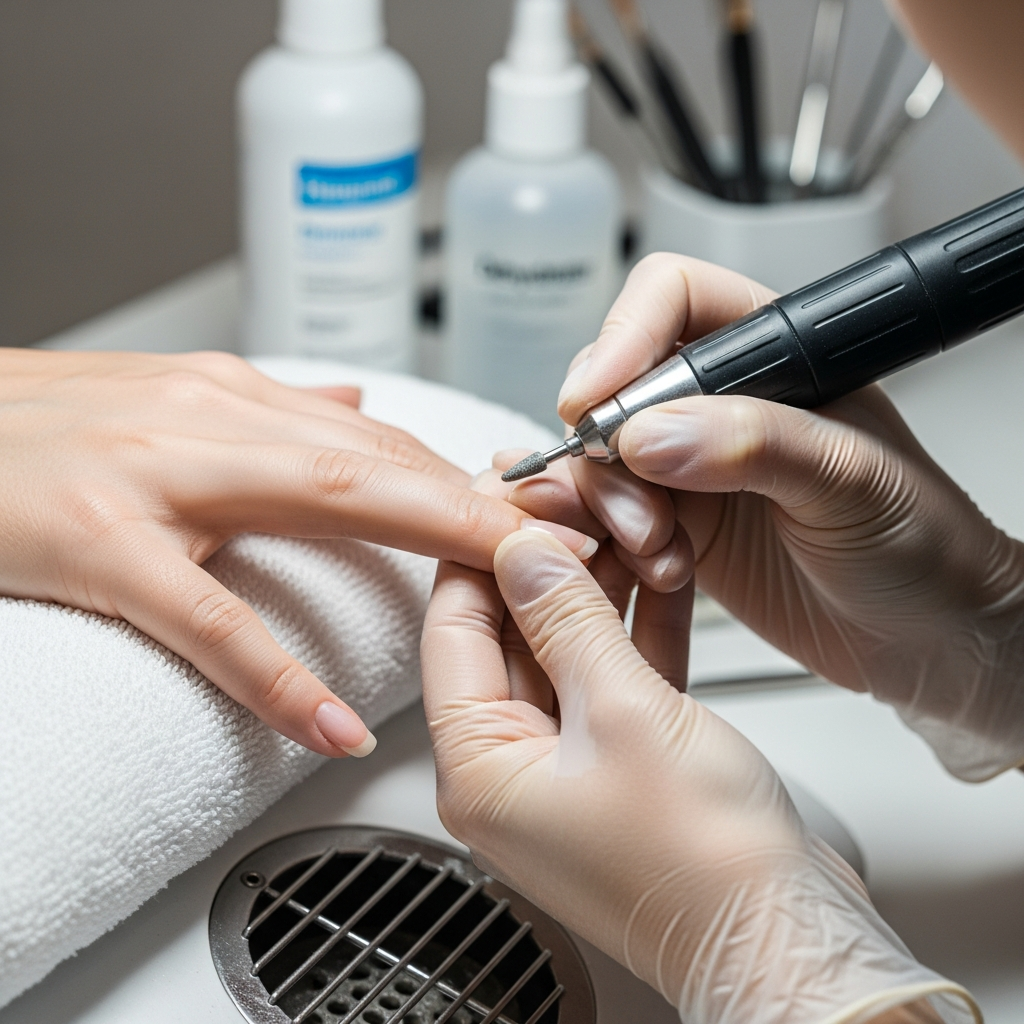
Use a professional pusher or a diamond e-file bit to gently lift the proximal nail fold.
Carefully remove the true cuticle from the nail surface using light pressure.
This creates a clean canvas for the enhancement material to bond directly to the keratin.
Buffing for Surface Adhesion
Gently remove the natural shine from the nail plate using a high-grit buffer.
Use a 180 or 240-grit tool to create a lightly textured surface without thinning the nail.
Always buff in the direction of nail growth to maintain structural integrity.
Chemical Preparation and Dehydration
After mechanical prep, chemical intervention is necessary to remove oils and moisture.
The nail plate naturally contains lipids that repel gel, acrylic, and dip resins.
Proper dehydration ensures the enhancement adheres to the nail fibers effectively.
Using Professional pH Balancers
Apply a professional-grade dehydrator to strip surface oils and temporary moisture.
This temporary state allows the nail product to penetrate the top layers of the nail.
Ensure the product evaporates completely before moving to the next step.
Applying High-Quality Primers
Choose between acid-based or acid-free primers depending on the nail type and product.
Primers act as double-sided tape, anchoring the nail enhancement to the natural plate.
Avoid over-saturating the brush to prevent chemical burns or flooded sidewalls.
Precision Application to Prevent Lifting
How the product is laid onto the nail determines its long-term durability.
Incorrect placement is the leading cause of lifting at the cuticle and sidewalls.
Consistency and control are vital for professional nail technicians.
Maintaining the Perimeter Gap
Leave a tiny gap, roughly the thickness of a hair, between the product and the skin.
If the product touches the skin, it will lift as the natural nail grows out.
Use a clean brush to wipe away any excess before curing the nail under a lamp.
Proper Product Consistency
When working with acrylic, the liquid-to-powder ratio must be perfectly balanced.
A bead that is too wet will shrink and pull away from the nail edge.
A bead that is too dry will fail to wet the nail surface for a strong bond.
Client Safety and Durability Standards
Ensuring the structural apex of the nail is correctly positioned prevents snapping.
A well-structured nail distributes pressure evenly across the entire surface area.
This protects the natural nail while providing the client with a three-week wear time.
Always inspect the nail for signs of thinning or damage before starting a new service.
If the nail plate is over-filed, product retention will decrease significantly.
Maintaining nail health is the most effective way to ensure service longevity.
