Optimizing Nail Salon Operations for Service Consistency
Nail salon operations involve the systematic management of daily workflows and service protocols to ensure every client receives identical quality. By implementing standard operating procedures, nail salon owners maintain strict sanitation levels, control service duration, and stabilize revenue by reducing product waste and ensuring technician performance remains uniform across all shifts.
Establishing Professional Nail Service Standards
Professional nail salon management relies on the ability to replicate high-quality results across different technicians. Without standardized workflows, the customer experience varies, which negatively impacts client retention and brand reputation.
Establishing clear protocols for every service, from a basic manicure to complex nail enhancements, ensures that time is managed effectively. This prevents scheduling bottlenecks and maximizes the number of clients served per day.
Implementing Standard Operating Procedures for Nail Services
Standard operating procedures (SOPs) act as the backbone of a successful nail salon. These documents should outline the exact steps for every service offered on the salon menu.
- Preparation phase: Sanitizing hands, removing old polish, and shaping the natural nail.
- Application phase: Precise cuticle work and layering of products according to professional specifications.
- Finishing phase: Proper curing times, oil application, and station cleanup for the next client.
Daily Workflow and Station Management
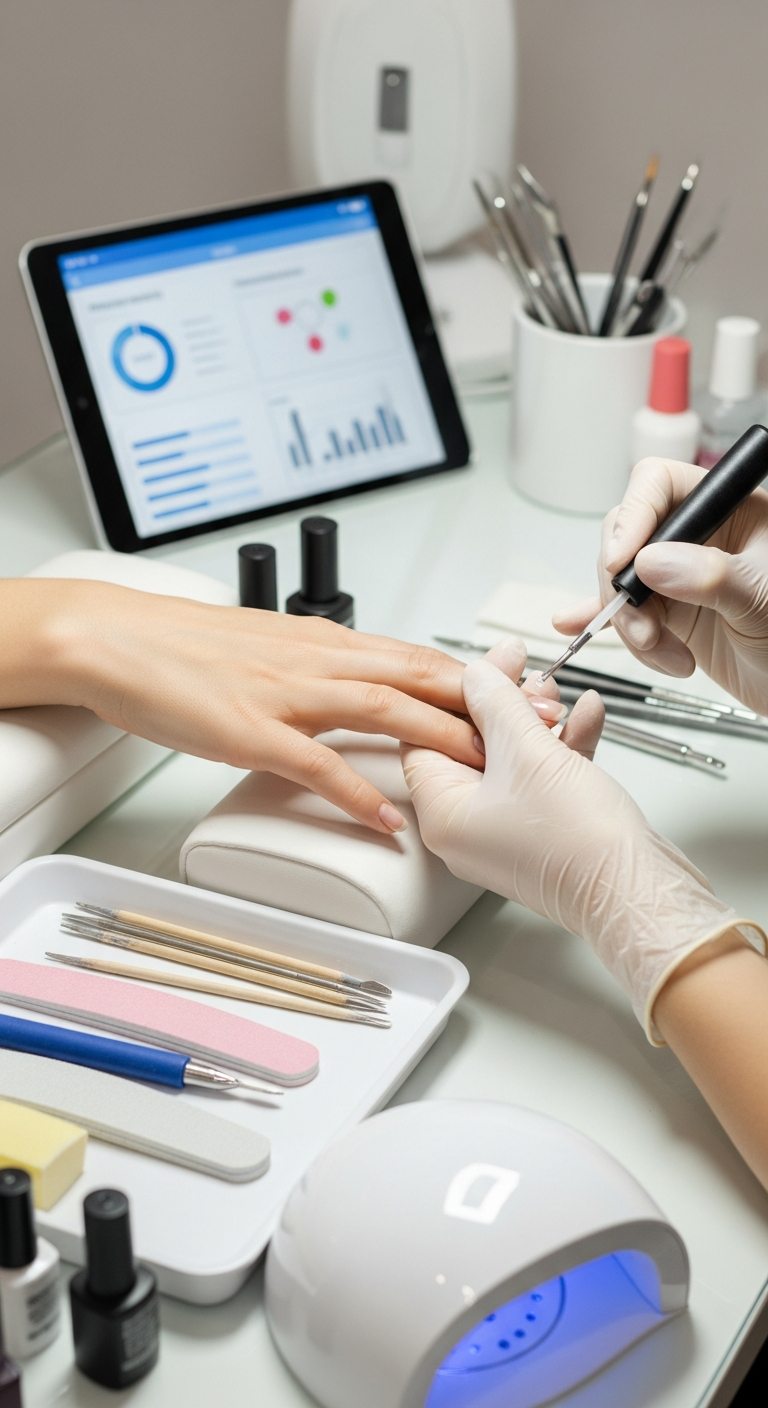
A structured daily workflow ensures the salon remains organized during peak hours. Technicians must be responsible for their individual nail stations to maintain a professional environment.
Daily checklists should include restocking frequently used items like lint-free wipes, alcohol, and monomer. Cleanliness standards must be verified between every client to meet state board regulations.
Staff Scheduling and Performance Control
Managing a nail salon team requires a balance between technician availability and client demand. Effective scheduling accounts for lunch breaks and cleaning duties without disrupting the service flow.
Performance tracking focuses on service duration and technical accuracy. Monitoring how long a technician takes for a full set of nails helps in refining the salon’s master schedule.
Managing Revenue and Supply Costs
Operational success in the nail industry depends on tight control over product usage. Over-dispensing acrylic liquid or using excessive amounts of gel polish directly reduces profit margins.
Owners should implement a system for tracking inventory levels weekly. This prevents emergency orders and ensures the salon never runs out of essential nail supplies during busy weekends.
Regular audits of service tickets against product consumption help identify areas where technicians might need additional training. Reducing waste is a primary driver of long-term salon profitability.
