Nail Salon Operational Workflows and SOP Management
Professional nail salon operations require structured daily workflows and standard operating procedures to maintain service consistency and financial health. These management protocols define staff duties, sanitation requirements, and service execution steps, ensuring every nail technician delivers uniform results that meet professional industry standards and regulatory compliance.
Implementing Standard Operating Procedures for Nail Services
Standard Operating Procedures, or SOPs, act as the structural foundation for every professional nail business. They establish clear, written expectations for technical execution and workplace conduct.
This uniformity prevents service variations that can confuse clients and damage a brand’s reputation. When every nail technician follows the same protocol, the quality remains predictable and professional.
SOPs also serve as training manuals for new hires, ensuring they integrate into the salon workflow quickly. Documentation should cover everything from client consultation to the final application of cuticle oil.
Essential Daily Workflows for Nail Salon Efficiency
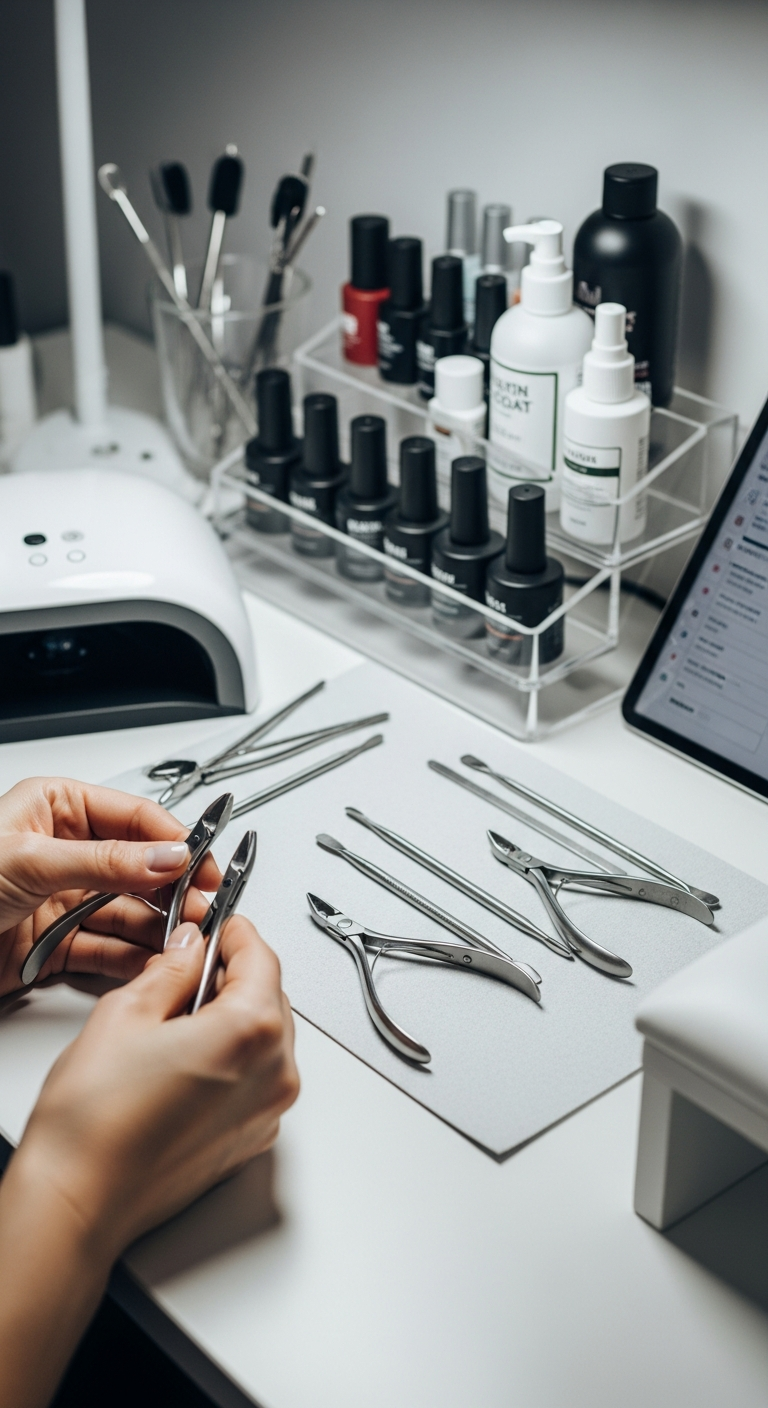
A disciplined morning routine ensures all nail stations are fully stocked and ready for the first appointment. Technicians must verify that all implements are sterilized according to U.S. state board mandates.
Consistent preparation prevents service delays during peak hours when the salon environment becomes high-pressure. A prepared station allows the technician to focus entirely on the technical application.
End-of-day workflows are equally important for maintaining a professional environment. These include deep cleaning pedicure basins, restocking supplies, and reconciling daily revenue logs.
Managing Service Turnaround and Station Management
Efficient turnaround times between nail clients are critical for maintaining the daily schedule and maximizing revenue. Technicians must follow a specific sequence for cleaning and resetting their desks.
This sequence includes disposing of all single-use items and disinfecting all non-porous surfaces with hospital-grade EPA-registered disinfectants. Speed must never compromise these essential safety standards.
Proper station management also involves organizing professional products to minimize movement. Efficient layout designs reduce physical strain on the technician and shorten the overall service time.
Maintaining Consistency in Professional Nail Execution
Salon owners must monitor the technical output of every nail technician to ensure quality standards are met. Regular skill assessments help identify areas where additional training may be required.
Unified technical training prevents clients from preferring only one specific staff member over others. This balance is vital for a healthy, manageable booking schedule and overall salon growth.
Consistency extends to the quantity of product used during services like acrylic or gel applications. Standardizing product usage helps in predicting supply costs and maintaining service margins.
Operational Revenue Tracking and Supply Management
Tracking daily service totals helps salon management identify high-performing nail treatments and peak hours. This data is essential for making informed decisions regarding staff scheduling and labor costs.
Monitoring product consumption prevents waste and keeps professional supply costs under control. High-volume salons must implement strict inventory checks to ensure the business never runs out of essential liquids or powders.
Revenue management also involves analyzing the ratio of service time to the price charged. Adjusting operational workflows to reduce wasted time directly improves the net profit of each nail service performed.
- Daily Sanitation Logs: Maintaining proof of compliance with health and safety regulations.
- Inventory Controls: Tracking professional nail product usage to prevent over-ordering.
- Performance Reviews: Evaluating technician speed, accuracy, and adherence to salon SOPs.
- Waste Reduction: Monitoring the amount of nail liquid and polymer used per service.
