Optimizing Nail Salon Operations for Consistent Service
Professional nail salon operations require standardized workflows to ensure every client receives the same high-quality service regardless of the technician. By implementing service-specific protocols and daily operational checklists, owners can maintain brand standards, reduce product waste, and stabilize revenue across all nail service categories.
The Importance of Standard Operating Procedures in Nail Salons
Standard Operating Procedures (SOPs) act as the backbone of a professional nail business. Without them, service quality varies between technicians, leading to inconsistent client experiences and unpredictable reviews.
Maintaining Service Quality Across Technicians
Every nail technician has a unique style, but the foundational steps of a service must remain identical. Establishing a uniform protocol for prep, application, and finishing ensures that every set of nails meets the salon standard.
Reducing Chemical and Material Waste
Standardized workflows dictate the exact amount of monomer, gel, or beads required for specific services. This precision prevents technicians from overusing expensive nail chemicals, directly impacting the salon’s bottom line and profit margins.
Daily Workflow Management for Efficient Nail Services
A well-managed nail salon relies on a strict daily rhythm to prevent bottlenecks. Efficient workflows start before the first client arrives and continue through the final closing tasks.
Morning Prep and Station Readiness
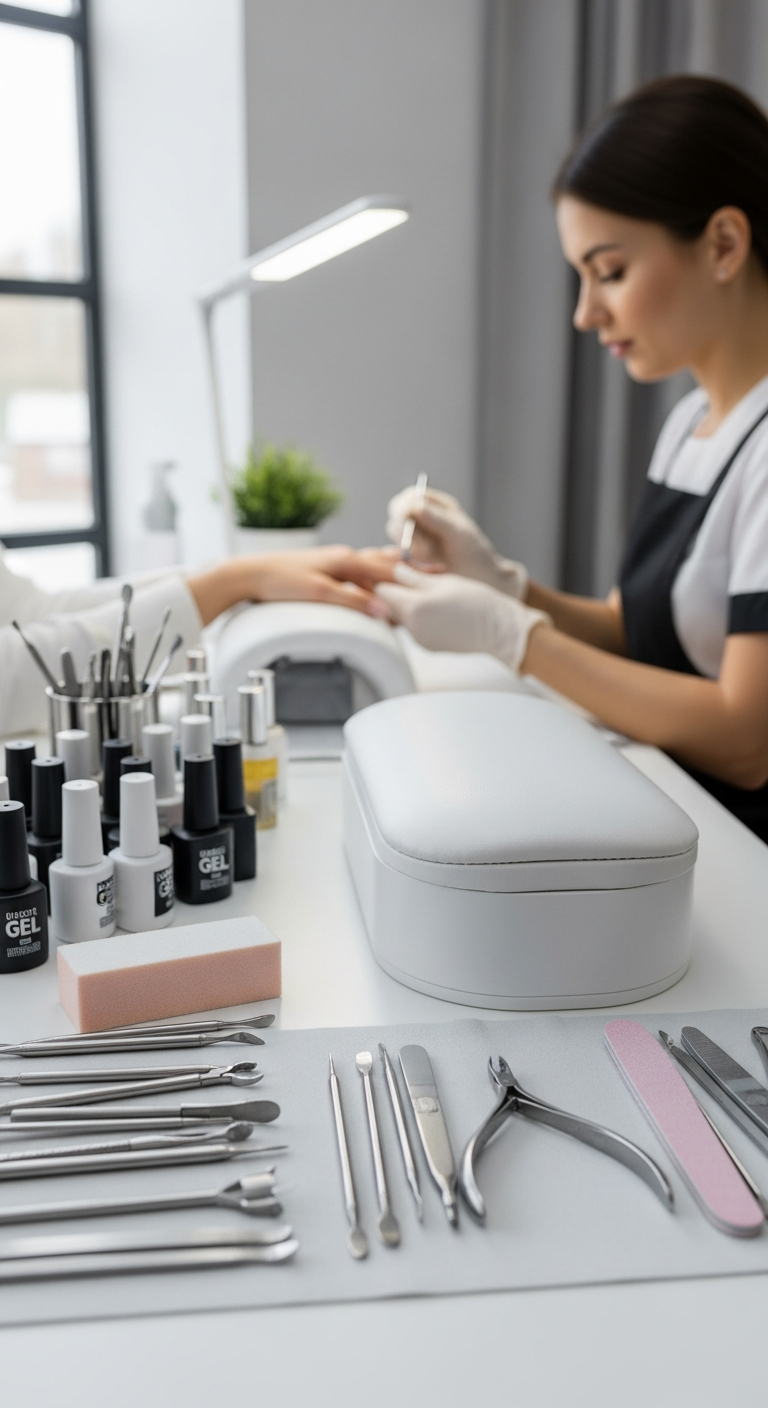
Technicians must arrive early to ensure their nail stations are fully stocked and sanitized. Having all files, buffers, and liquids ready prevents mid-service interruptions that delay the entire daily schedule.
Client Turnover and Sanitation Cycles
The time between nail appointments is critical for maintaining safety standards. SOPs should clearly define the 10 to 15-minute window required for cleaning pedicure basins and disinfecting implements according to state board regulations.
Monitoring Revenue and Operational Performance
Tracking the performance of a nail salon requires a deep dive into service timing and resource allocation. Management must monitor how long specific services take compared to the revenue they generate.
Tracking Service Timing and Efficiency
If a standard full set of acrylic nails takes one technician 60 minutes and another 90 minutes, it creates scheduling conflicts. Establishing time benchmarks helps in creating a predictable and profitable daily appointment book.
Inventory Management and Cost Control
Internal operational success depends on tight inventory control. Regularly auditing nail lacquer stocks, gel bottles, and disposable supplies prevents over-ordering and ensures the salon never runs out of essential service items.
Staff Scheduling and Performance Control
Effective nail salon management involves aligning staff schedules with peak traffic hours. Proper scheduling ensures the salon can maximize walk-in opportunities without overworking the technicians during slow periods.
Performance reviews should focus on technical skill, punctuality, and adherence to the salon’s sanitation protocols. Consistent feedback helps technicians maintain the high standards necessary for a successful nail professional career.
