Essential Professional Nail Prep Techniques for Retention
Professional nail preparation involves mechanically and chemically removing oils, debris, and the pterygium from the nail plate to ensure product adhesion. Proper nail prep prevents lifting, increases service longevity, and maintains the integrity of the natural nail during gel, acrylic, or dip powder applications in a salon setting.
The Foundation of Mechanical Nail Preparation
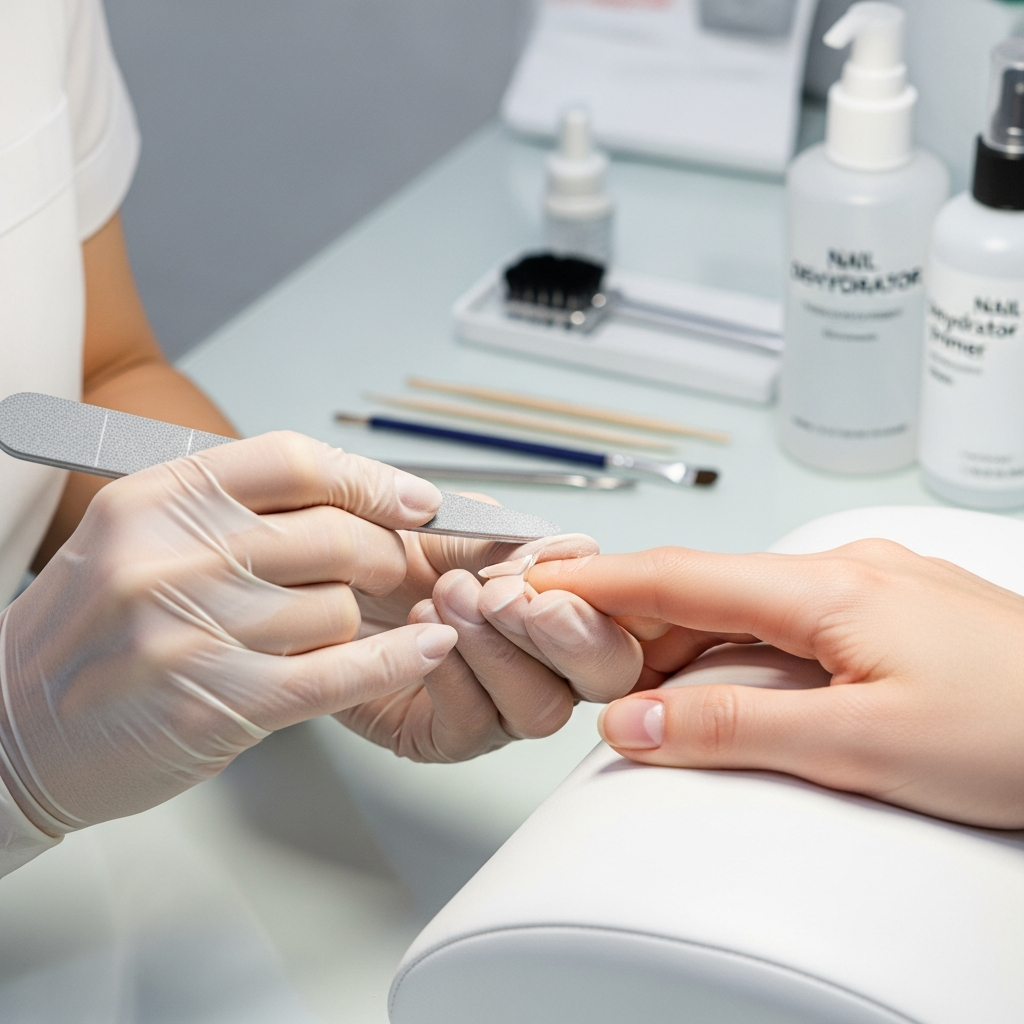
Effective retention begins with the thorough removal of non-living tissue from the nail plate. Use a sterilized pusher to gently retract the eponychium and expose the true cuticle or pterygium.
Removing this thin layer of skin is critical because product will not adhere to organic tissue. Any remaining skin trapped under the nail enhancement will inevitably cause lifting within days of the service.
Use a high-quality 180-grit file or a fine-grit buffer to remove the natural shine from the nail. This creates microscopic texture on the nail surface, allowing the base coat to form a strong mechanical bond.
Chemical Dehydration and pH Balancing
After mechanical prep, the nail plate must be completely free of surface oils and moisture. Apply a professional-grade nail dehydrator to temporarily strip moisture from the top layers of the keratin.
Follow dehydration with a pH balancer or an acid-free primer depending on the client’s nail type. Primers act as double-sided tape, creating a chemical link between the natural nail and the enhancement product.
Avoid touching the nail plate with your fingers after these steps have been completed. Skin oils transferred back onto the nail will immediately compromise the chemical bond and lead to premature failure.
Advanced Techniques for Superior Adhesion
Safe Use of Electric Files in Nail Prep
An electric nail file with a fine diamond bit can provide a cleaner finish around the proximal nail fold. This precision allows for closer product application without touching the surrounding skin.
Technicians must maintain a low RPM and keep the bit parallel to the nail plate to avoid thinning the natural nail. Proper e-file technique ensures a smooth transition between the enhancement and the natural growth.
Managing Difficult Nail Types
Clients with oily nail plates or hyperhidrosis require extra attention during the preparation phase. Double-dehydration may be necessary to ensure the surface remains dry enough for product application.
- Oily Nails: Use two coats of dehydrator and a stronger acid-based primer if compatible.
- Thin Nails: Avoid heavy buffing and prioritize chemical primers to maintain structural integrity.
- Dry Nails: Use acid-free primers to prevent further dehydration of the natural keratin layers.
Common Technical Mistakes to Avoid
Over-filing the nail plate is a frequent error that leads to thin, flexible nails that cannot support enhancements. A nail that is too thin will flex away from rigid products like acrylic, causing cracks.
Improper dust removal is another leading cause of lifting in professional services. Use a stiff nylon brush or a lint-free wipe soaked in 90% isopropyl alcohol to clear all debris from the nail folds.
Ensure that no product touches the soft tissue during application. Any gel or acrylic that cures onto the skin will pull away as the nail grows, creating an entry point for moisture and bacteria.
