Preventing Nail Lifting with Professional Prep Techniques
Nail lifting is the separation of an enhancement from the natural nail plate caused by improper preparation or application errors. Professionals prevent this by removing non-living tissue, dehydrating the surface, and maintaining a precise margin between the product and the skin to ensure long-term adhesion and client safety.
The Critical Role of Mechanical Preparation
Success in nail retention begins with thorough mechanical preparation of the natural plate. Technicians must remove any non-living tissue to create a pristine bonding surface for the product.
Removing the True Cuticle
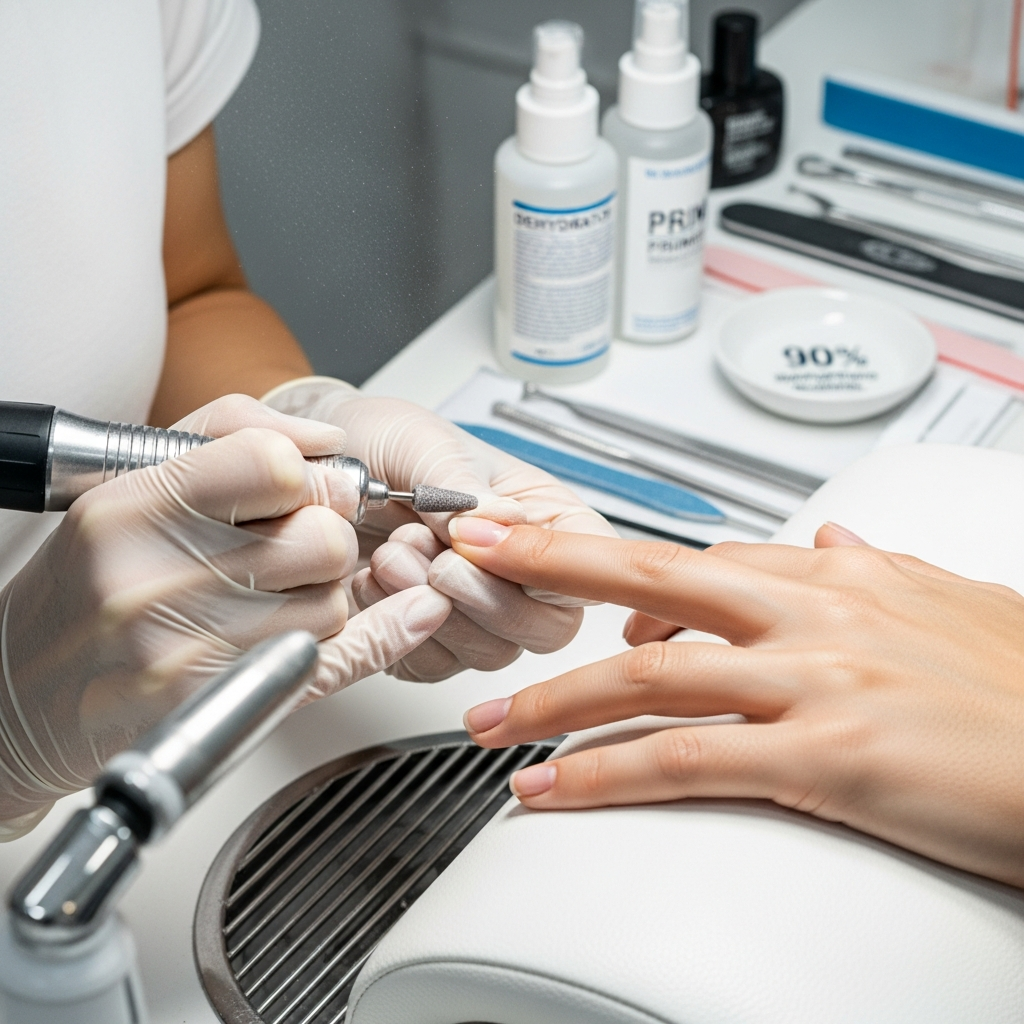
The true cuticle is the thin layer of dead skin attached to the nail plate. Using a fine-grit diamond bit or a pusher ensures no organic matter interferes with the bond.
Surface Etching and Buffing
A light buffing with a 180-grit file removes natural shine and opens the nail plate. This step increases the surface area for the primer or base gel to anchor securely.
Chemical Preparation and Dehydration
Mechanical prep must be followed by chemical dehydration to remove moisture and surface oils. This step is vital for ensuring the nail enhancement remains stable for several weeks.
- Nail Cleansing: Use 90% or higher Isopropyl Alcohol to remove all dust.
- Dehydrator: Apply a professional-grade dehydrator to balance the PH level.
- Primer Selection: Use acid-free or acid-based primers depending on the client’s nail chemistry.
Application Standards for Enhancement Durability
Proper product placement is just as important as the preparation steps. Even the best prep can be ruined by poor application techniques near the proximal nail fold or side walls.
Maintaining the Margin
Leave a tiny margin between the nail enhancement and the surrounding skin. If the product touches the skin, it will lift as the natural nail grows and oils transfer.
Sealing the Free Edge
Always cap the free edge of the nail with every layer of gel or acrylic. This technique seals the enhancement and prevents moisture from seeping under the product at the tip.
Common Technical Mistakes to Avoid
Inconsistent results often stem from small errors during the service workflow. Identifying these technical flaws allows for immediate correction and better client satisfaction in the salon.
- Over-filing: Thinning the nail plate reduces the strength of the chemical bond.
- Dust Contamination: Remaining debris acts as a physical barrier to product adhesion.
- Incorrect Curing: Under-cured gel leads to flexibility issues and eventual nail lifting.
