Mastering Professional Nail Prep for Maximum Retention
Professional nail prep is the systematic process of cleansing, dehydrating, and priming the natural nail plate to ensure optimal adhesion of enhancements. Proper preparation involves removing non-living cuticle tissue and balancing pH levels, which prevents lifting and extends the durability of gel, acrylic, and dip powder services in a salon environment.
The Critical Role of Mechanical Nail Preparation
Mechanical preparation involves the physical removal of debris and the gentle etching of the nail surface. This step creates a textured landscape that allows professional products to anchor securely to the keratin layers.
Removing Non-Living Cuticle Tissue
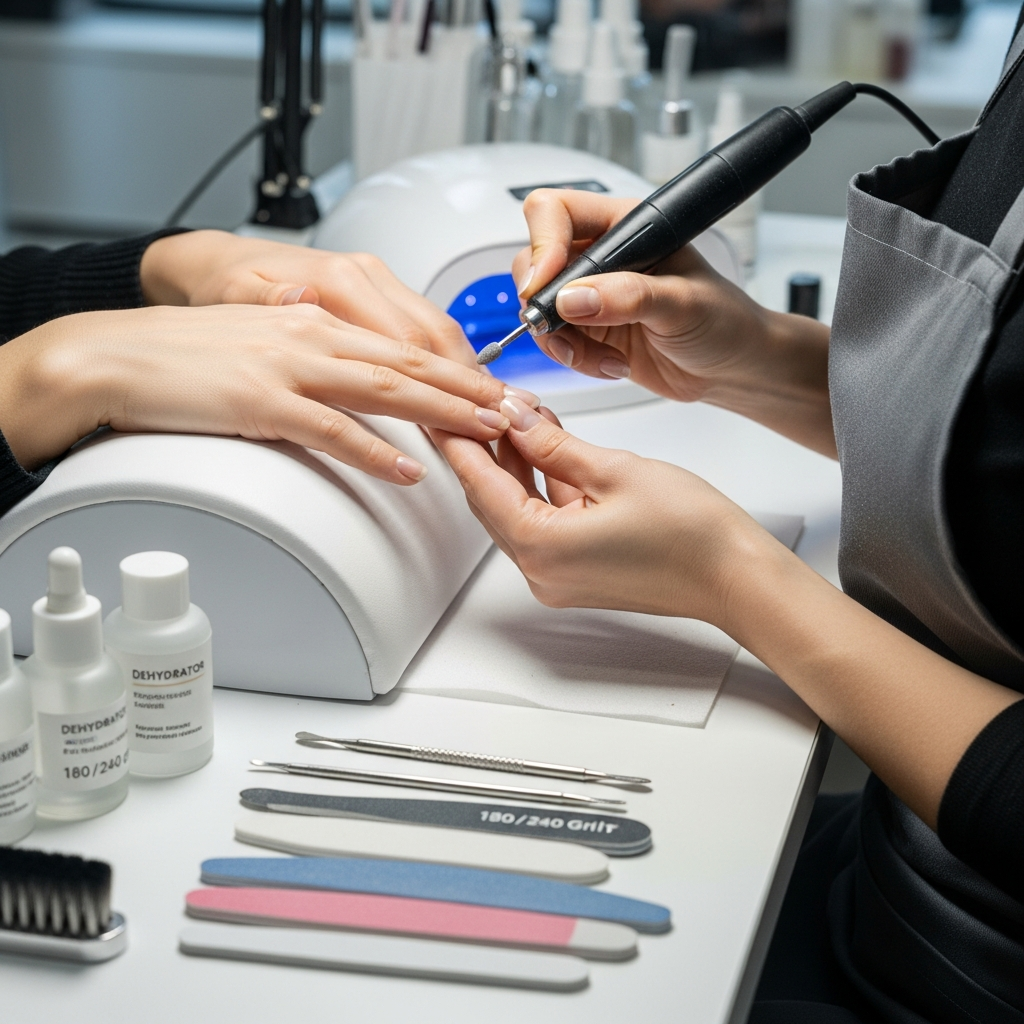
Technicians must differentiate between the eponychium and the true cuticle. Using a fine-grit diamond bit or a manual pusher, remove all non-living tissue from the nail plate to prevent pocket lifting.
Surface Refinement and Shine Removal
Use a 180 or 240-grit buffer to remove the natural oils and shine from the nail surface. Over-filing thins the nail plate, leading to heat spikes and weakened structural integrity during product wear.
Chemical Preparation Standards for Nail Techs
After mechanical prep, chemical agents are required to eliminate moisture and oils that naturally recur on the nail surface. This ensures a sterile and receptive base for the base coat or primer.
Dehydration and pH Balancing
Apply a professional-grade dehydrator to temporarily remove moisture from the top layers of the nail. This step is vital in high-humidity regions where moisture levels can interfere with the curing process.
Selecting Acid-Free vs. Acid Primers
Choose an acid-free primer for most gel and builder gel services to create a double-sided adhesive bond. Use acid primers specifically for problematic acrylic clients who experience recurring lifting at the proximal nail fold.
Common Technical Prep Mistakes to Avoid
Inconsistent retention is often the result of small technical errors during the preparation phase. Identifying these mistakes is essential for maintaining professional service standards and client satisfaction.
- Touching the nail plate with bare fingers after dehydration.
- Leaving dust in the lateral nail folds before product application.
- Applying primer too heavily, which can flood the soft tissue.
- Using dull bits or buffers that polish the nail instead of etching it.
Managing Lateral Fold Debris
Use a stiff nylon manicure brush to clear all dust from the nail grooves. Even microscopic debris trapped under the product will lead to immediate delamination once the nail is exposed to water.
Standardized Prep Timing
Professional technicians should complete the prep phase within 10 to 15 minutes. Efficiency in this stage ensures enough time for precise structure building and shaping without rushing the chemical bond.
