Mastering Professional Nail Prep for Long-Term Retention
Professional nail preparation involves removing the true cuticle, dehydrating the nail plate, and creating a mechanical bond to ensure product longevity. Proper nail prep prevents lifting by eliminating oils and debris, allowing gel or acrylic systems to adhere securely to the natural nail surface for three to four weeks of wear.
The Essentials of Nail Plate Debridement
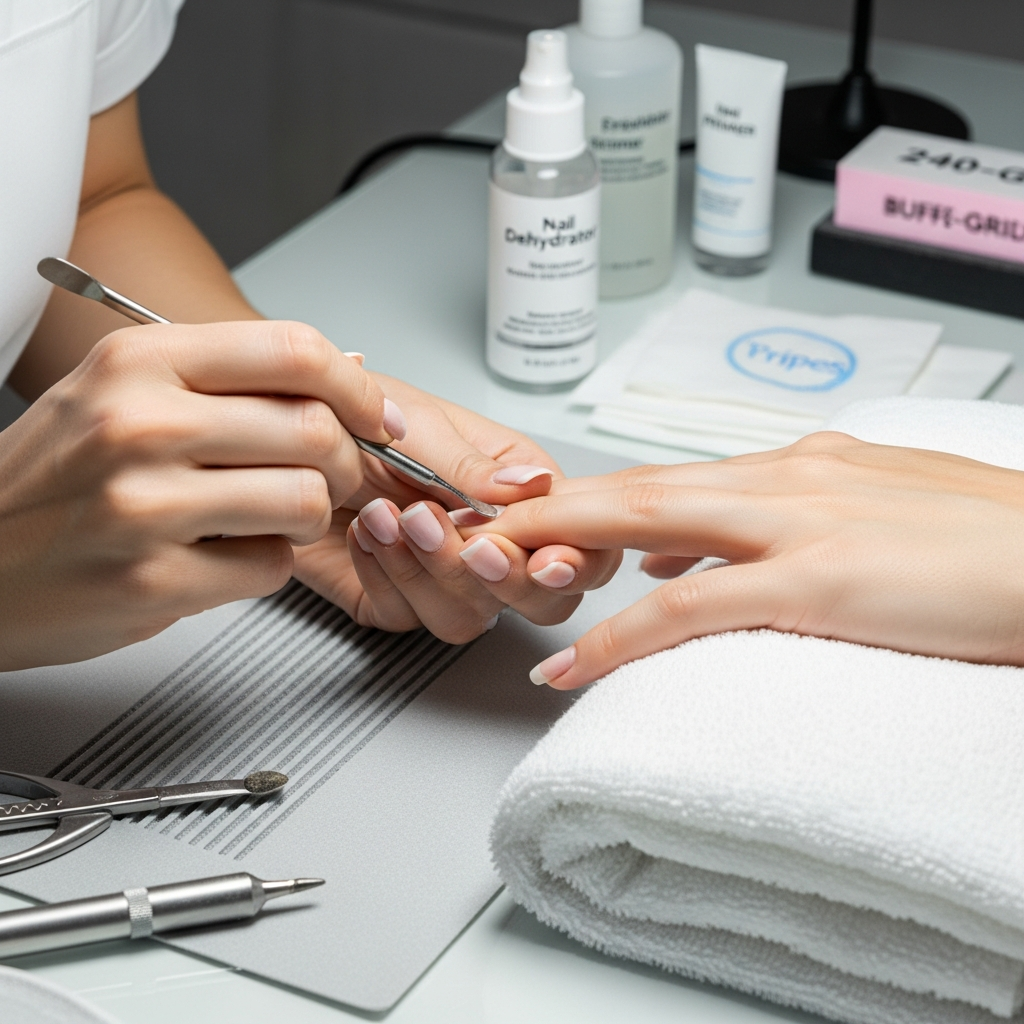
Effective nail prep begins with the thorough removal of non-living tissue from the nail plate. Use a professional-grade pusher or an e-file bit to clear the lateral folds and the proximal nail fold area.
This process ensures that enhancement products like gel or acrylic bond directly to the keratin rather than to skin or debris. Failure to clear this area is the most common cause of early enhancement lifting.
Chemical Preparation and Dehydration
Once the mechanical prep is finished, applying a professional nail dehydrator is critical for removing surface oils. This step temporarily balances the pH of the nail and removes moisture from the top layers.
Follow the dehydrator with a high-quality primer to create a chemical bridge between the natural nail and the enhancement material. Always match the primer type to the specific product system being applied.
Managing High Moisture Levels
Clients with naturally oily or high-moisture nail beds require extra attention during the dehydration phase. Scrubbing the nail plate with a lint-free wipe and alcohol ensures a deeper clean.
Avoid touching the nail plate with your own skin after the dehydration step has been completed. Any transfer of oils will compromise the bond and likely lead to service failure within days.
Proper Primer Application Techniques
Apply primer sparingly to avoid flooding the soft tissue surrounding the nail. For acid-based primers, use a dry-brush technique to prevent over-saturation of the nail plate.
For non-acid primers, ensure the layer remains slightly tacky if the manufacturer instructions specify. This “sticky” layer acts as a double-sided adhesive for the base gel or acrylic bead.
Avoiding Over-Filing and Plate Damage
Professional technicians must balance surface roughening with maintaining nail integrity. Use a 180 or 240-grit buffer to gently remove the shine without thinning the natural nail plate.
Over-filing creates a weak, flexible foundation that cannot support the weight of professional enhancements. A healthy, thick nail plate is essential for long-term product retention and client safety.
- Remove all traces of the true cuticle from the nail surface.
- Dehydrate thoroughly to eliminate oils and surface contaminants.
- Apply site-specific primers to improve chemical adhesion.
- Protect the nail plate by avoiding aggressive grit files during prep.
The Impact of Proper Perimeter Sealing
During the application phase, ensure the product does not touch the skin at the nail walls. A small gap, the thickness of a hair, prevents the product from lifting as the nail grows.
Sealing the free edge is also vital for nail services involving gel. This technique “wraps” the product around the tip, preventing moisture from entering the bond between the nail and the coating.
