Mastering Professional Nail Prep for Long-Term Gel Retention
Professional nail preparation is the systematic process of cleaning, dehydrating, and etching the natural nail plate to ensure maximum product adhesion. By removing the cuticle and surface oils, technicians prevent lifting and enhance the durability of gel or acrylic systems, providing clients with long-lasting, high-quality results across every professional service.
The Anatomy of Effective Nail Plate Decontamination
Proper decontamination begins with the removal of non-living tissue from the nail plate. This step is critical because any debris left behind creates a barrier between the enhancement and the natural surface.
Removing Surface Oils and Moisture
Natural oils and moisture are the primary causes of premature lifting in professional services. Using a high-quality dehydrator ensures the surface is chemically prepared for bonding agents and primers.
A thorough scrub with a lint-free wipe and 90% isopropyl alcohol is often the first line of defense. This removes dust and contaminants that accumulate during the initial shaping phase of the service.
Clearing the True Cuticle
Technicians must distinguish between the eponychium and the true cuticle during the prep phase. Removing the thin layer of skin attached to the nail plate prevents the product from lifting at the proximal fold.
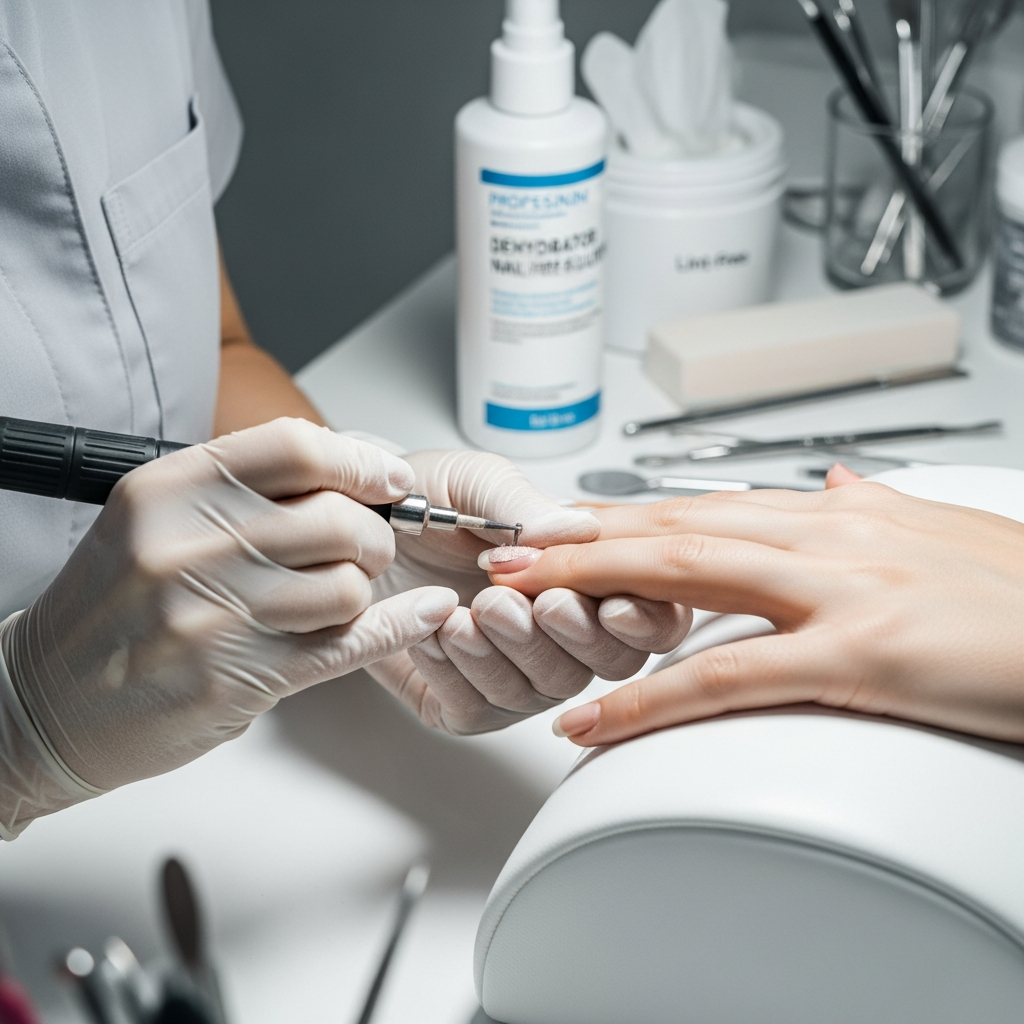
Using a professional pusher or a specific e-file bit allows for precision without damaging the matrix. Clean margins are essential for a seamless finish that lasts three to four weeks without catching.
Mechanical Preparation and Etching Techniques
Mechanical preparation involves gently roughening the nail surface to create “teeth” for the product to grip. This process must be performed with precision to avoid thinning the natural plate over time.
Choosing the Correct Grit for Surface Prep
A 180-grit or 240-grit buffer is typically sufficient for removing the natural shine without causing trauma. Using a grit that is too coarse can lead to sensitivity and permanent plate damage.
Always file in the direction of nail growth to minimize fraying of the keratin layers. A uniform, matte surface is the goal for every professional gel or acrylic application.
Preventing Common Retention Mistakes
Retention issues often stem from subtle technical errors during the preparation and application phase. Identifying these mistakes early allows for immediate correction and improved client satisfaction levels.
Avoiding Over-Filing and Damage
Over-filing weakens the nail plate, making it flexible and prone to peeling away from rigid products. Maintaining the structural integrity of the natural plate is vital for long-term product success.
Technicians should observe the plate for signs of redness or “rings of fire,” which indicate excessive filing. Healthy keratin provides the strongest foundation for any professional enhancement system.
Ensuring Proper Product Margin Control
Leaving a small margin between the gel and the surrounding soft tissue prevents “flooding.” This technique ensures that the nail enhancement remains sealed and does not lift when the skin moves.
- Apply thin layers to control product flow.
- Clean the sidewalls before curing in the lamp.
- Ensure the free edge is properly capped for maximum seal.
Safety Standards in Professional Nail Preparation
Professional safety involves more than just cleanliness; it requires the correct use of chemicals and tools. Technicians must prioritize the health of the nail while achieving a durable, aesthetic finish.
Always use fresh, sanitized implements for every client to prevent the spread of pathogens. Following manufacturer instructions for primer and bonder application ensures chemical safety and optimal performance.
