Nail Prep Techniques for Professional Retention
Professional nail prep is the foundational process of cleaning, dehydrating, and priming the natural nail plate to ensure superior product adhesion. This technical sequence removes surface oils and non-living tissue, effectively preventing lifting and chipping while maximizing the longevity of professional gel, acrylic, and dip powder enhancements.
Mechanical Surface Preparation
The first step in any professional service is the removal of the true cuticle, also known as the pterygium. This non-living tissue adheres to the nail plate and is a primary cause of lifting if not cleared.
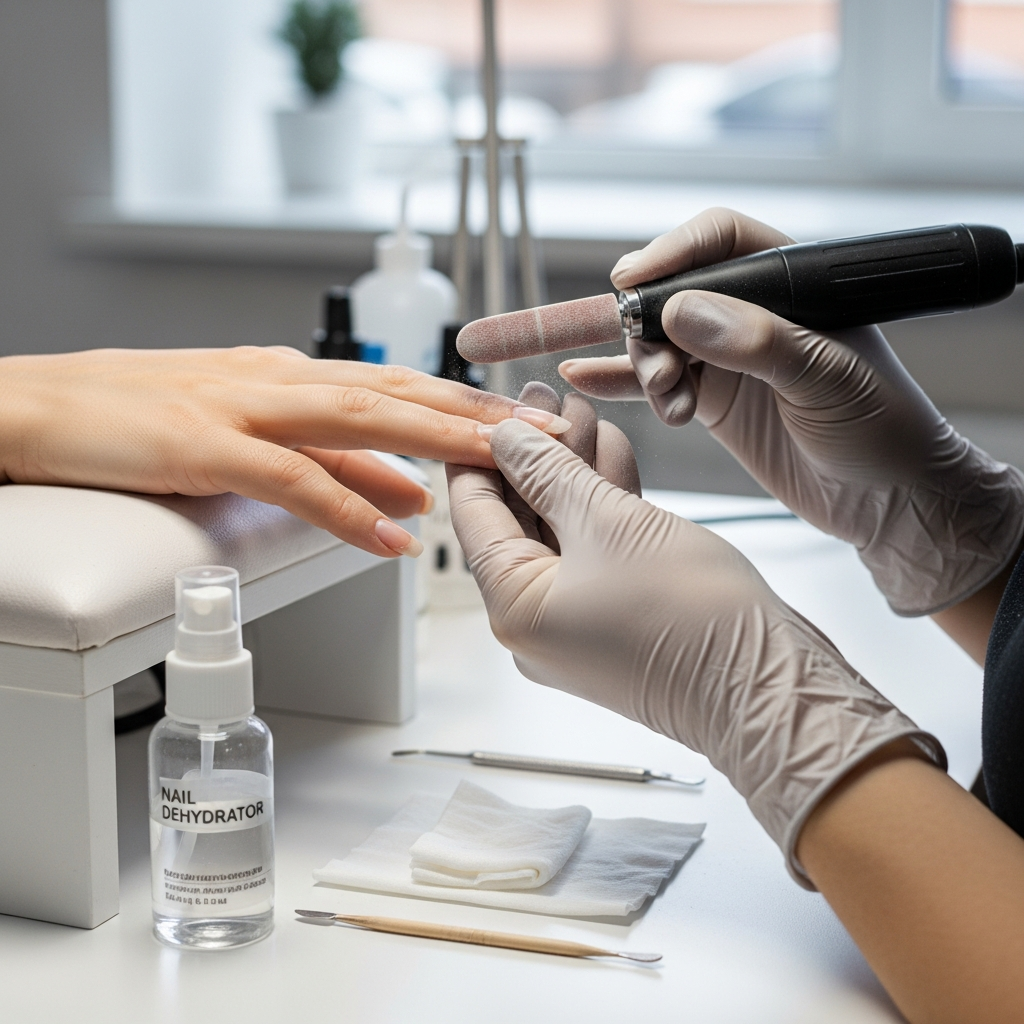
Technicians use a fine-grit sanding band or a manual pusher to gently exfoliate the surface. This creates a textured “key” on the nail plate, allowing the enhancement product to anchor securely.
Avoid over-filing the natural nail layers, as thinning the plate reduces structural integrity. A light buffing to remove the natural shine is sufficient for most professional systems.
Chemical Dehydration and PH Balancing
After mechanical prep, the nail must be chemically cleansed to remove dust, oils, and moisture. Isopropyl alcohol or specialized nail cleansers are standard for this stage.
A professional dehydrator is then applied to temporarily remove moisture from the upper layers of the nail plate. This creates an ideal environment for chemical bonding agents.
Primers or protein bonds act as a double-sided adhesive. Acid-based primers etch the nail for acrylics, while acid-free primers work as a sticky layer for gel systems.
Safety and Precision in Technique
Maintaining the health of the natural nail is paramount during the prep phase. Technicians must ensure that no product touches the surrounding skin or eponychium.
Product touching the skin causes a “bridge” that leads to immediate lifting. Precision application ensures the nail enhancement remains sealed at the proximal nail fold.
- Use a 180-grit file for shaping and surface prep.
- Always use lint-free wipes to prevent debris contamination.
- Ensure the sidewalls are completely clear of dust before application.
Optimizing Retention for Different Systems
Gel systems require a perfectly smooth, oil-free surface to prevent peeling. Acrylic systems require a slightly more textured surface to facilitate a strong mechanical bond.
Dip powder services benefit from meticulous cuticle clearing to prevent the base resin from flooding the cuticle area. Proper nail prep directly impacts the service lifespan.
Consistently following these professional protocols ensures that every nail service meets industry standards for durability and client safety.
