Preventing Gel Nail Lifting Through Professional Technique
Gel nail lifting is the separation of professional gel products from the natural nail plate, often caused by improper preparation or application. To ensure maximum nail retention, technicians must thoroughly remove non-living tissue, dehydrate the nail surface, and apply product in thin, even layers while avoiding any contact with the surrounding skin or cuticle.
The Foundation of Nail Plate Preparation
Successful gel retention begins with a meticulous dry manicure. The presence of oils or moisture on the natural nail is the leading cause of service breakdown.
Removing the True Cuticle
Technicians must differentiate between the eponychium and the true cuticle. The true cuticle is the non-living tissue attached directly to the nail plate.
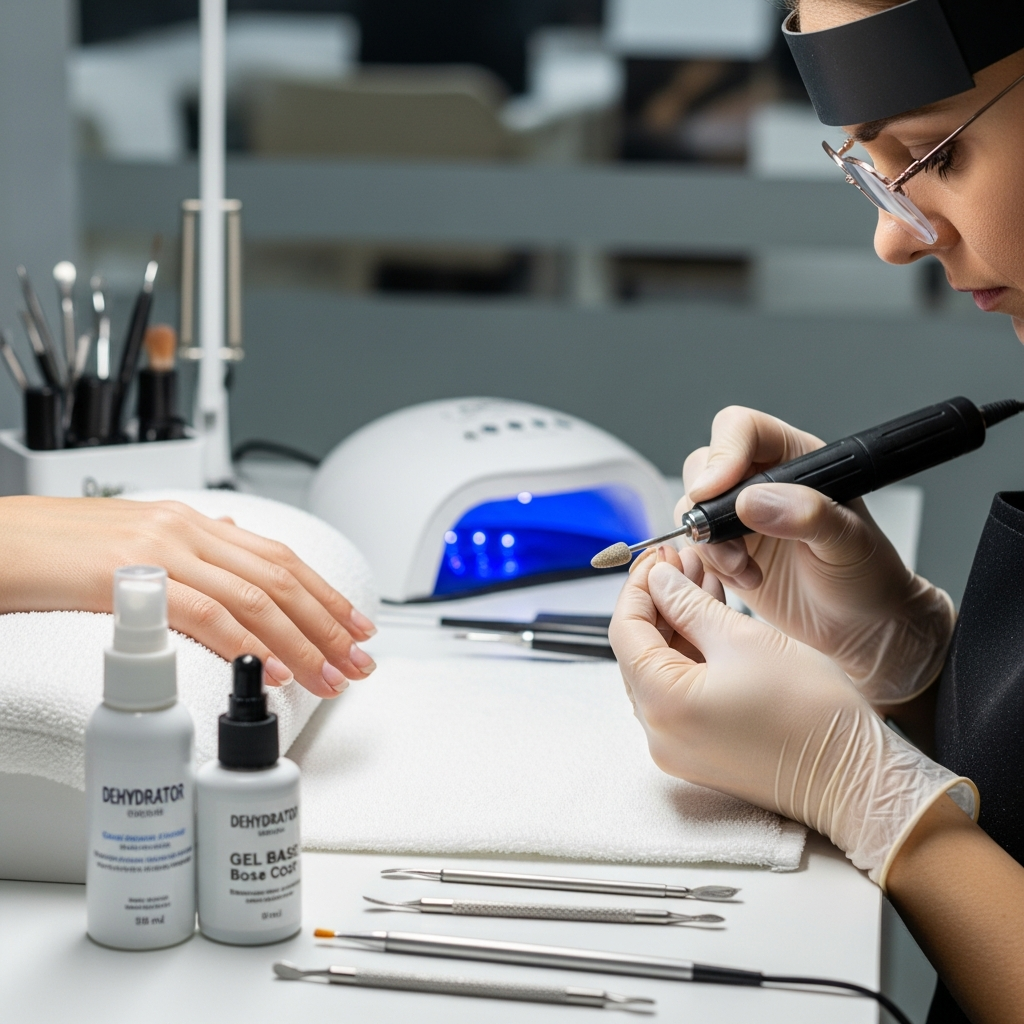
Using a professional pusher or a diamond bit, gently clear this tissue. Any leftover cuticle will prevent the gel from bonding to the nail surface.
Surface Dehydration and Cleansing
After mechanical preparation, the nail plate must be chemically cleansed. Use a lint-free wipe saturated with 90% isopropyl alcohol or a dedicated dehydrator.
This step removes surface dust and temporary oils. Avoid touching the nail with your own fingers after this process to prevent re-contamination.
Advanced Application for Maximum Durability
The way a technician handles the brush determines the structural integrity of the service. Thin, controlled layers are superior to thick applications.
The Importance of Capping the Free Edge
Every layer of gel must be “capped” along the free edge of the nail. This seals the product and prevents shrinkage during the polymerization process.
Failure to cap the edge often results in premature chipping. This is especially critical for clients who use their hands frequently in high-impact environments.
Managing the Side Walls
Gel polish should never touch the lateral folds or the proximal nail fold. If the product floods these areas, it creates a ledge as the nail grows.
This ledge is a common entry point for moisture and debris. Use a fine detail brush to clean the perimeter before the nail enters the curing lamp.
Troubleshooting Common Technical Errors
If lifting occurs at the free edge, it usually indicates improper capping or heavy-handed filing. Ensure the nail is filed smoothly before application.
Lifting at the cuticle area suggests that the nail plate was not cleaned thoroughly. It may also indicate that the product was applied too close to the skin.
Check the strength of your curing lamp bulbs regularly. Inadequate curing leaves the bottom layers of the gel soft, leading to immediate nail service failure.
