How to Prevent Nail Lifting in Professional Services
Nail lifting is the separation of an enhancement from the natural nail plate, usually caused by improper surface preparation or product application errors. To eliminate lifting, technicians must thoroughly remove pterygium, dehydrate the nail plate, and apply professional primers while ensuring that gel or acrylic products never touch the skin or cuticle area.
Mechanical Preparation of the Nail Plate
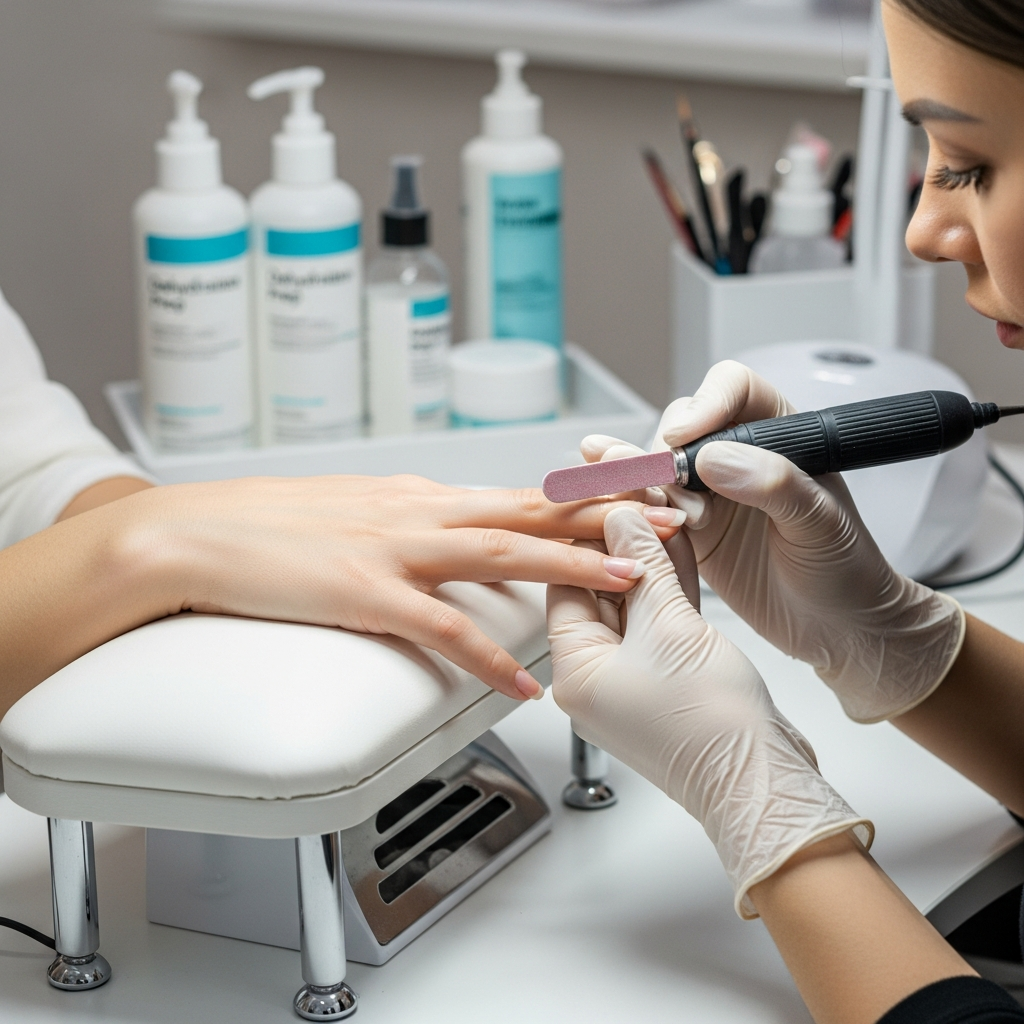
Proper mechanical preparation is the first step in ensuring product adhesion. Technicians must use a 180-grit file or a fine-grit e-file bit to gently remove the shine from the entire nail surface.
Removing the shine creates a porous surface that allows the product to anchor securely. Focus specifically on the lateral folds and the proximal nail fold where oil often remains trapped.
Thoroughly clearing the pterygium—the thin layer of skin attached to the nail—is critical. Any skin left on the plate will cause the nail enhancement to lift within days.
Chemical Dehydration and pH Balancing
After mechanical filing, the nail plate must be chemically cleaned to remove surface oils and moisture. A professional-grade dehydrator temporarily alters the pH of the natural nail for better bonding.
Apply a pH balancer followed by a primer tailored to the specific product line being used. Acid-free primers act as double-sided tape, creating a chemical bond between the natural keratin and the enhancement.
Avoid touching the nail plate with your own fingers after dehydration. Even a small amount of oil from the technician’s skin can compromise the integrity of the nail service.
Precision Application to Avoid Skin Contact
Product application requires a “tiny margin” technique to prevent lifting. Ensure there is a hair-thin gap between the product—whether gel, acrylic, or dip—and the surrounding soft tissue.
When product touches the cuticle or side walls, it creates a ledge as the nail grows. This ledge is easily snagged, leading to mechanical lifting and potential moisture entrapment.
Use a clean brush dipped in alcohol or monomer to wipe away any accidental contact before curing. Maintaining a thin application at the cuticle area ensures a seamless transition as the enhancement grows out.
Common Mistakes Leading to Service Failure
- Incomplete Dust Removal: Residual dust acts as a barrier between the nail and the product.
- Over-filing: Thinning the nail plate too much makes it flexible, causing rigid products to pop off.
- Expired Products: Using old monomers or gels can lead to improper polymerization and weak bonds.
- Improper Curing: Using a lamp with incompatible wavelengths prevents the nail product from hardening fully.
Managing High-Moisture Clients
Some clients have naturally oily or “wet” nail plates that require extra attention. For these individuals, a double application of dehydrator is often necessary before the primer step.
Advise clients to avoid water exposure for at least one hour before their appointment. Saturated nail plates expand and then shrink after the service, which is a primary cause of early lifting.
