Managing Nail Salon Operations for Maximum Consistency
Nail salon operations involve the systematic management of daily workflows, staff scheduling, and service protocols to ensure consistent quality across all technicians. Effective management relies on standard operating procedures (SOPs) that govern everything from sanitation to application techniques, ensuring every client receives the same professional nail service level.
Developing Standard Operating Procedures for Nail Technicians
Consistency is the foundation of a successful nail salon. Without standard operating procedures, clients receive different results depending on which technician they see, which undermines the salon brand.
Every nail service must follow a documented sequence. This includes the preparation of the natural nail plate, specific product application amounts, and standardized finishing steps for every manicure or pedicure.
Standardizing these steps ensures that the wear-time of gel or acrylic services remains predictable. It also helps management identify precisely where a technician may need additional technical training.
Sanitation and Station Setup Protocols
Operational excellence begins with a clean workspace. Technicians must follow a strict checklist for disinfecting implements and cleaning the nail station between every client according to state board regulations.
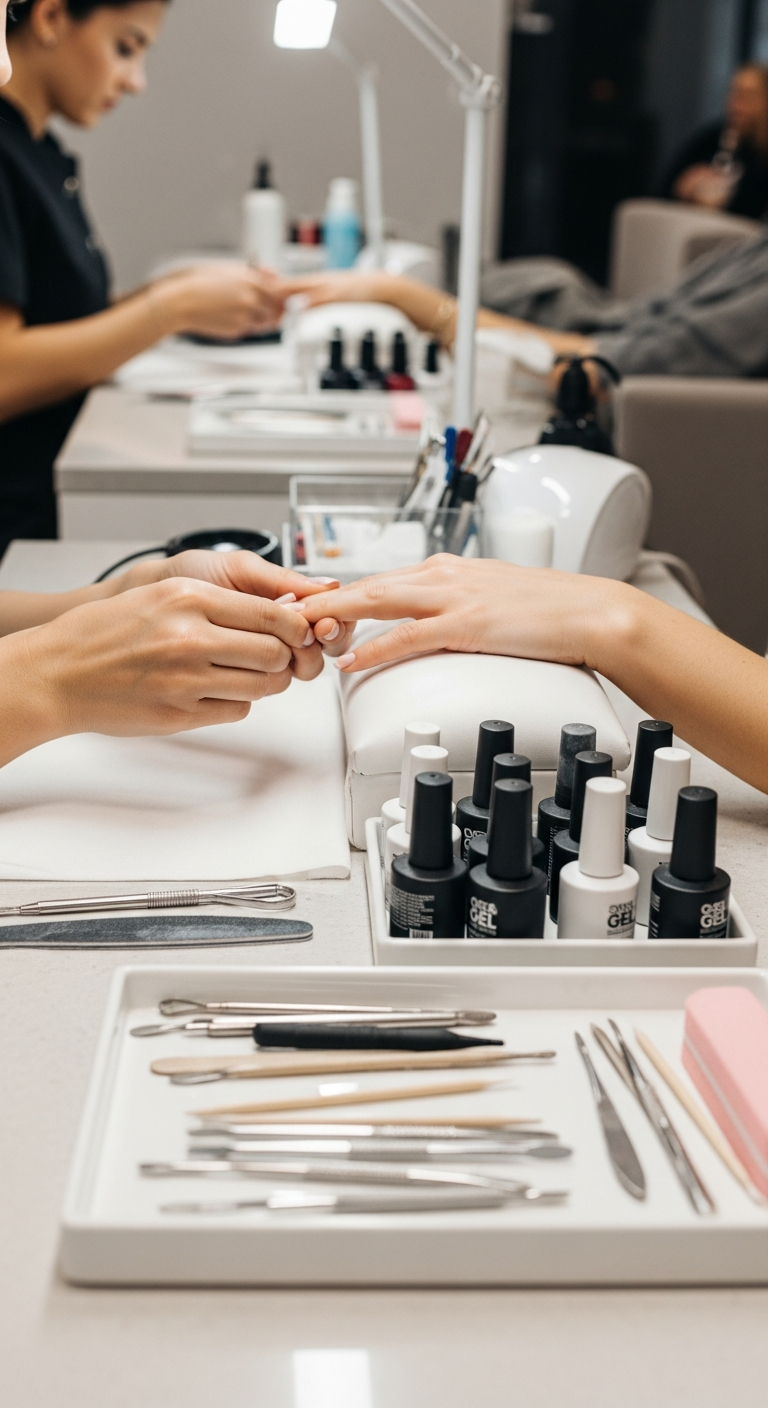
A standardized station setup reduces the time spent looking for files, buffers, or monomers. When every station is organized identically, nail technicians can work more efficiently and maintain a professional appearance.
Effective Staff Scheduling and Workflow Management
Managing the daily flow of a nail salon requires balancing walk-in traffic with scheduled appointments. Proper scheduling prevents technician burnout and ensures that the salon floor remains productive.
Staff schedules should reflect peak hours and the specific skill sets of the nail technicians. Assigning more complex nail art or enhancement services to senior staff maximizes efficiency and customer satisfaction.
Managing Station Rotation and Break Times
Internal workflows must include fair station rotation and designated break times. This prevents certain nail technicians from being over-utilized while others remain idle, which helps maintain staff morale.
Clear communication regarding the daily lineup ensures that every nail professional knows their responsibilities. This includes side-work such as restocking polish racks or organizing the pedicure area during downtime.
Revenue Tracking and Supply Cost Control
Operational management requires a deep understanding of the relationship between service time and material costs. High-quality nail products represent a significant portion of a salon’s monthly overhead.
Tracking the usage of consumables like monomer, polymer, and gel polishes helps prevent waste. Over-application of product not only increases costs but can also lead to service failures like lifting or peeling.
Monitoring Service Timing and Performance
Revenue growth depends on technicians meeting specific timing benchmarks for each nail service. If a full set of acrylics takes too long, it reduces the number of clients a station can handle per day.
Management must monitor these performance metrics regularly. Providing feedback based on data allows the salon to optimize its capacity and ensure that every nail tech contributes to the salon’s financial health.
