How to Prevent Nail Lifting: Professional Technical Guide
Nail lifting is the separation of an enhancement from the natural nail plate, typically caused by improper preparation or application. To prevent lifting, technicians must perform thorough cuticle removal, dehydrate the nail plate, and ensure product does not touch the surrounding skin or proximal nail fold during the service.
The Critical Role of Mechanical Preparation
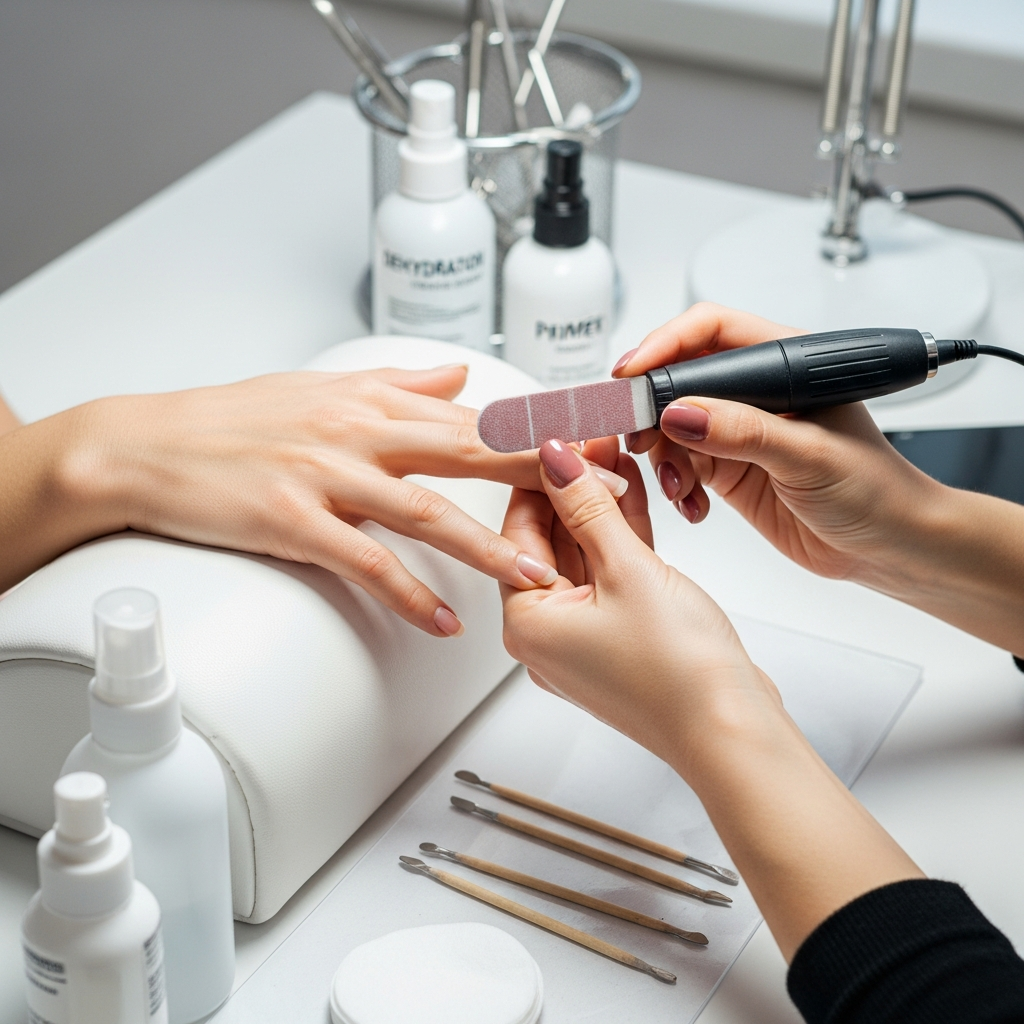
Mechanical preparation is the foundation of long-term nail enhancement retention. This process involves the physical removal of non-living tissue from the nail plate using professional tools.
Technicians must focus on removing the pterygium, which is the thin layer of skin that adheres to the nail surface. If any tissue remains, the gel or acrylic will bond to the skin instead of the keratin, causing immediate lifting.
Using a fine-grit sanding band or a hand file, the technician should gently remove the shine from the natural nail. This creates a surface texture that allows for a mechanical bond between the natural nail and the product.
Chemical Dehydration and pH Balancing
After mechanical prep, chemical preparation ensures the nail plate is free of oils and moisture. Natural oils are the most common cause of product failure in the professional salon environment.
A professional dehydrator should be applied to the entire nail surface to temporarily remove moisture. This step is essential for clients with oily nail plates or hyperhidrosis, which can compromise the bond.
Following dehydration, a primer or bonding agent creates a chemical bridge. Depending on the product system, acid-free primers act like double-sided tape, while acid primers etch the surface for maximum adhesion.
Precision Product Application and Margins
Proper application technique requires a strict margin between the product and the soft tissue. Over-application is a leading cause of service breakdown and client dissatisfaction.
- Leave a Tiny Gap: Always maintain a hairline gap between the product and the proximal nail fold.
- Thin Margins: Ensure the product is tapered toward the cuticle area to prevent a thick ledge.
- Side Wall Clearance: Avoid touching the lateral folds, as product on the skin will pull away as it cures.
Structural Integrity and Apex Placement
The structure of the nail enhancement determines its durability under daily stress. A missing or misplaced apex leads to leverage issues that force the product to lift at the back.
The apex should be positioned over the stress area to absorb impact. If the enhancement is too thin at the stress point, the natural nail will flex, causing the rigid product to crack or delaminate.
Consistency in thickness is vital for balance. Technicians should regularly check the profile of the nail to ensure the architecture supports the length of the enhancement and the client’s lifestyle.
Troubleshooting Common Technical Errors
If lifting occurs at the free edge, it often indicates the technician failed to seal the edge correctly. Capping the free edge with product protects the bond from water and environmental exposure.
Internal lifting in the center of the nail plate usually points to improper curing or contaminated products. Technicians must ensure their lamps are functioning correctly and that the nail plate was fully cleaned.
Consistent service results require a disciplined approach to every step. By mastering prep and application, professional technicians ensure high retention rates and maintain the health of the natural nail.
