How to Prevent Nail Lifting Through Proper Prep and Application
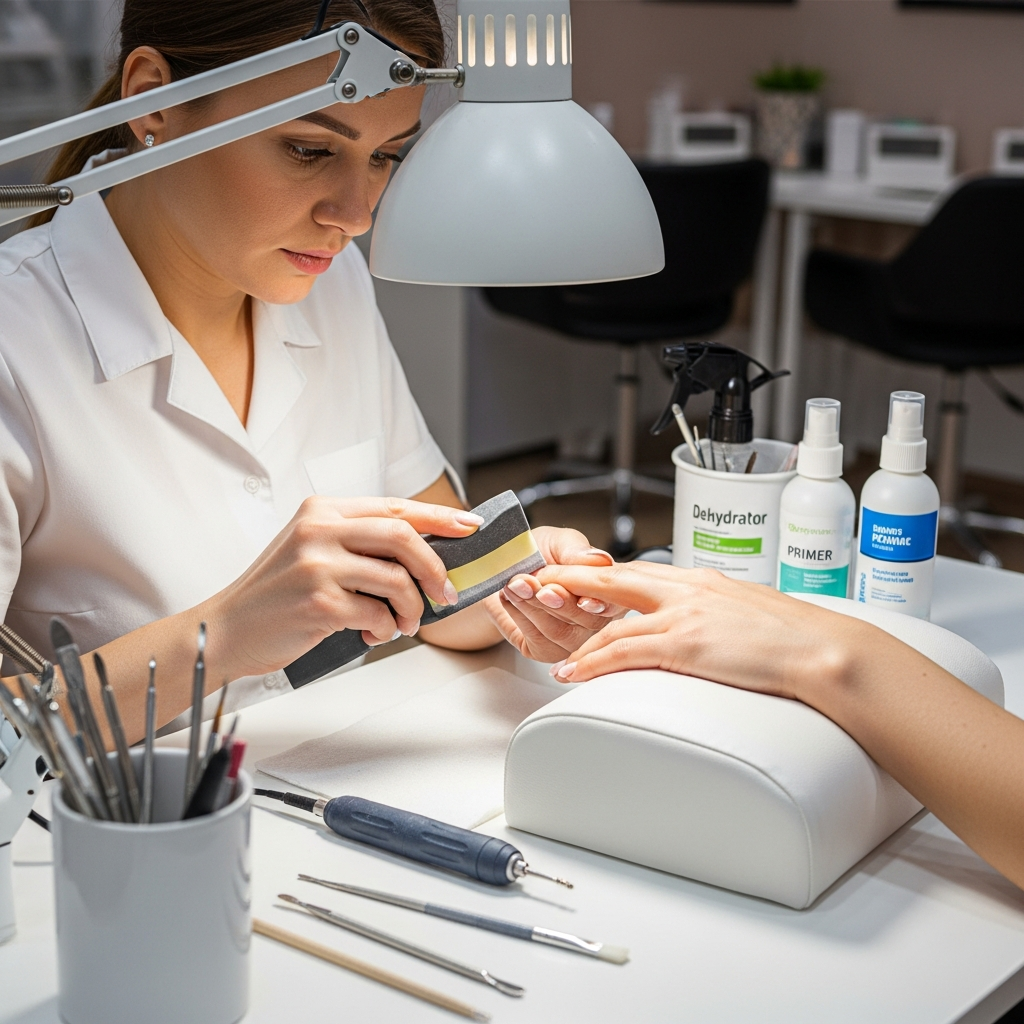
To prevent nail lifting, a technician must perform thorough mechanical and chemical preparation of the natural nail plate. This involves removing the non-living tissue from the nail surface, dehydrating the plate, and applying a high-quality primer or bonder to ensure the enhancement material creates a permanent bond with the keratin.
The Importance of Mechanical Nail Preparation
Proper mechanical preparation is the foundation of any long-lasting nail service. Technicians must focus on removing the true cuticle from the nail plate using a pusher or specialized e-file bits.
Any remaining non-living tissue acts as a barrier between the nail and the product, leading to early separation. Use a 180-grit file or buffer to gently remove the surface shine and open the keratin cells.
Careful attention to the lateral folds and the proximal nail fold area is essential. Dust must be thoroughly removed using a stiff manicure brush before moving to the chemical stage.
Chemical Dehydration and pH Balancing
After mechanical prep, the nail plate must be free of oils, moisture, and contaminants. A professional-grade dehydrator removes surface oils that naturally accumulate on the nail.
Applying a pH balancer ensures the nail surface is at the optimal acidity for product adhesion. This step is critical for clients with naturally oily nail plates or high moisture levels.
Avoid touching the nail plate with your own fingers after cleaning it. Any transfer of oils will immediately compromise the bond of the gel or acrylic system.
Precision Product Application Techniques
Maintaining a Clean Margin
The most common cause of nail lifting is product touching the skin or flooding the cuticle area. Always leave a tiny “hairline” gap between the enhancement and the surrounding tissue.
If product touches the skin, it creates a ledge that will eventually pull away as the nail grows. Use a clean-up brush dipped in alcohol or monomer to rectify any flooding before curing.
Building Proper Nail Structure
Incorrect apex placement causes unnecessary stress on the free edge, leading to cracks and lifting. Ensure the highest point of the nail enhancement is over the stress area.
A balanced structure supports the weight of the extension and protects the natural nail. Proper thickness at the sidewalls and a tapered free edge prevent the product from “leveraging” off the plate.
Environmental and Safety Factors
Ensure the nail service environment is controlled for temperature and humidity. Extreme conditions can affect the polymerization of acrylic monomers and the curing of gel products.
Verify that your curing lamp is compatible with your specific gel system to ensure a full cure. Under-cured product is a leading cause of both lifting and client sensitivities.
Always follow the manufacturer instructions for flash-curing and full-curing times. Consistency in technical execution ensures safety and retention for every client.
