
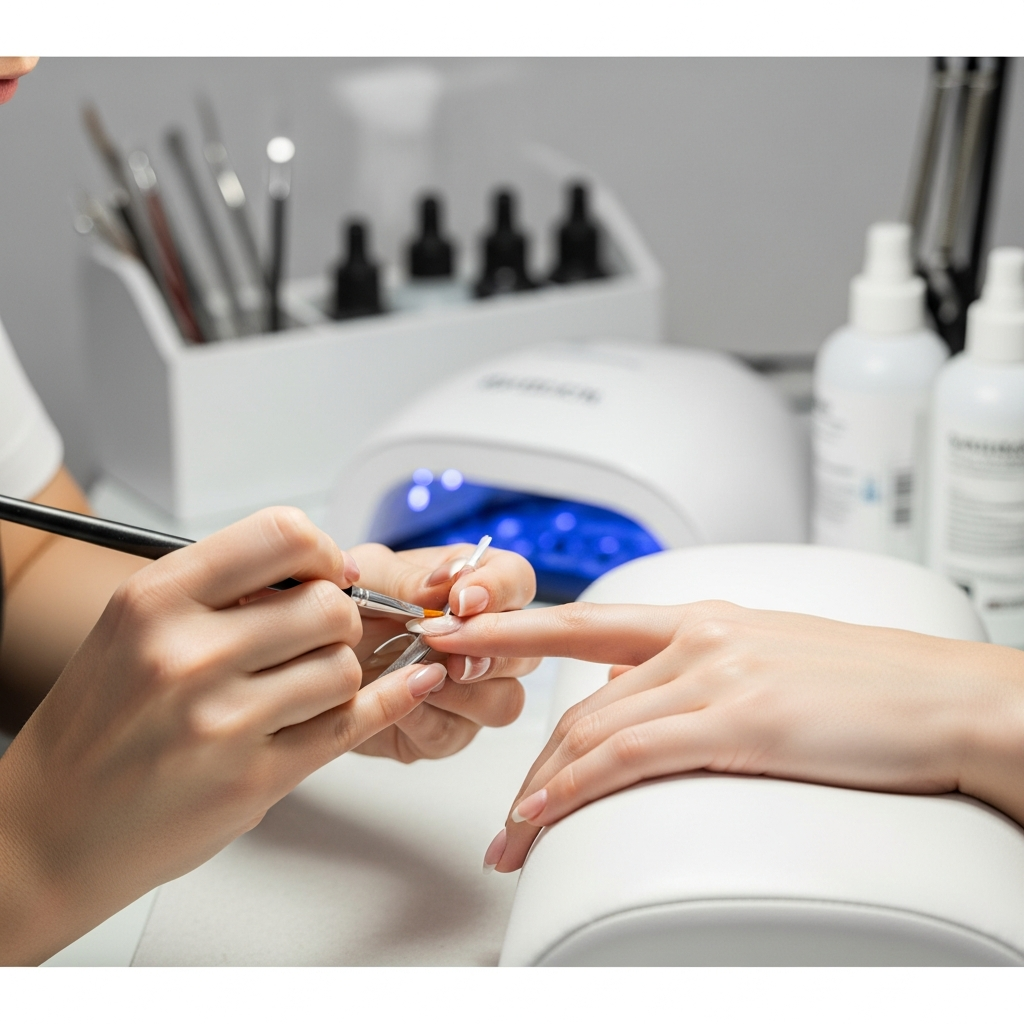
Perfecting Nail Apex Placement for Structural Integrity
A nail apex is the highest point of a nail enhancement, strategically placed over the stress area to provide structural support. Proper apex positioning absorbs impact and prevents the enhancement from snapping or lifting. It ensures the nail remains balanced as it grows out, maintaining the durability of gel, acrylic, or builder gel applications.
Understanding the Stress Area and Apex Mechanics
The stress area is the point on the natural nail plate most susceptible to breakage under pressure. This is typically located where the free edge meets the nail bed.
Placing the bulk of the product—the apex—directly over this zone creates a fulcrum. This balance allows the nail to withstand daily wear without putting excessive strain on the matrix.
As the natural nail grows, the apex moves forward toward the free edge. Professional technicians must account for this growth by positioning the initial apex slightly further back.
The 1/3 Rule for Enhancement Balance
For most salon-length extensions, the apex should be situated in the back third of the nail body. This provides a slim profile at the cuticle while reinforcing the center.
On longer stiletto or coffin shapes, the apex requires more height and a more centered position. This prevents the added weight of the tip from causing a painful snap.
Technical Steps for Building a Proper Apex
Building a smooth, structural apex requires controlled product placement and an understanding of viscosity. The technique varies slightly between medium-viscosity gels and traditional acrylic monomers.
When working with builder gel, use a “bead and bridge” method to float the product. Gravity can assist in leveling the apex if the hand is momentarily turned over.
For acrylic applications, the second bead is usually the “structure bead.” Place it at the center of the nail and taper it toward the sidewalls and cuticle area.
Application Techniques for Gel vs. Acrylic
- Gel Apex Construction: Use a liner brush to pull a small amount of gel from the highest point toward the side walls for a seamless transition.
- Acrylic Apex Control: Use the belly of the brush to press and pat the product, ensuring the thickest point remains over the stress zone.
- Refinement Filing: Use a 180-grit file to check the profile view, ensuring there are no flat spots or excessive humps that compromise the look.
Common Structural Failures and Corrections
Flat nails are the most common cause of premature service breakdown. Without an apex, the enhancement lacks the strength to resist bending, leading to vertical cracks or “pocket lifting.”
Overbuilding the apex is equally problematic as it creates a bulky, unnatural appearance. Excessive product at the cuticle can also lead to irritation and lifting within 48 hours.
Troubleshooting Flat or Overbuilt Nails
If the nail appears flat after curing or setting, add a small “reinforcement bead” to the stress area. Blend it carefully into the existing structure before final filing.
For overbuilt nails, use an e-file with a medium-grit carbide bit to thin the product. Focus on the longitudinal arch to restore a natural, slender professional silhouette.
