Mastering Professional E-File Nail Prep for Maximum Retention
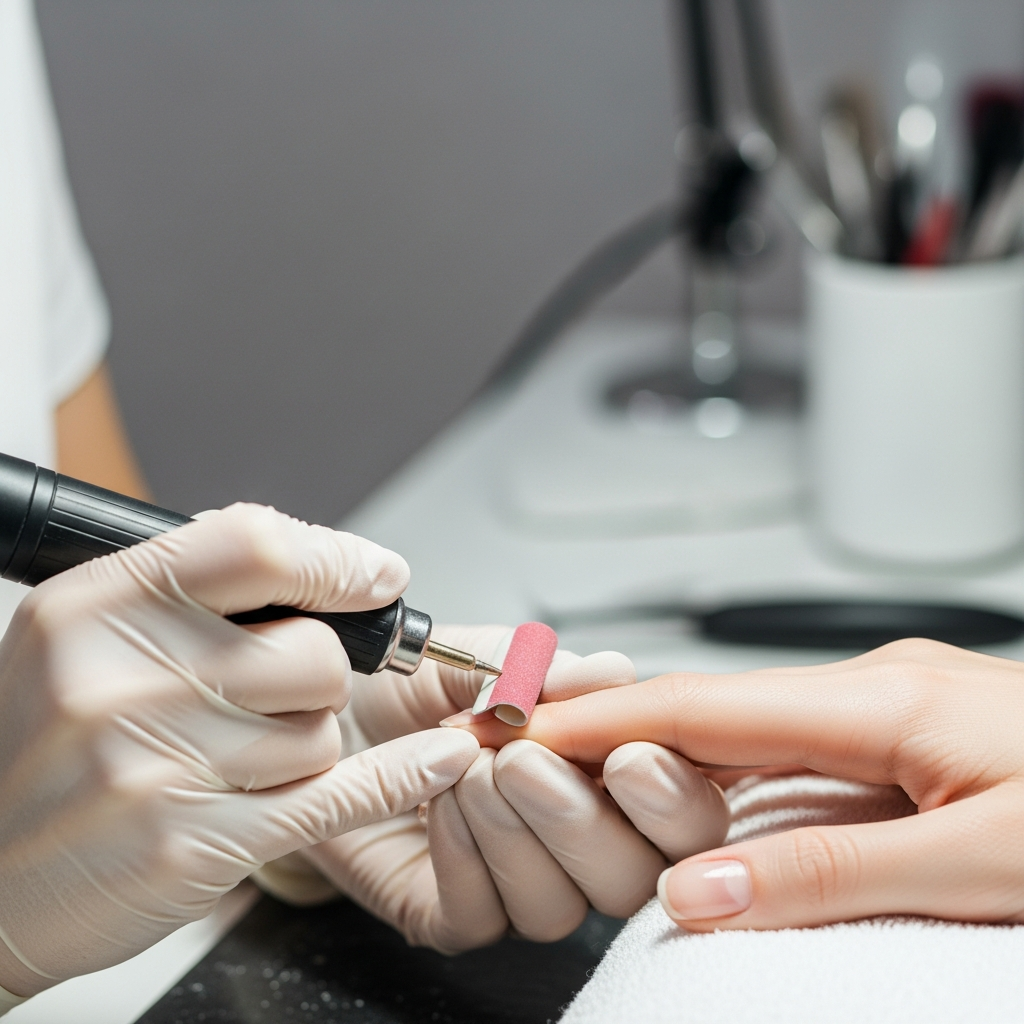
Professional nail prep involves using an electronic file to remove non-living tissue from the nail plate and refine the surface for product adhesion. This precise mechanical exfoliation creates a clean foundation, preventing lifting and ensuring long-term durability for gel, acrylic, and dip services while maintaining the health of the natural nail.
The Importance of Precise Mechanical Prep
Achieving a long-lasting nail enhancement starts with the complete removal of the cuticle from the nail plate. Even microscopic traces of non-living tissue can cause product lifting within days of service.
Using an e-file allows a nail technician to reach the tight areas of the lateral folds and the proximal nail fold. This level of precision is difficult to achieve with manual hand files alone.
Essential E-File Bits for Professional Execution
Selecting the correct diamond bit is critical for safety and efficiency. A fine-grit flame bit is the industry standard for cleaning the nail plate and lifting the cuticle area.
Sanding bands with a 180-grit or 240-grit texture are used to gently remove the natural shine. This step opens the keratin scales of the nail plate, allowing the base product to bond securely.
Safety bits with rounded tops prevent accidental cuts to the client’s surrounding skin. These are essential when working near the delicate hyponychium or the lateral sidewalls of the nail.
Step-by-Step E-File Prep Workflow
1. Pushing Back the Proximal Fold
Use a sterilized pusher to gently lift the skin away from the nail plate. This creates a clear path for the e-file bit to enter the pocket without causing friction burns.
2. Cleaning the Lateral Folds
Set the e-file to a low RPM, typically between 3,000 and 5,000. Use the flame bit in a flat position to sweep away debris from the nail grooves and corners.
3. Removing Surface Shine
Switch to a mandrel with a high-grit sanding band. Move the e-file in one direction across the nail plate using extremely light pressure to avoid creating heat spikes or thinning the nail.
Avoiding Common Technical Prep Mistakes
One frequent error is using an incorrect angle, which can lead to “rings of fire” or deep grooves in the nail plate. Always keep the bit parallel to the nail surface.
Excessive speed is another common issue that causes client discomfort. Lower RPMs provide better control and ensure the nail technician does not over-file the natural plate.
Inconsistent dust removal can also compromise retention. Always use a stiff nylon brush to clear all debris from the nail surface before applying primers or dehydrators.
