Advanced Nail Prep Techniques to Prevent Lifting
Proper nail preparation is the foundation of every long-lasting service.
Without a clean, oil-free surface, even high-quality products will fail.
Technicians must focus on removing surface oils and debris effectively.
Removing the True Cuticle Safely
The true cuticle is the dead tissue attached to the nail plate.
Failing to remove this transparent skin is the leading cause of lifting.
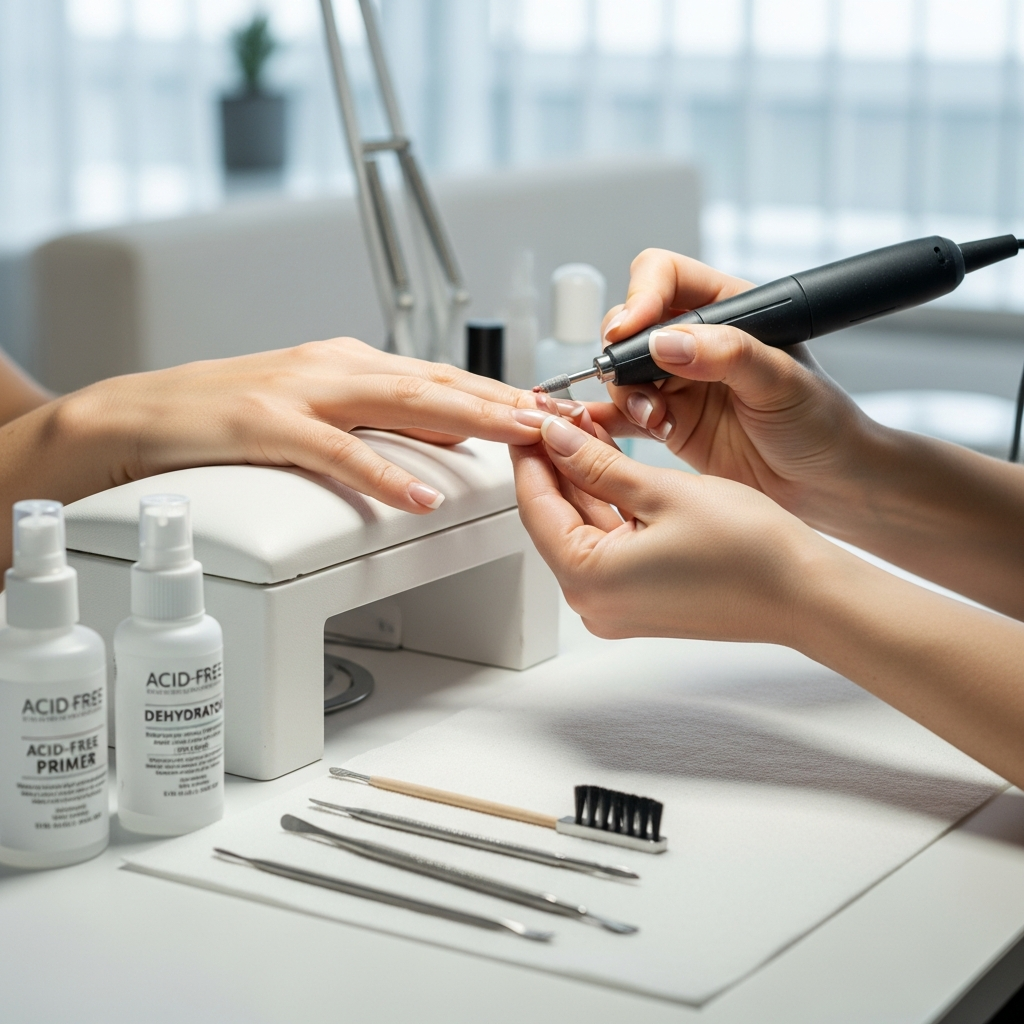
Use a professional pusher or E-file bit at a low RPM for precision.
Gently push back the proximal nail fold to reveal the hidden pterygium.
Use a specialized bit to clear the lateral side walls and corners.
A clean nail plate ensures the product bonds directly to the keratin.
Optimal Grit Selection for Nail Buffing
Using a 180-grit file creates the necessary texture for product adhesion.
Avoid over-buffing, which thins the natural nail and weakens the bond.
Lightly etch the surface in a single direction for the best results.
High-shine buffers should never be used before a professional gel or acrylic application.
Smooth surfaces prevent the product from anchoring to the nail plate.
Always ensure the free edge is free of any ragged keratin fibers.
The Role of pH Balancing and Primers
Apply a professional nail dehydrator to remove residual moisture.
This step temporarily alters the pH of the nail to favor chemical bonding.
Wait for the surface to appear chalky and white before moving forward.
Follow with an acid-free primer to create a double-sided adhesive bond.
Ensure the primer does not touch the surrounding skin or soft tissue.
Correct application prevents irritation and keeps the product localized.
Common Technical Mistakes to Avoid
- Touching the nail plate: Never touch the nail after dehydration.
- Incomplete cleaning: Ensure all dust is removed with a stiff brush.
- Product flooding: Keep gel or acrylic away from the sidewalls.
- Washing hands: Avoid water contact immediately before a service.
Maintaining Structural Integrity
The nail must be structurally sound to support the weight of extensions.
Check for any delamination or peeling of the natural nail layers.
Damaged areas must be carefully blended or repaired before product application.
Consistency in these steps leads to superior retention for every client.
Mastering the prep phase reduces the need for frequent repairs.
Professional execution reflects your technical skill and industry knowledge.
