Mastering Nail Adhesion: Professional Prep and Application
Professional nail lifting is prevented by performing meticulous cuticle removal, thorough surface dehydration, and precise product application that avoids contact with the skin. Proper nail preparation ensures a clean, oil-free surface for maximum adhesion, significantly improving the longevity and durability of gel, acrylic, and builder gel enhancements in a salon environment.
Essential Mechanical Nail Preparation
The foundation of every service is the mechanical removal of the true cuticle.
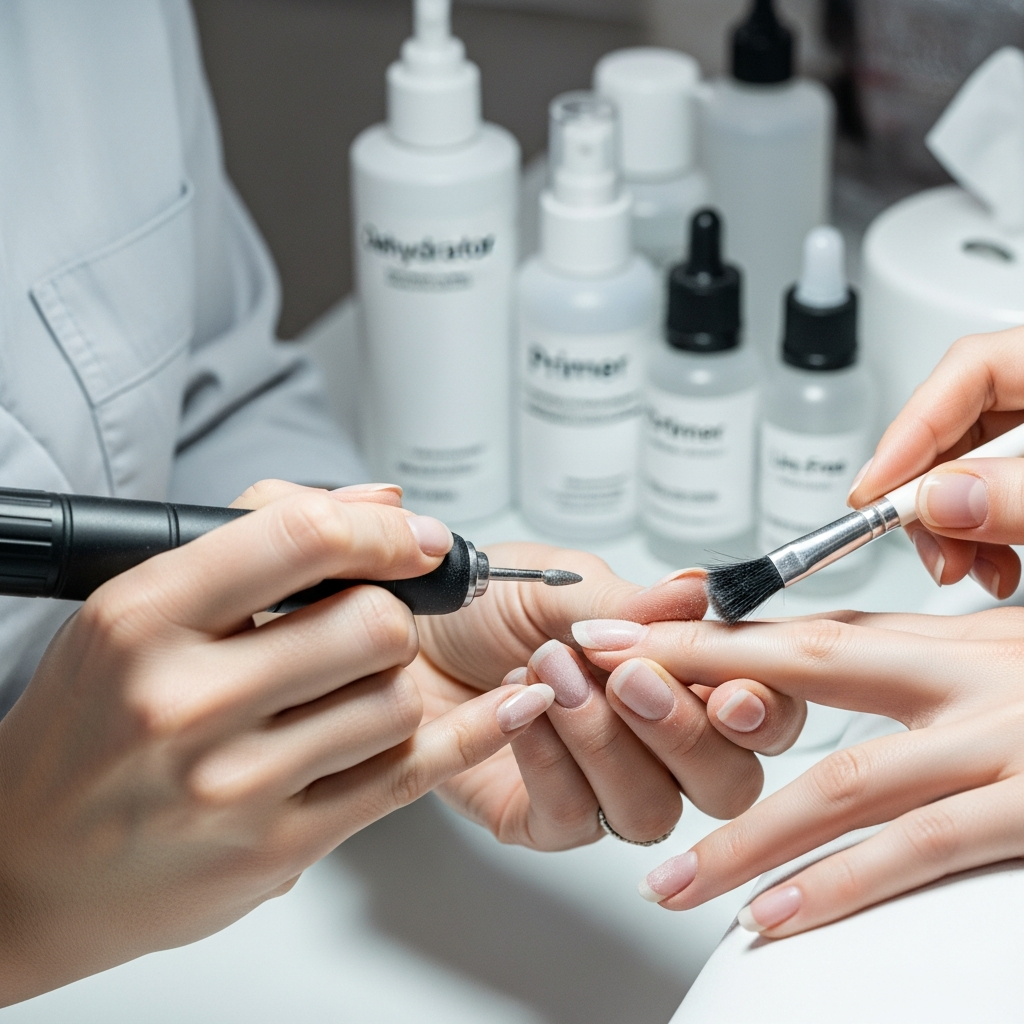
Using a professional e-file with a fine diamond bit or a sterilized pusher is critical.
Remaining pterygium on the plate is the primary cause of product separation.
Gently remove the natural shine from the nail surface using a high-grit buffer or file.
Over-filing thins the plate and weakens the bond, leading to flexibility-related lifting.
The goal is to create a slightly textured surface for the product to anchor to.
Eliminating Surface Contaminants
Remove all dust particles using a lint-free wipe and 90% isopropyl alcohol.
Residual dust acts as a barrier between the nail plate and the enhancement.
Ensure the lateral folds and proximal nail fold areas are completely clean.
Chemical Dehydration and Priming Steps
Apply a professional-grade dehydrator to remove surface moisture and natural oils.
The nail plate should appear chalky white, indicating a temporary state of dehydration.
This step is vital for clients with hyperhydrosis or oily nail beds.
Follow dehydration with an acid-based or non-acid primer depending on the system.
Primer acts as double-sided tape, creating a chemical bond between the keratin and the product.
Apply primer sparingly to avoid flooding the soft tissue or causing chemical burns.
Precision Product Application Techniques
Maintain a small margin between the product and the surrounding skin or cuticle.
Nail enhancements that touch the skin will inevitably lift as the product cures or grows.
Use a thin liner brush to refine the edges around the proximal nail fold.
The Importance of Capping the Free Edge
Seal the free edge by running the brush along the very tip of the natural nail.
This prevents moisture and oils from seeping under the enhancement from the front.
Capping is essential for gel polish and builder gel to maintain structural integrity.
Identifying and Correcting Technical Mistakes
If lifting occurs at the cuticle, the issue is usually inadequate mechanical preparation.
Lifting at the free edge often indicates a failure to cap or improper filing.
Bubbles within the product can also cause internal fractures and eventual delamination.
Analyze the wear pattern of the nail enhancement during the maintenance appointment.
Professional technicians must adjust their prep routine based on individual client chemistry.
Consistent results require a balance of thorough cleaning and careful product placement.
