Nail Salon Operations and Service Standard Protocols
Nail salon operations involve standardizing service workflows and sanitation protocols to ensure consistent quality across every appointment. A professional nail salon relies on documented procedures to manage technician performance, chemical safety standards, and client scheduling, ultimately protecting the business’s reputation and revenue stability in the competitive U.S. market.
Standardizing the Nail Service Workflow
Establishing a uniform process for every nail service prevents variations in quality that drive clients away. This begins with a mandatory technician checklist that covers everything from station preparation to the final top coat application.
Standard operating procedures (SOPs) must define the exact steps for nail preparation, including cuticle work and dehydrator application. When every technician follows the same technical sequence, the salon reduces the risk of lifting or premature chipping.
Pre-Service Setup and Sanitation
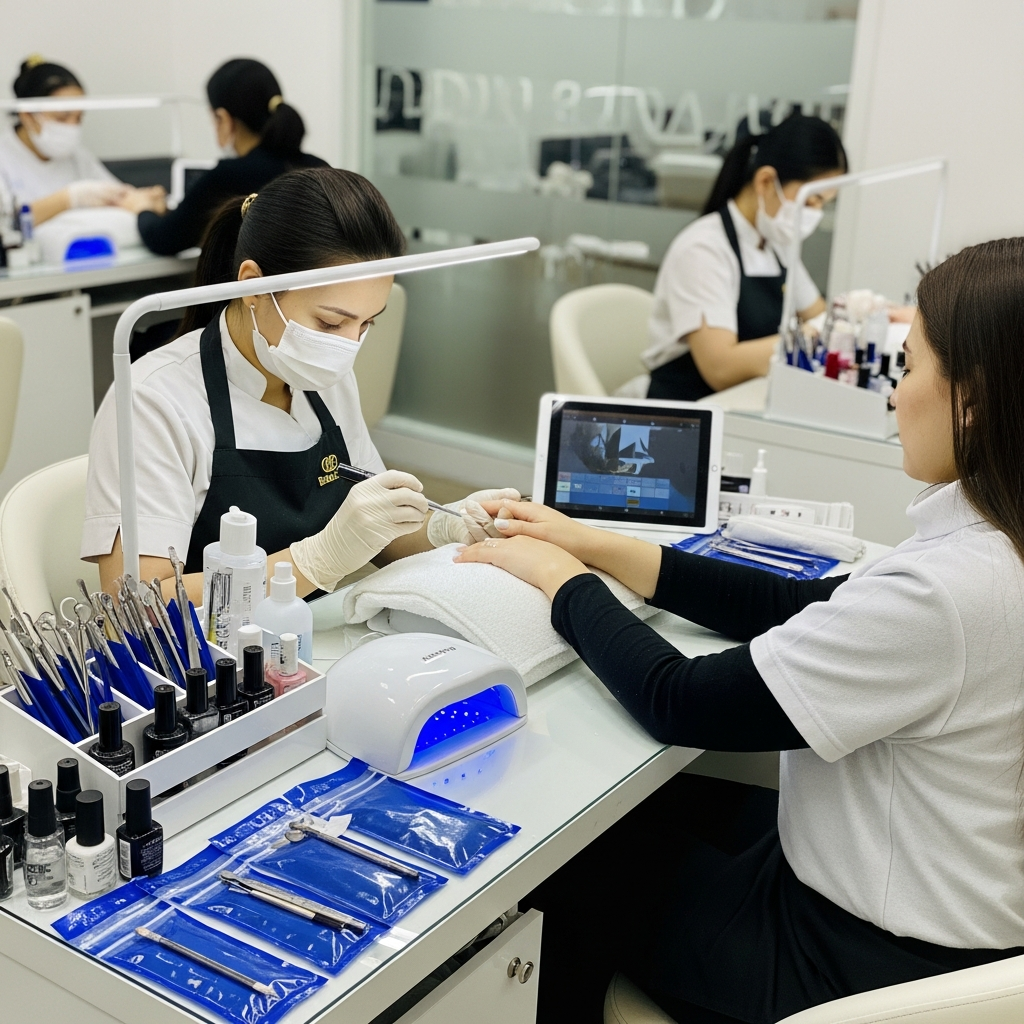
- Station Disinfection: Every nail table must be cleaned with an EPA-registered hospital-grade disinfectant between clients.
- Tool Readiness: Technicians must use sealed pouches containing sterilized metal pushers, nippers, and clean drill bits for each service.
- Personal Protective Equipment: Professional standards require technicians to wear fresh gloves and masks to mitigate dust and chemical exposure.
Technical Execution and Timing Controls
Nail salon profitability depends on precise timing for services like full sets, fill-ins, and gel manicures. Management should set time benchmarks, such as sixty minutes for a standard gel polish service including removal.
Implementing a strict protocol for E-file usage ensures safety and efficiency across the floor. Technicians should follow a specific rotation speed and bit sequence to maintain natural nail integrity while maximizing speed.
Managing Nail Technician Performance Standards
Consistent service delivery requires active oversight of the technical staff. Management must conduct regular skill assessments to ensure every technician meets the salon’s standards for shaping, application, and finishing.
Performance tracking should include service time monitoring and client retention rates per technician. High-performing nail professionals should be recognized, while those failing to meet benchmarks require targeted technical training.
Skill Assessments and Consistency Checks
- Product Control: Monitor monomer and polymer usage to prevent excessive waste during acrylic applications.
- Shaping Accuracy: Audit finished sets for symmetry in coffin, almond, and square shapes across all technicians.
- Sanitation Audits: Perform unannounced checks of pedicure basin disinfection logs to ensure compliance with state board regulations.
Operational Cost Control in the Nail Industry
Effective nail salon management requires a deep understanding of back-bar costs and inventory turnover. Tracking the cost per service for gels, acrylics, and dipping powders is essential for maintaining healthy profit margins.
Inventory management should focus on reducing chemical waste and preventing product expiration. Using standardized dispensing amounts for lotions, scrubs, and nail oils prevents the erosion of service revenue.
Chemical Waste Reduction and Inventory Tracking
Over-pouring monomer or using excessive amounts of gel can significantly increase overhead. Managers should implement measured dispensing systems to ensure product usage aligns with the number of services performed.
Regular inventory audits prevent overstocking of slow-moving polish colors while ensuring high-demand base coats and primers are always available. This balance maintains cash flow and prevents service interruptions during peak hours.
