Optimizing Nail Salon Operations and Service Standards
Nail salon operations rely on standardized procedures to ensure consistent service quality and professional efficiency. By implementing clear protocols for sanitation, technician workflows, and client management, salon owners can stabilize revenue and maintain high performance standards across all stations while minimizing service errors and operational downtime.
Developing Professional Nail Service SOPs
Standard Operating Procedures (SOPs) are the foundation of a successful nail business. These documents outline every step of a service to ensure a uniform experience for every client.
Consistency in nail preparation and product application prevents service failures such as lifting or chipping. When every technician follows the same technical roadmap, the salon reputation remains protected.
SOPs should also include specific time frames for each service type. Setting these benchmarks helps management predict daily capacity and prevents technicians from over-extending their service times.
Standardizing the Nail Prep and Application Process
The nail prep phase is the most critical part of any enhancement or manicure service. Establish a required sequence for cuticle removal, plate dehydration, and primer application.
Using a universal technique for nail plate preparation reduces the risk of chemical reactions and product waste. It also ensures that the results are predictable regardless of which technician performs the service.
Managing Technician Workflows and Scheduling
Effective technician management requires a balance between scheduled appointments and walk-in traffic. A professional rotation system ensures that every nail technician has a fair opportunity to generate revenue.
Workflows should account for transition periods between clients. These gaps are necessary for station sanitation and the preparation of fresh implements for the next nail service.
Tracking individual technician performance helps identify who meets timing benchmarks and who requires additional technical training. This oversight maintains the high operational standards expected in the U.S. market.
Optimizing Station Turnover Times
Station turnover must be swift but thorough to maintain professional sanitation standards. Technicians should follow a checklist to ensure all nail dust is removed and tools are placed in disinfectant.
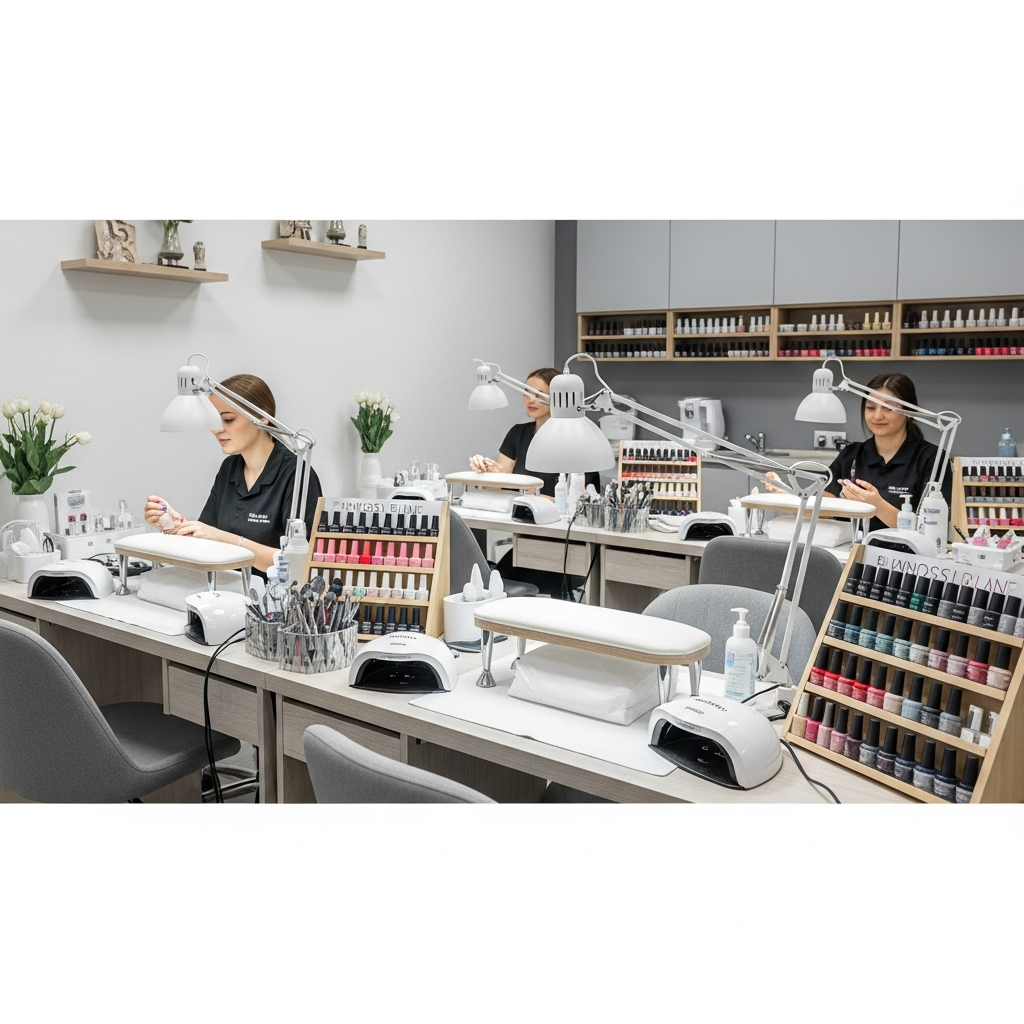
Organizing nail stations with a consistent layout reduces movement and speeds up the service process. When every technician knows exactly where the monomer or gel lamps are located, the workflow becomes seamless.
Revenue Tracking and Supply Cost Management
Managing the cost of nail supplies is essential for maintaining healthy profit margins. Owners should monitor the consumption of liquid, powder, and color gels to prevent excessive waste.
Internal tracking systems can reveal if service prices align with the actual cost of professional materials. Regular inventory audits prevent the salon from running out of essential nail products during peak hours.
Revenue tracking should be broken down by service type and technician. This data allows management to see which nail services are most profitable and which require price adjustments to cover labor costs.
Handling Operational Challenges in the Salon
Service redos and client complaints are inevitable operational challenges in the nail industry. Establishing a clear policy for service guarantees helps technicians handle these situations professionally.
Internal communication logs allow the staff to document specific client preferences or nail sensitivities. This shared knowledge prevents repetitive errors and enhances the overall professional atmosphere of the salon.
Managing the physical environment, including ventilation and lighting, is also part of operational oversight. Proper maintenance of the nail salon infrastructure ensures a safe and productive workspace for all staff.
