Mastering Professional Acrylic Nail Prep and Application
Professional nail application requires precise prep and bead control to ensure long-term retention and structural integrity. A high-quality service involves thorough cuticle removal, surface dehydration, and an optimal liquid-to-powder ratio, which prevents lifting and maximizes the durability of the acrylic enhancement for clients in U.S. salons.
The Critical Role of Professional Nail Preparation
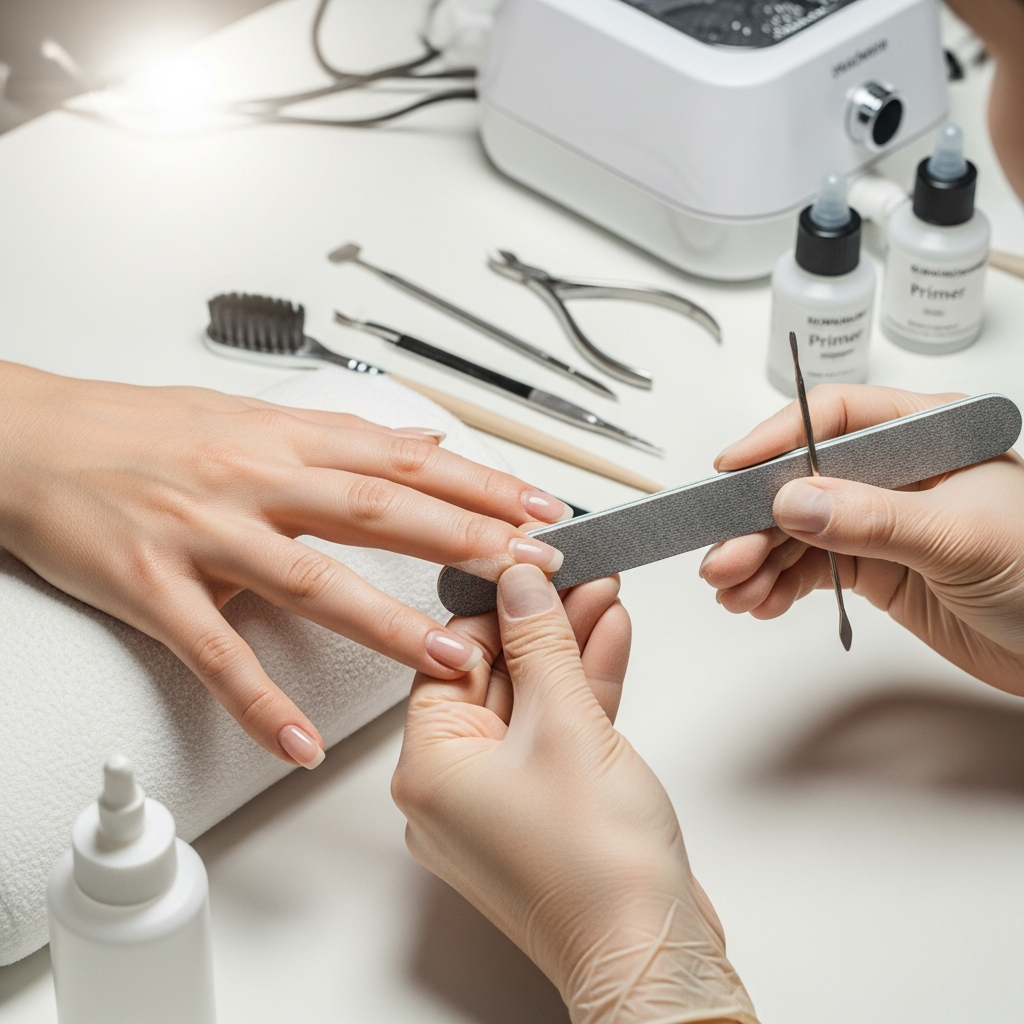
The longevity of any acrylic service depends entirely on the quality of the initial nail plate preparation. Removing the true cuticle and non-living tissue from the plate prevents lifting at the proximal fold.
Using a high-quality dehydrator and acid-free primer ensures a clean surface for chemical bonding. Technicians must remove the natural surface oils without over-filing the natural nail layers.
Proper sanitation of tools and the workstation is the first step in every technical service. This standard protects the client and ensures a stable environment for chemical application.
Achieving Perfect Acrylic Bead Consistency
Consistency in the liquid-to-powder ratio is the foundation of a durable nail enhancement. A bead that is too wet will shrink and lift, while a bead that is too dry will be brittle.
Technicians should aim for a smooth, satin-finish bead that holds its shape upon placement. This allows for controlled manipulation of the product before polymerization begins.
- Wet beads: Lead to excessive shrinkage and potential skin irritation.
- Dry beads: Cause bubbles, poor adhesion, and structural weakness.
- Ideal beads: Ensure maximum strength and minimal filing time.
Structural Integrity and Apex Placement
The apex is the strongest point of the nail enhancement, located over the stress area to prevent breakage. Proper placement varies depending on the length and shape of the extension.
Building a correct longitudinal arch and C-curve provides the necessary reinforcement for daily wear. This structural balance is essential for long-term nail health and client satisfaction.
Tapering the product at the free edge and cuticle area creates a natural appearance. Thin edges prevent snagging and reduce the leverage that causes lifting.
Common Technical Mistakes and Corrections
Flooding the cuticle with monomer or polymer is a primary cause of service failure. Technicians must leave a tiny margin between the product and the skin to ensure a proper seal.
Inconsistent filing can weaken the nail structure and lead to cracks in the stress zone. Use a systematic filing routine to maintain symmetry and thickness across all ten fingers.
Over-thinning the sidewalls during the shaping process often leads to side-loading breaks. Maintain a consistent thickness through the nail walls to support the weight of the enhancement.
