Master Professional Nail Prep for Long-Lasting Retention
Professional nail prep is the essential process of dehydrating the nail plate and removing non-living tissue to ensure superior product adhesion. By utilizing precise mechanical and chemical preparation steps, nail technicians create a clean, textured surface that prevents lifting and extends the durability of gel, acrylic, or dip powder enhancements.
The Critical Role of Cuticle and Pterygium Removal
Properly clearing the nail plate of pterygium is the first step in preventing premature service failure.
Technicians must use a professional pusher to gently lift the eponychium and expose the hidden cuticle on the nail plate.
Using a diamond flame bit at low RPMs allows for the safe removal of stubborn skin cells without damaging the natural nail.
Mechanical vs. Chemical Nail Dehydration
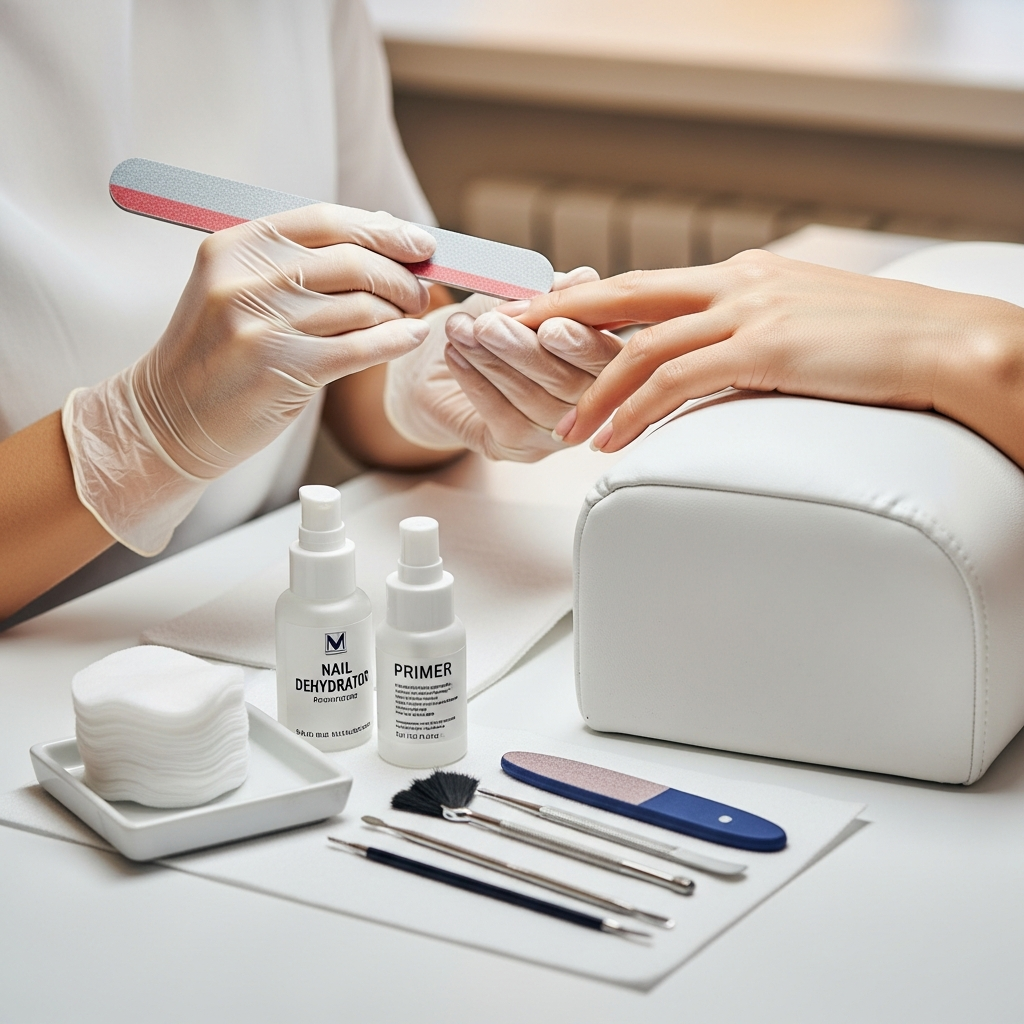
Mechanical preparation involves lightly etching the nail surface with a 180-grit file or buffer to remove natural oils.
Chemical preparation requires a high-quality dehydrator and a pH-balancing primer to ensure the nail is ready for bonding.
The combination of these two steps creates the necessary surface tension for professional-grade nail products to adhere securely.
Best Practices for Primer Application
- Acid-based primers: Use sparingly for clients with severe oily plates or chronic lifting issues.
- Acid-free primers: Acts as double-sided tape for most standard gel and acrylic applications.
- Avoid skin contact: Ensure the primer never touches the surrounding soft tissue to prevent irritation.
Common Technical Mistakes in Nail Preparation
Over-filing the natural nail plate is a frequent error that leads to thinning, sensitivity, and poor product retention.
Failing to remove dust from the lateral folds and proximal nail fold causes “pockets” where lifting begins.
Using a dirty or dull e-file bit can generate heat spikes and fail to properly texture the nail for the base coat.
Standard Workflow for Retention Success
- Sanitize the client’s hands and your own professional tools.
- Perform meticulous dry manicure steps to clear the nail plate.
- Shape the free edge and remove any shine from the surface.
- Scrub the nail with a lint-free wipe and 90% isopropyl alcohol.
- Apply dehydrator and professional primer before starting the enhancement.
Ensuring Client Safety and Nail Plate Integrity
Maintaining the health of the natural nail is the primary responsibility of every professional technician.
Avoid aggressive scraping or high-speed e-file settings that can cause “rings of fire” or deep grooves in the nail.
By following these standardized prep protocols, technicians provide a safe, durable service that builds trust and loyalty.
