Mastering Acrylic Nail Retention and Lifting Prevention
Proper acrylic nail retention is achieved through meticulous mechanical and chemical preparation of the natural nail plate. Professional technicians prevent lifting by removing the true cuticle, dehydrating the surface, and applying a balanced monomer-to-polymer ratio. Correct product placement near the eponychium and sidewalls ensures a seamless transition and durable bond.
The Importance of Mechanical Nail Preparation
Successful nail enhancement services begin with thorough mechanical preparation.
Using a low-grit file or specialized e-file bit removes the shine from the natural nail.
This creates the necessary surface profile for the acrylic to bond effectively.
Removing the True Cuticle
Failing to remove the non-living tissue on the nail plate is a primary cause of lifting.
Use a pusher and a diamond bit to clear the eponychium area completely.
Any skin left under the product will eventually cause the enhancement to separate.
Surface Dehydration and Priming
Chemical preparation involves removing oils and moisture from the nail surface.
Applying a high-quality dehydrator followed by an acid or non-acid primer is essential.
This step ensures the keratin layers are ready to receive the chemical bond.
Mastering Monomer and Polymer Ratios
The strength of a nail enhancement depends on the monomer-to-polymer ratio.
A bead that is too wet will shrink excessively and pull away from the edges.
Conversely, a dry bead will lack the structural integrity needed for daily wear.
Achieving Bead Consistency
Professional nail technicians must control their brush saturation carefully.
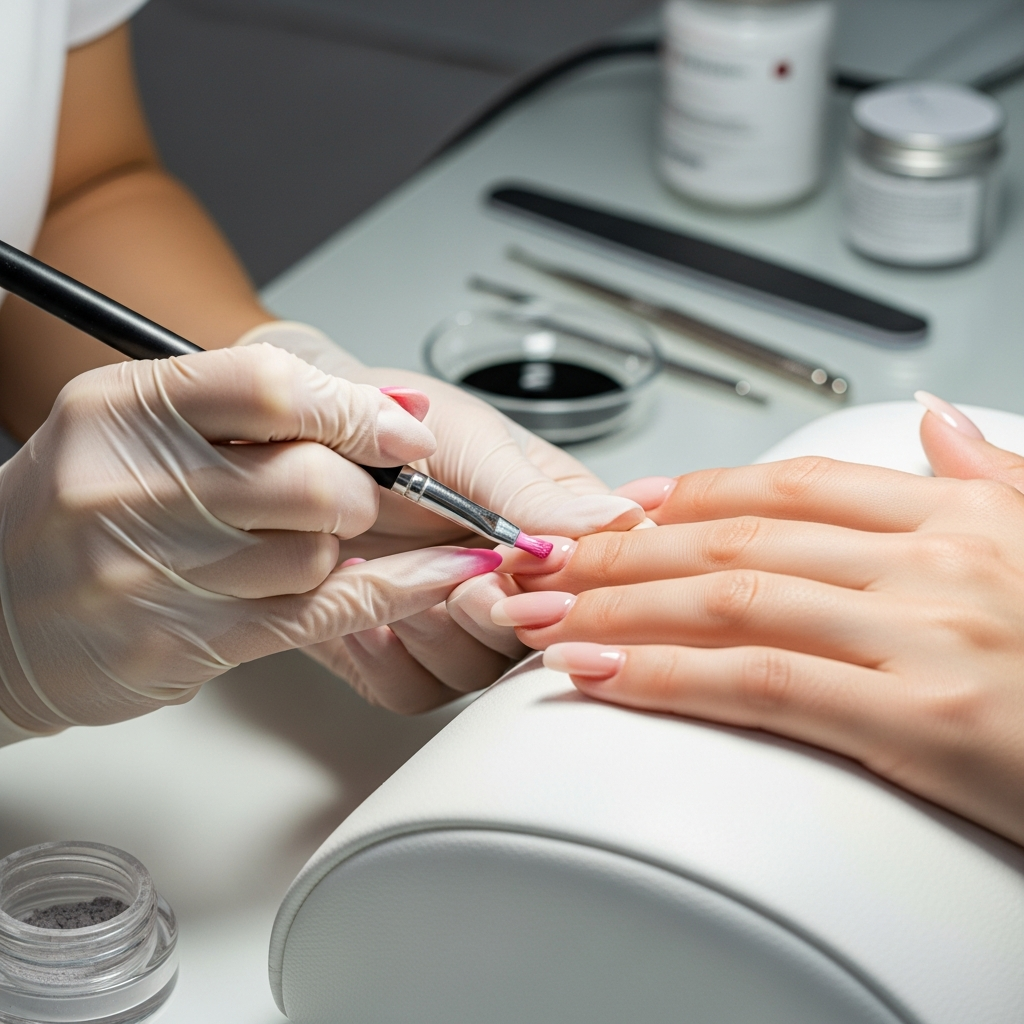
Dip the brush fully, wipe one side, and tap the powder to create a creamy bead.
A consistent bead allows for smooth application and minimizes the need for heavy filing.
Structural Integrity and Product Placement
The apex is the thickest part of the nail and provides necessary reinforcement.
Place the bulk of the product over the stress area to prevent breakage.
Ensure the product tapers off toward the free edge and the cuticle area.
Managing the Perimeter Zone
Keep the acrylic product approximately a hairline distance away from the skin.
Touch-ups with a brush during the curing process prevent flooding of the sidewalls.
Clean margins are the most effective way to ensure long-term nail retention.
