Professional Nail Salon Workflow and Operational Management
Nail services represent a professional category of cosmetic treatments specifically for the fingernails and toenails, requiring specialized technical skill and operational oversight. Efficient management of these services involves standardizing technician workflows and strictly monitoring supply usage to ensure every nail appointment meets safety regulations and profit margins within a competitive market.
Standardizing Service Protocols for Consistency
Establishing Standard Operating Procedures (SOPs) is critical for maintaining quality across different technicians.
Every professional service should follow a precise sequence, from the initial consultation to the final application.
Consistency ensures that clients receive the same high-quality result regardless of which technician they visit.
The Client Consultation and Prep Phase
Technicians must begin every appointment by assessing the health of the natural nail and identifying any contraindications.
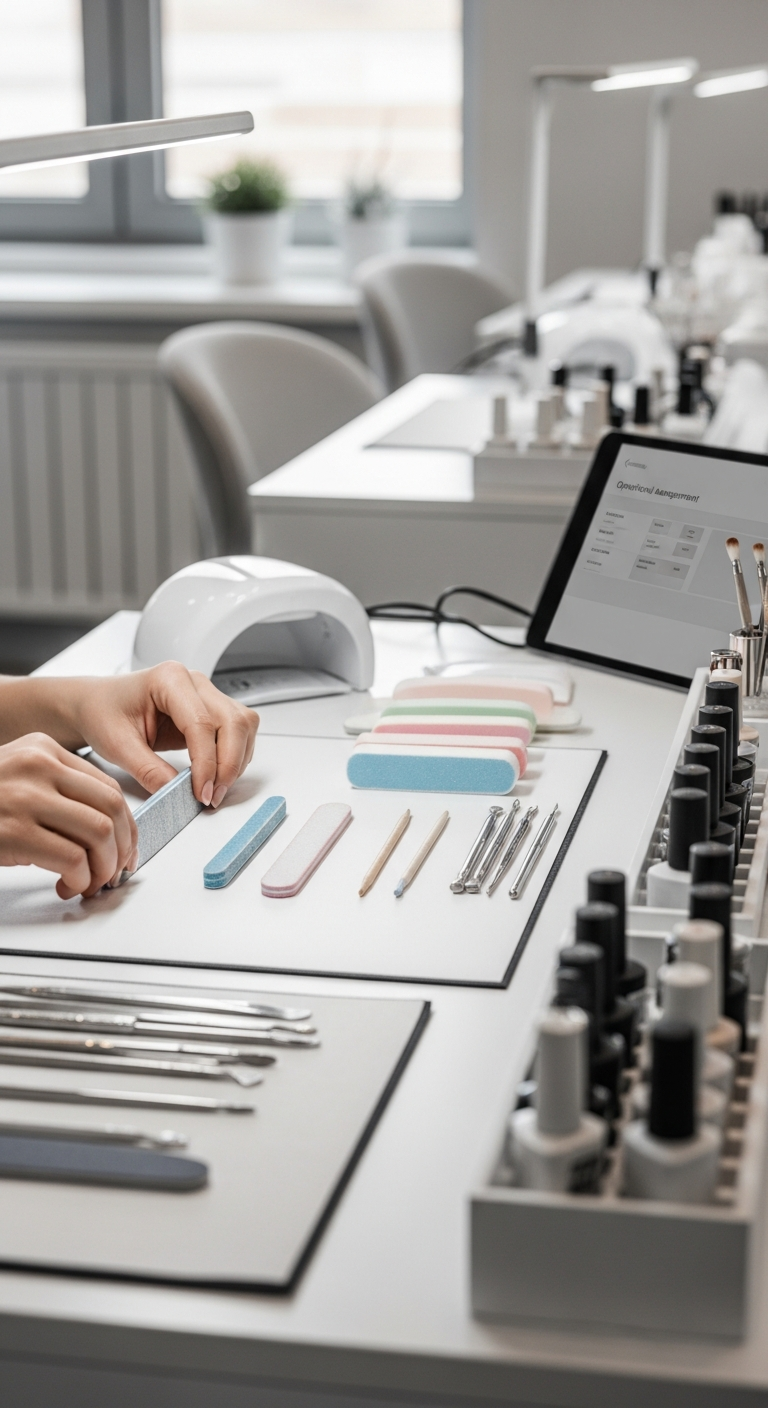
Proper sanitation of the hands and feet is mandatory before any tools touch the client.
Setting a clear timeframe for this phase prevents the schedule from slipping during peak hours.
Executing Professional Nail Techniques
Standardizing the application process for gels, acrylics, and lacquers reduces product waste and improves durability.
Technicians should be trained to follow specific ratios when mixing monomers and polymers or applying UV-cured products.
Defining these technical steps helps manage the total service time and stabilizes the salon schedule.
Efficient Staff Scheduling and Performance
Effective scheduling requires balancing technician availability with high-demand appointment windows.
Managers should assign stations based on technician speed and expertise to maximize the daily volume of services.
Tracking the time spent on each nail set allows for more accurate booking and prevents service overlaps.
Performance monitoring should focus on both technical skill and operational efficiency.
Technicians who consistently meet time targets without sacrificing quality contribute most to the salon’s profitability.
Regular reviews of service times help identify where additional technical training may be required.
Managing Supply Costs and Waste Reduction
Controlling the cost of professional nail products is essential for maintaining healthy profit margins.
Over-pouring monomers or excessive use of disposable files and buffers can significantly increase overhead.
Implementing a system for tracking product consumption per service helps identify areas of unnecessary waste.
- Inventory Audits: Perform weekly counts of high-use liquids, powders, and gels.
- Dispensing Limits: Set guidelines for the amount of product used per set of enhancements.
- Vendor Relations: Purchase professional-grade supplies in bulk to reduce the per-service cost.
Sanitation and Safety Compliance Protocols
Operational excellence is impossible without strict adherence to state board sanitation standards.
Designated times for cleaning stations and disinfecting multi-use tools must be integrated into the daily workflow.
Failure to maintain these standards poses a risk to client safety and the salon’s professional license.
Each technician is responsible for the cleanliness of their specific station after every nail service.
Implementing a closing checklist ensures the entire facility meets hygiene requirements before the next business day.
Clear protocols for handling chemicals and ventilation help maintain a safe environment for both staff and clients.
