Optimizing Nail Salon Operations for Consistent Service
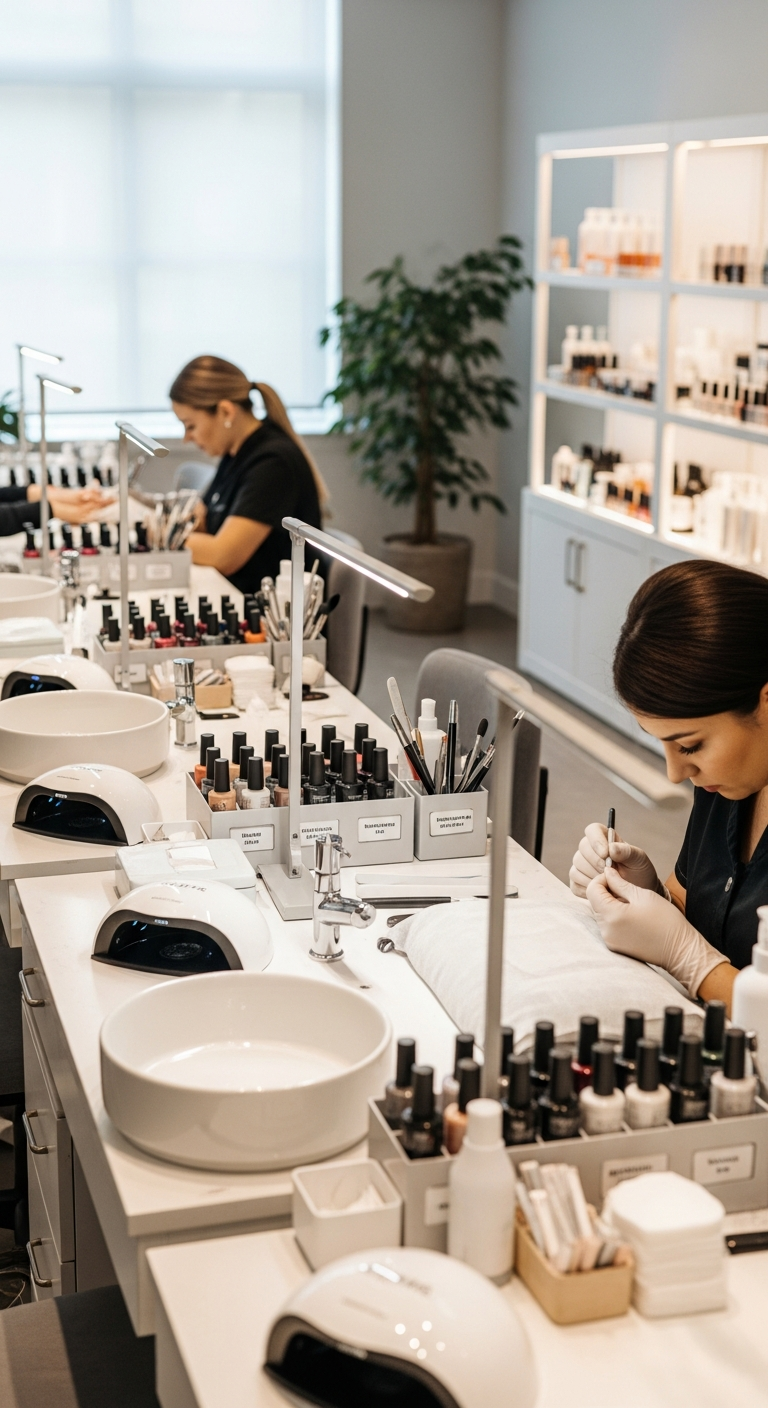
Effective nail salon operations rely on standardized procedures to ensure consistent service quality and technical precision across all staff members. By establishing clear protocols for nail prep, application, and finishing, owners minimize errors, reduce product waste, and maintain professional safety standards that protect both the technician and the client within the salon environment.
Establishing Standard Workflows for Every Nail Service
Consistent service delivery is the backbone of a successful professional nail business. Without standardized operating procedures, client experiences vary significantly between different technicians.
Every technician must follow the same steps for nail plate preparation and product application. This uniformity ensures that enhancements and coatings perform predictably regardless of who performs the service.
Standardizing the Technical Execution
- Preparation Protocols: Define exact methods for cuticle work and surface dehydration to prevent lifting.
- Product Ratios: Establish specific measurement standards for liquid and powder or gel applications.
- Finishing Steps: Set requirements for filing shapes and top coat application to maintain a signature salon look.
Controlling Professional Product Costs and Inventory
Revenue leakage often occurs through improper product usage and lack of inventory oversight. Managing nail supplies requires a strict system to track high-cost chemicals and disposables.
Monitor the amount of product used per service to identify waste or theft. High-performance nail systems are expensive, and small inefficiencies can significantly impact the monthly bottom line.
Waste Reduction in the Nail Room
- Dispensing Limits: Use measured pumps or droppers for monomer and nail cleansers to avoid over-pouring.
- Stock Rotation: Implement a first-in, first-out system for gels and polishes to prevent product expiration.
- Usage Audits: Compare product depletion against the number of nail services performed each week.
Managing Staff Performance and Daily Schedules
Effective scheduling ensures that the salon maximizes booth occupancy without overworking the team. Operational success depends on balancing the appointment book with technician speed and skill level.
Track the duration of every nail service to identify technicians who may need additional technical training. Efficiency in the nail industry is directly tied to the ability to maintain quality within set timeframes.
Optimizing the Appointment Book
Account for setup and sanitation time between every nail client. Proper turnover protocols ensure the station is clean and tools are disinfected according to state board regulations.
Assign specific responsibilities for end-of-shift cleaning and inventory counts. Clear accountability prevents operational breakdowns and ensures the nail salon is ready for the next business day.
Tracking Revenue and Service Metrics
Professional salon management requires daily monitoring of service totals and retail sales. Analyzing these metrics helps owners understand which nail services are most profitable.
Review the average ticket price regularly to determine if pricing covers the rising costs of professional nail supplies and labor. Adjusting operations based on data leads to sustainable growth.
