How to Prevent Nail Lifting Through Professional Preparation
Preventing nail lifting requires meticulous preparation of the natural nail plate to ensure maximum adhesion for gel or acrylic enhancements. Professional nail technicians achieve superior retention by removing the true cuticle, dehydrating the nail surface, and applying appropriate primers to create a secure chemical bond between the product and the nail.
Understanding the Primary Causes of Nail Product Lifting
Lifting occurs when the enhancement separates from the natural nail plate due to trapped moisture, oils, or improper application techniques.
Professional technicians must identify whether the lifting is internal, originating from the cuticle area, or external, caused by mechanical stress.
Consistent lifting often indicates that the nail plate was not sufficiently cleaned of non-living tissue or surface contaminants before product application.
Critical Steps in Professional Nail Plate Preparation
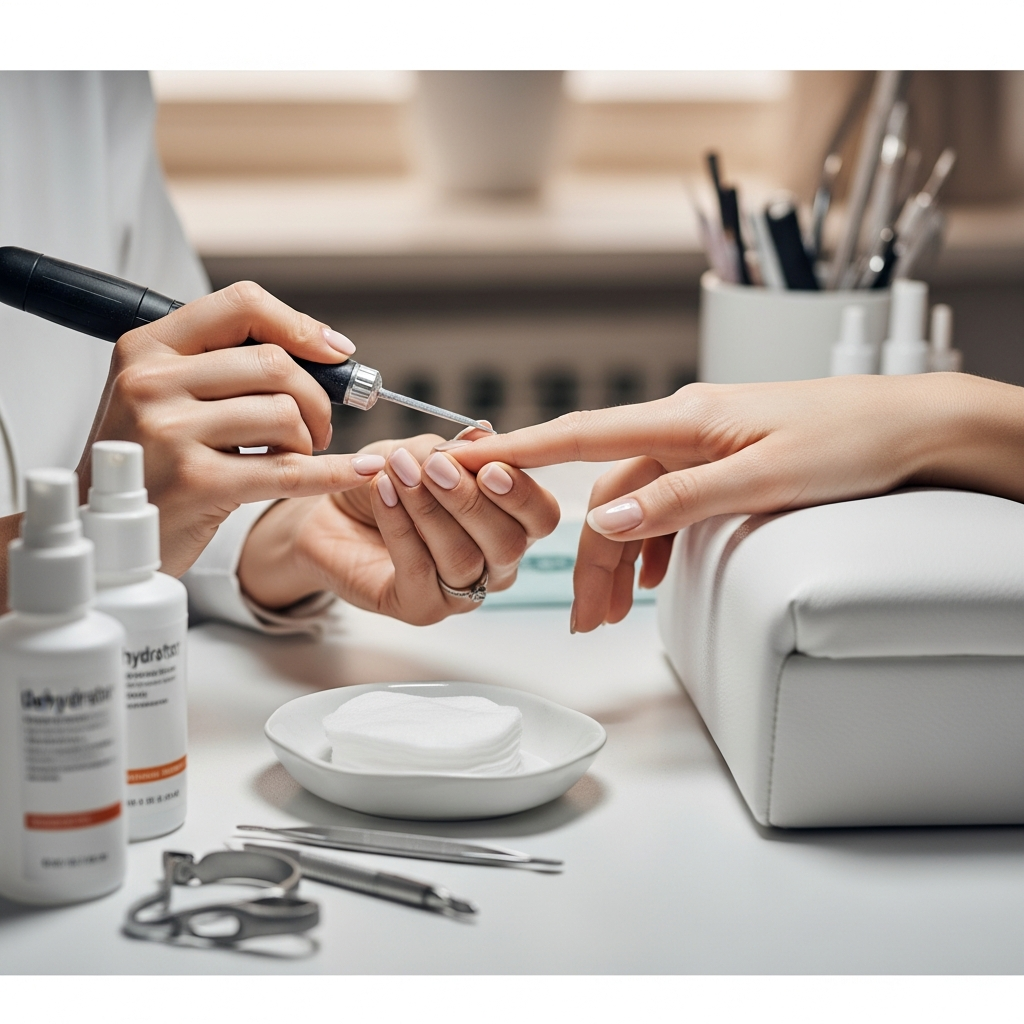
Proper nail prep starts with thorough mechanical cleaning using a high-quality e-file bit or hand file to remove the true cuticle.
Use a 180-grit file to gently remove the shine from the natural nail, ensuring the surface is etched without thinning the plate.
Chemical dehydration is a non-negotiable step that removes surface oils and moisture, which act as primary barriers to nail product adhesion.
The Role of Primers and Bonders in Nail Retention
Selecting the correct nail primer depends on the specific enhancement system and the individual condition of the client’s natural nails.
Acid-based primers create microscopic pits for mechanical bonding, while acid-free primers act like double-sided tape for a strong chemical bond.
Apply these agents sparingly to avoid over-saturation, which can lead to chemical burns or paradoxical lifting if the product remains wet.
Common Technical Mistakes During Nail Application
Avoid flooding the cuticle area or sidewalls with product, as contact with the skin triggers immediate lifting as the natural nail grows.
Ensure the apex is correctly positioned to support the stress area, preventing structural failure and subsequent nail separation under pressure.
-
Professional Retention Checklist:
- Thoroughly remove non-living tissue from the nail plate.
- Ensure the nail surface is completely dry and free of debris.
- Avoid touching the prepared nail plate with bare fingers.
- Maintain a small margin between the product and the proximal nail fold.
Managing High-Moisture Natural Nails
Clients with naturally oily or moist nail plates may require a double-dehydration process to ensure the surface remains dry during application.
In these cases, a pH balancer followed by a high-strength protein bonder can significantly improve the longevity of the nail enhancement.
