Troubleshooting Nail Lifting: Professional Prep Standards
Nail lifting occurs when the enhancement separates from the natural nail plate, typically due to improper preparation or surface contamination. Professional nail retention requires thorough cuticle removal, precise mechanical etching, and the application of pH-balancing dehydrators to create a clean, oil-free surface for maximum product adhesion.
The Critical Role of Mechanical Preparation
Mechanical preparation is the foundation of any long-lasting nail service.
Removing the non-living tissue from the plate prevents product from bonding to skin.
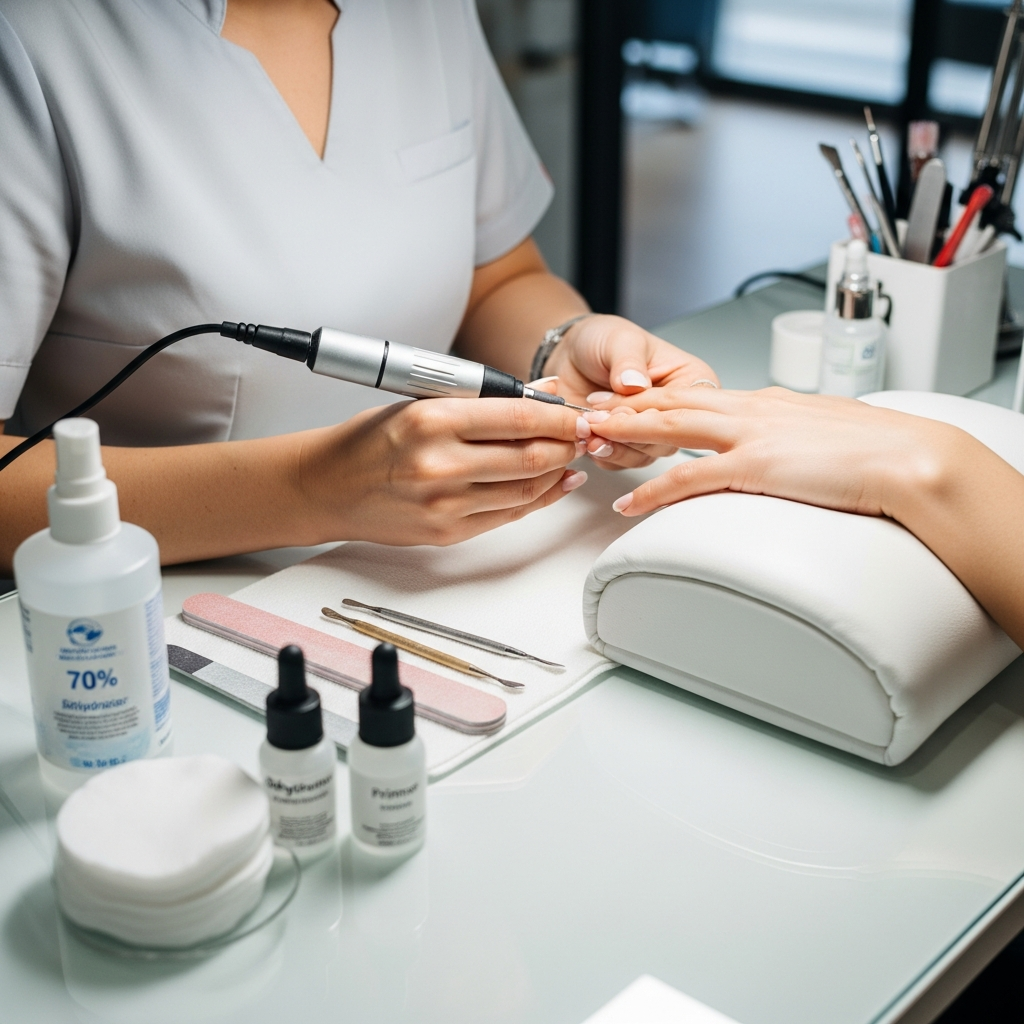
Technicians must use a 180-grit file or a fine diamond bit to remove the natural shine.
Removing the Invisible Cuticle
The invisible cuticle is the thin layer of skin that grows onto the nail plate.
If left behind, any gel or acrylic applied over it will inevitably lift.
Use a professional-grade pusher or an e-file flame bit to clean the proximal fold.
Proper Plate Etching Techniques
Surface etching creates a porous texture that allows the product to anchor.
Avoid over-filing, as thinning the nail plate reduces the strength of the bond.
Ensure the entire surface, including the sidewalls and corners, is uniformly buffed.
Chemical Preparation and Dehydration
Once mechanical prep is finished, chemical preparation ensures a sterile surface.
Natural oils and moisture are the primary enemies of professional nail retention.
A clean surface is essential before applying any bonding agents or primers.
Utilizing PH Bonders and Primers
Apply a high-quality dehydrator to temporarily remove moisture from the nail layers.
Follow with a protein-based or acid-free primer to create a double-sided adhesive bond.
Ensure the primer does not touch the surrounding soft tissue to avoid irritation.
Product Application and Margin Control
How the product is placed impacts the longevity of the nail service.
Leaving a tiny margin at the cuticle prevents the product from touching the skin.
Skin contact causes the product to pull away from the plate as it cures.
Sealing the Free Edge
Always cap the free edge of the nail with the base coat and color layers.
This seal prevents water and debris from seeping under the enhancement.
Capping ensures the product stays locked to the natural plate during daily wear.
Correcting Structure and Thickness
An improper apex or uneven thickness can lead to stress-induced lifting.
The nail must have a balanced structure to support the weight of the extension.
Properly positioned bulk absorbs impact and prevents the product from popping off.
Maintaining Client Safety and Hygiene
Professional technicians must prioritize safety during every step of the prep process.
Use only sanitized and disinfected tools to prevent cross-contamination between clients.
Single-use files and buffers should be discarded immediately after the service ends.
Identifying Contraindications
Never apply enhancements to a nail plate that shows signs of infection or thinning.
Damaged plates cannot support the weight of gel or acrylic systems safely.
Professional judgment is required to determine if the plate is healthy enough for service.
