Essential Nail Prep Techniques for Maximum Retention
Nail lifting is the separation of an artificial enhancement from the natural nail plate, typically caused by inadequate surface preparation or improper product application. Professional nail technicians eliminate lifting by performing thorough cuticle work, surface dehydration, and precise product margin control to ensure a secure chemical bond and long-term enhancement durability.
Mechanical Preparation of the Natural Nail Plate
The foundation of any long-lasting service is the removal of non-living tissue from the nail plate. Pterygium and stubborn cuticle growth act as a barrier that prevents enhancements from bonding directly to the keratin.
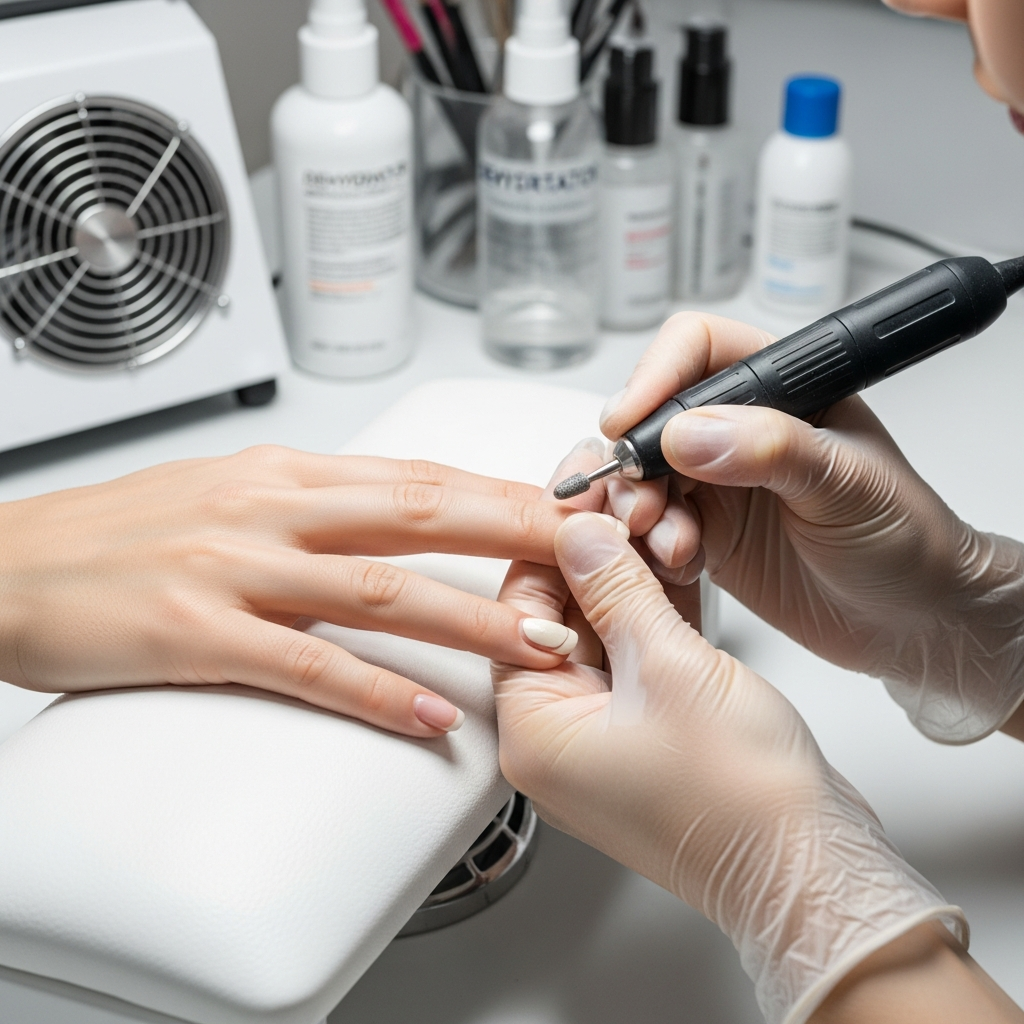
Professional technicians use a high-quality pusher or a fine diamond e-file bit to gently clear the proximal nail fold. This step ensures the product adheres to a clean, solid surface rather than unstable skin cells.
Gently removing the surface shine with a 180-grit buffer or file creates the necessary texture for mechanical bonding. Avoid over-filing, as thinning the nail plate significantly reduces product retention and overall health.
Chemical Dehydration and Priming Standards
Natural oils and moisture are the primary enemies of nail enhancement adhesion. A professional-grade dehydrator must be used to temporarily strip surface moisture and oils from the prepared keratin layers.
Following dehydration, applying a pH-balancing primer is essential for creating a receptive surface. For acrylic systems, an acid-based primer provides a deep etch, while non-acid primers work like double-sided tape for gels.
Ensure the primer does not touch the surrounding soft tissue, as this can cause irritation or chemical burns. Proper saturation of the nail plate is required, but the brush should never be dripping wet during application.
Precise Product Application and Margin Control
Lifting often begins at the cuticle area or the sidewalls when product is applied too thick or touches the skin. Maintaining a tiny margin between the enhancement and the skin is a hallmark of professional technique.
Applying product too close to the skin leads to wicking, where the enhancement pulls moisture from the tissue. This creates a gap that eventually causes the entire nail enhancement to pull away or trap bacteria.
- Zone 1: Focus on the free edge and extension thickness.
- Zone 2: Build the apex for structural support and impact resistance.
- Zone 3: Taper the product thin toward the cuticle for a seamless transition.
Troubleshooting Common Adhesion Failures
If lifting occurs despite proper prep, evaluate the product consistency and curing environment. For acrylics, an improper liquid-to-powder ratio results in brittle material that cracks and separates from the nail.
For gel-based systems, under-curing is a frequent cause of lifting and potential sensitivity. Ensure your UV or LED lamps are clean, high-powered, and compatible with the specific professional nail system being used.
Consistent maintenance and refining these technical skills will ensure high retention rates and client satisfaction. Proper execution reduces the need for frequent repairs and protects the integrity of the natural nail.
