Standardizing Nail Salon Service Consistency
Nail salon service consistency is the operational practice of ensuring every technician follows uniform protocols to deliver identical quality results. This system uses documented standards for preparation, application, and finishing to eliminate service variations, improve client retention, and streamline professional workflows within the nail industry environment.
The Role of Standard Operating Procedures
Standard Operating Procedures (SOPs) serve as the foundation for a professional nail business. They define the exact technical steps required for every service on the menu.
By implementing SOPs, owners can reduce redo rates and minimize client complaints. Clear guidelines ensure that every nail technician meets the salon’s specific quality benchmarks.
Consistency also supports safety and sanitation compliance. Standardized cleaning protocols ensure every station remains professional and adheres to state board regulations at all times.
Designing a Daily Nail Salon Workflow
Efficiency begins with a structured daily workflow that starts before the first client arrives. Technicians must follow a specific morning checklist to prepare their stations.
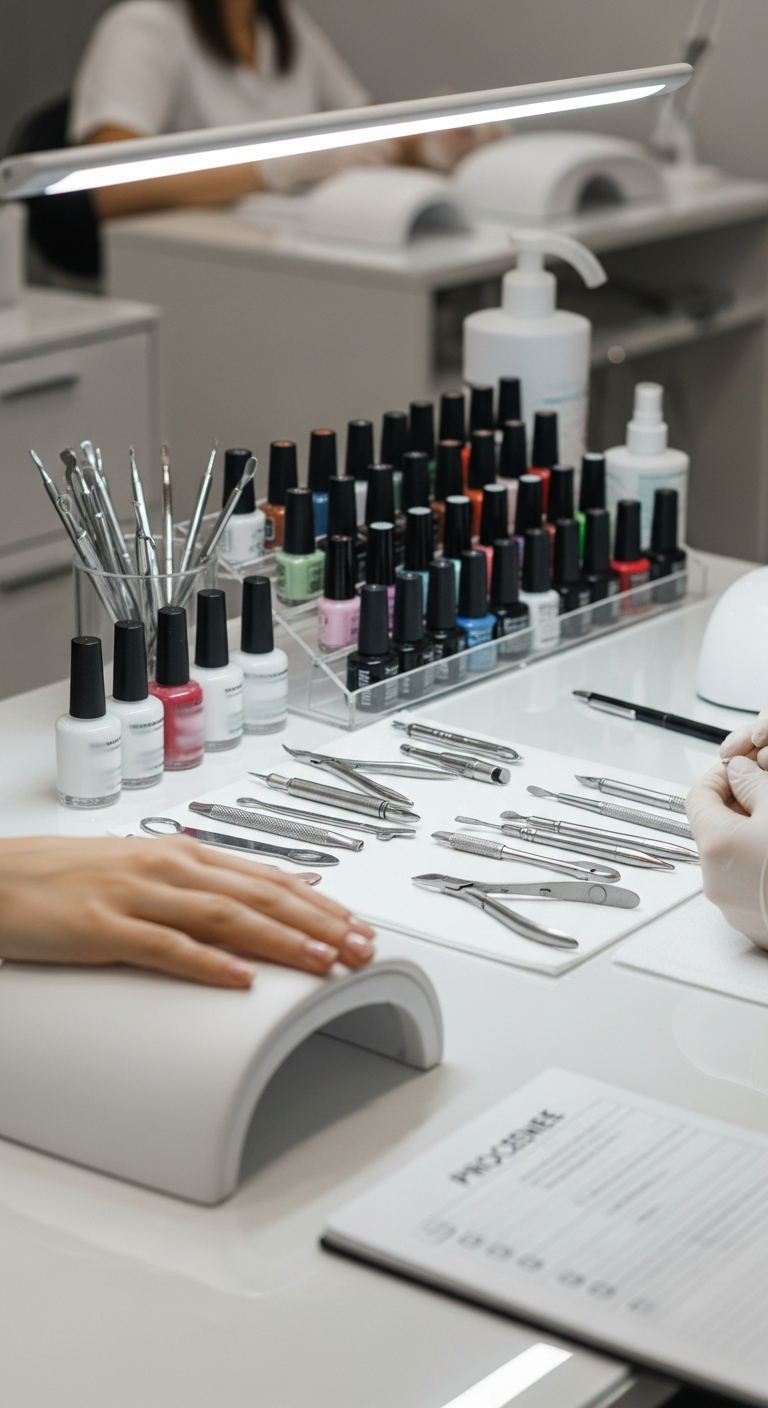
Proper preparation includes organizing professional implements and checking product levels. This prevents interruptions during service and maintains a calm environment for the client.
The end-of-day workflow is equally critical for operational success. Technicians must complete disinfection logs and restock their nail stations to ensure readiness for the next business day.
Technical Service Protocols
Standardizing the technical steps of a nail service prevents variations in longevity and appearance. Owners should document the exact grit of files used for preparation.
Specific protocols for chemical application, such as primer and base coat layers, ensure product adhesion. These steps protect the reputation of the salon by preventing lifting or chipping.
Timing is a vital component of technical protocols. Establishing a maximum duration for services helps manage the salon schedule and maximizes revenue per chair.
Staff Performance and Quality Control
Maintaining high standards requires regular performance audits. Owners should observe nail technicians to ensure they are following the established SOPs correctly.
Internal training sessions allow the team to practice new techniques and align their skills. This collaborative approach ensures that even junior technicians produce work that matches senior staff.
Consistent feedback helps identify operational bottlenecks. Monitoring service times and product waste allows for better cost management and higher profitability in the salon.
Revenue Tracking and Cost Management
Operational success depends on accurate tracking of service revenue and supply costs. Every nail service should have a calculated cost of goods used.
Standardizing product usage prevents technicians from over-using expensive chemicals. This control is essential for maintaining healthy profit margins in a competitive market.
Regular inventory audits ensure that the salon never runs out of essential supplies. Tracking high-turnover items helps management predict monthly operational expenses with greater accuracy.
