Long-Lasting Nail Retention: Professional Prep and Structure
Professional nail retention is achieved through meticulous mechanical preparation of the natural nail plate and precise chemical dehydration. Combining these steps with proper apex placement ensures the enhancement withstands daily stress, preventing lifting at the cuticle area and ensuring long-term structural integrity for the client.
The Foundation: Mechanical and Chemical Nail Preparation
The success of any nail enhancement begins with the removal of the true cuticle. This non-living tissue adheres to the nail plate and is the primary cause of lifting if not thoroughly cleared.
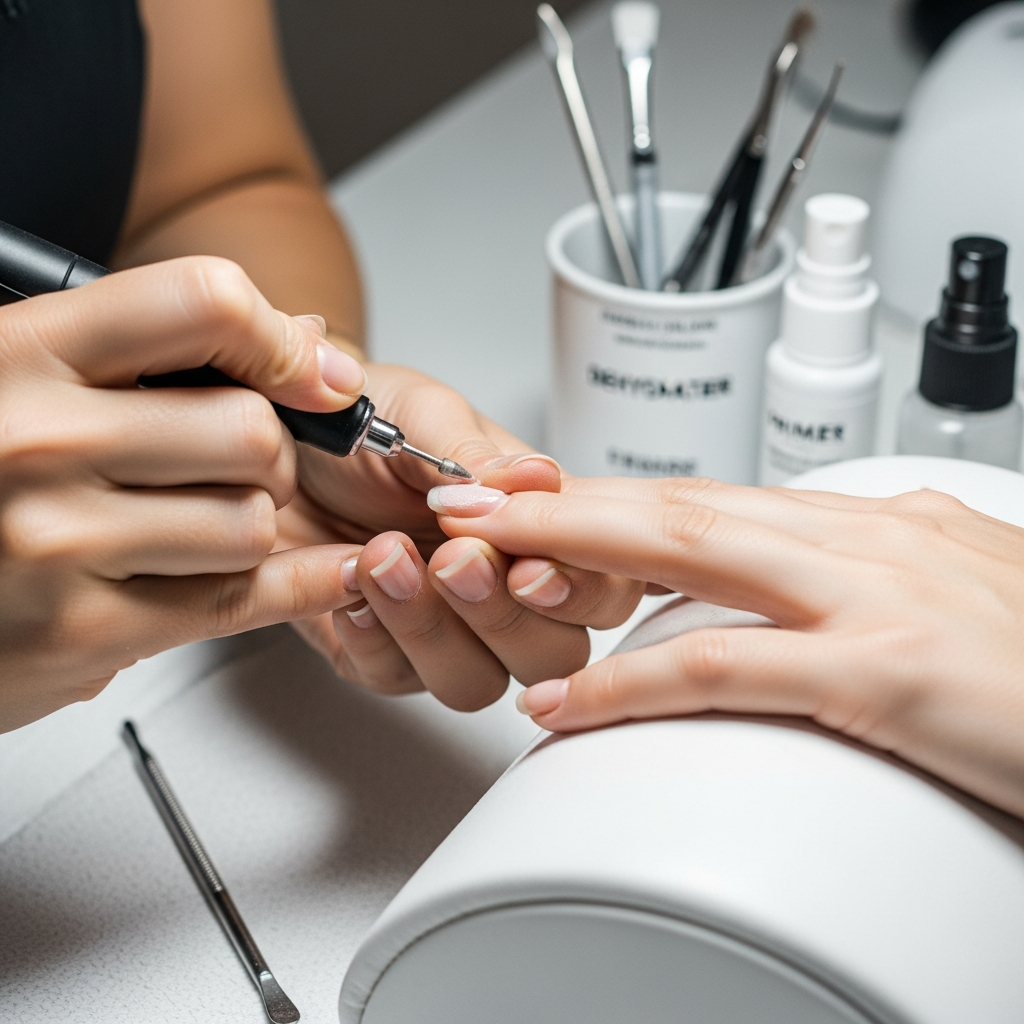
Technicians must use a fine-grit file or an electronic file bit to gently remove the shine. This creates a textured surface that allows the product to create a mechanical bond with the keratin layers.
Chemical preparation involves using a high-quality dehydrator and a pH balancer. These steps temporarily strip surface oils and moisture, ensuring the nail plate is optimized for primer adhesion.
Advanced Cuticle Work and Lateral Folds
Clearing the lateral folds is essential for preventing product from touching the skin. Any contact between the gel or acrylic and the surrounding tissue will lead to immediate lifting as the nail grows.
Using a pusher to create a clean pocket allows for precise product application. This ensures the enhancement sits flush against the natural nail without creating a bulky or uneven transition.
The Architecture of a Durable Nail Enhancement
Structural integrity depends on the correct placement of the apex. This is the highest point of the nail enhancement, designed to absorb shock and prevent the natural nail from snapping under pressure.
The apex should be positioned over the stress area, which is typically the middle third of the nail bed. As the enhancement grows out, the weight distribution must remain balanced to avoid strain.
Perfecting the C-Curve and Sidewalls
- Consistent Sidewalls: Filing the sidewalls straight from the growth point ensures the enhancement does not flare or weaken.
- C-Curve Reinforcement: A proper C-curve provides the necessary strength to the extension, allowing for a thinner, more natural-looking free edge.
- Tapered Cuticle Area: Thinning the product near the eponychium prevents a “ledge” from forming, which reduces the risk of snagging and premature lifting.
Common Technical Mistakes Leading to Lifting
Over-filing the natural nail plate is a frequent error that thins the keratin layers. A thin nail plate is flexible and oily, making it a poor foundation for rigid products like acrylic or hard gel.
Inconsistent liquid-to-powder ratios in acrylic application can also compromise durability. Too much monomer leads to shrinkage, while too much powder results in a brittle structure prone to cracking.
Finally, improper curing in gel services often stems from old lamp bulbs or thick product application. Ensuring full polymerization is vital for both nail safety and the longevity of the service.
