Mastering Professional Nail Prep for Optimal Retention
Professional nail preparation is the systematic process of cleaning and dehydrating the natural nail plate to ensure maximum product adhesion. This technical procedure involves removing non-living tissue, etching the surface, and using chemical dehydrators to prevent lifting in gel, acrylic, and builder gel services.
Mechanical Preparation of the Natural Nail Plate
The foundation of a durable nail service starts with thorough mechanical preparation.
Technicians must remove all non-living tissue from the nail plate using a curette or pusher.
Any remaining cuticle skin will cause product lifting within days of the service.
Effective Cuticle Removal and E-file Safety
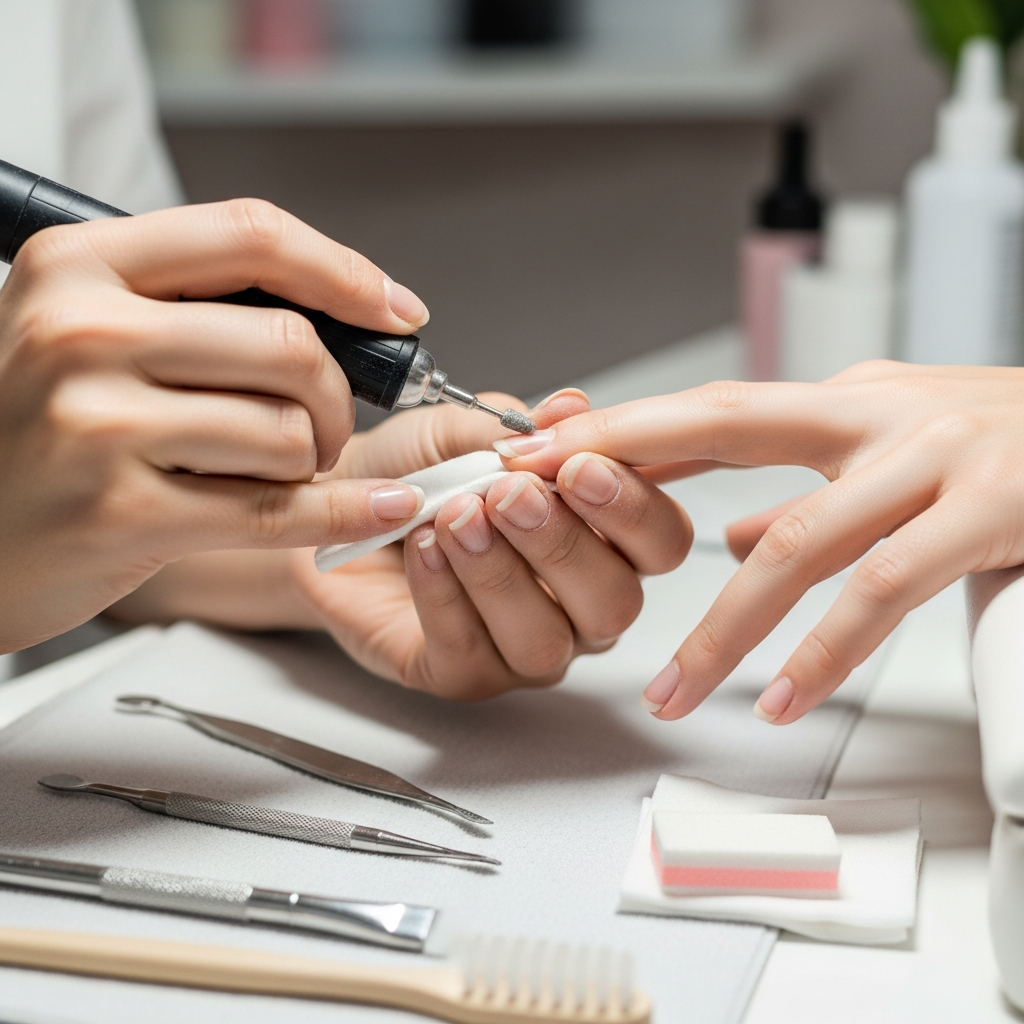
Using an electronic file with a fine diamond bit allows for precise cuticle clearing.
Keep the bit parallel to the nail plate to avoid creating painful grooves or “rings of fire.”
Light pressure ensures the plate remains thick enough to support the weight of enhancements.
Correct Surface Etching for Product Grip
Gently buff the nail surface with a high-grit file to remove the natural shine.
This creates microscopic grooves that allow the base coat or primer to bond securely.
Over-filing thins the plate, leading to heat spikes and poor product durability.
Chemical Dehydration and Priming Steps
Mechanical prep must be followed by chemical treatments to remove oils and moisture.
Contaminants are the primary cause of service failure in U.S. professional nail salons.
Apply these products in a controlled manner to avoid touching the surrounding skin.
Balancing PH Levels for Better Adhesion
A professional PH balancer temporarily raises the alkalinity of the natural nail.
This state is ideal for the chemical bond required by professional acrylic and gel systems.
The effect is temporary, so apply the enhancement immediately after the dehydrator dries.
Choosing Between Acid and Acid-Free Primers
Acid primers etch the nail plate chemically and are often used for problematic oily nails.
Acid-free primers act like double-sided tape to create a strong physical bond.
Selecting the right primer depends on the client’s nail type and the specific product line.
Common Technical Mistakes Leading to Lifting
Most retention issues stem from small errors during the application process.
Applying product too close to the side walls or cuticle area causes immediate lifting.
Always leave a tiny margin between the enhancement and the skin for a clean seal.
Incomplete Dust Removal
Residual dust acts as a barrier between the nail plate and the product.
Use a stiff nylon brush to clear the lateral folds and the proximal nail fold.
Wiping with a lint-free cleanser ensures no particles interfere with the chemical bond.
Improper Product Ratio and Curing
For acrylics, a bead that is too wet or too dry will not bond correctly.
In gel services, under-curing leaves the material soft and prone to peeling from the edge.
Ensure your lamp bulbs are clean and calibrated for the specific brand of product used.
Client Safety and Nail Plate Integrity
Maintaining the health of the natural nail is a professional priority during every service.
Never force an enhancement off the nail, as this pulls layers of keratin away.
Proper prep and removal techniques ensure the nail remains strong for future appointments.
