Essential Professional Nail Prep for Maximum Retention
Professional nail prep is the systematic process of cleaning, dehydrating, and etching the natural nail plate to ensure optimal adhesion of enhancements. By removing the proximal nail fold and surface oils, technicians create a clean, textured surface that prevents lifting and extends the durability of gel, acrylic, or dip applications.
The Foundation of a Clean Nail Plate
Successful nail enhancement services begin with thorough mechanical preparation. This involves removing the non-living tissue from the nail plate using specialized professional tools.
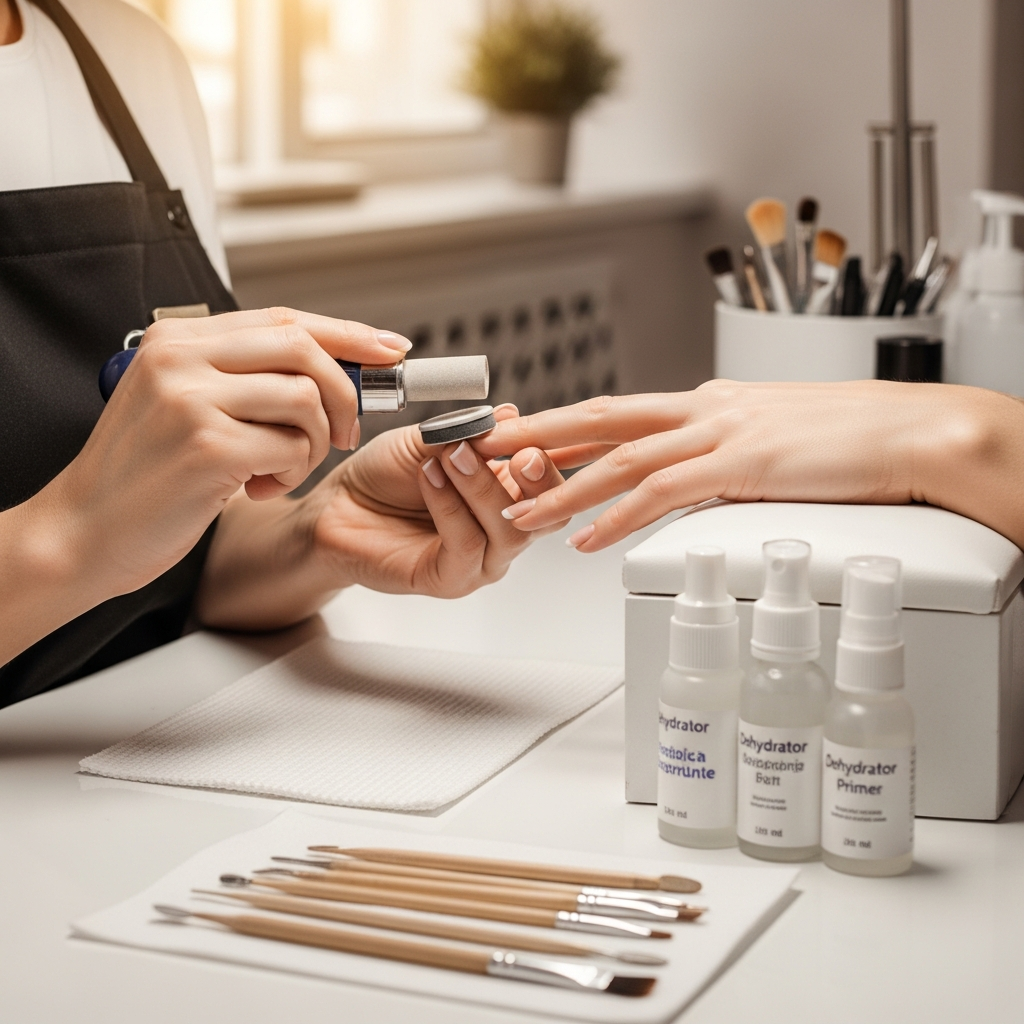
Technicians must carefully push back the eponychium to expose the true cuticle. Using a high-quality pusher or an electric file bit ensures the surface is free of protein debris.
If any invisible cuticle remains on the nail, the enhancement will bond to the skin rather than the keratin. This is the primary cause of premature lifting in the sidewalls.
Mechanical Buffing and Surface Etching
Creating a mechanical bond requires a specific level of surface roughness. Use a 180-grit file or buffer to gently remove the natural shine from the nail surface.
The goal is to open the keratin scales of the nail plate without thinning the structure. Over-filing can lead to sensitivity, heat spikes, and weakened adhesion over time.
Always file in the direction of nail growth to maintain integrity. A uniform, matte appearance indicates the surface is ready for the chemical preparation phase.
Eliminating Surface Contaminants
Dust and oils are the enemies of product longevity. Use a stiff nylon brush to remove all debris from the nail folds and the hyponychium area.
Applying a high-quality dehydrator is a critical step in the professional workflow. This temporary change in the nail pH ensures that no moisture interferes with the bond.
Avoid touching the nail plate with your own fingers after dehydration. Even a small amount of skin oil can compromise the integrity of the nail service.
Chemical Priming for Maximum Adhesion
Primers act as the double-sided tape between the natural nail and the enhancement material. Select a primer that matches the specific product chemistry being applied.
Acid-based primers are often used for traditional acrylics to create deep microscopic pores. Non-acid primers use covalent bonding, making them ideal for sensitive clients and gel systems.
Apply the primer sparingly to avoid flooding the soft tissue. Let the product air dry or remain tacky according to the specific manufacturer instructions for that nail system.
Common Prep Mistakes to Avoid
- Incomplete Debris Removal: Leaving dust in the lateral folds causes air pockets and immediate lifting.
- Over-Saturating the Plate: Excessive primer use can actually lead to chemical interference and product breakdown.
- Skipping the Sidewalls: Most lifting begins at the edges where the nail meets the skin.
Consistent execution of these steps ensures a high-standard service. Mastery of nail prep distinguishes a professional technician and guarantees long-term client satisfaction.
