Preventing Acrylic Nail Lifting: Professional Techniques
Acrylic nail lifting is prevented by performing thorough mechanical and chemical nail preparation to remove the cuticle and surface oils. Proper liquid-to-powder ratios and precise bead placement away from the eponychium ensure a secure bond between the nail plate and the enhancement, resulting in long-term durability and client satisfaction.
Effective Mechanical Nail Preparation
Thorough mechanical prep is the first step in ensuring nail enhancement longevity. This involves removing all non-living tissue from the nail plate using a curette or pusher.
Use a 180-grit file or a fine-grit e-file bit to gently remove the surface shine. This creates a textured surface for the acrylic nail product to grip effectively.
Dust removal is essential before proceeding to chemical steps. Use a stiff nylon brush to clear all debris from the nail folds and lateral side walls.
Chemical Dehydration and Priming
Applying a professional nail dehydrator removes residual oils and moisture from the natural nail. This step is critical for ensuring chemical adhesion and preventing service breakdown.
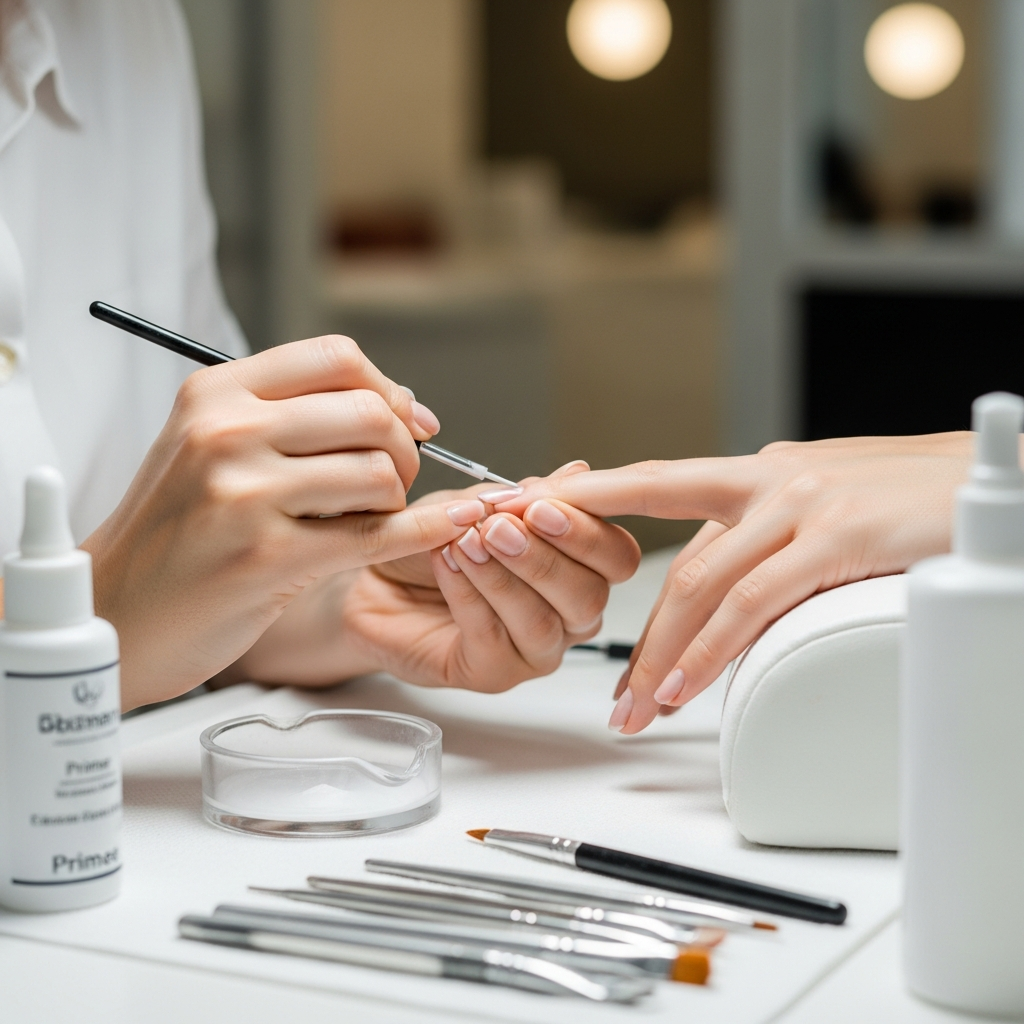
Follow with a high-quality primer suited for the specific nail type of the client. Acid-based primers provide a deep etch for problematic lifters.
Acid-free primers function as a double-sided adhesive layer. Ensure the primer does not touch the surrounding skin to prevent irritation and potential product rejection.
Understanding Primer Selection
- Acid Primers: Best for oily nail plates or heavy lifters.
- Acid-Free Primers: Ideal for standard nail types and sensitive skin.
- Dehydrators: Essential for temporary pH balancing of the nail surface.
Perfecting the Monomer and Polymer Ratio
A bead that is too wet will lead to shrinkage and lifting as the acrylic nail cures. It also increases the risk of skin sensitization if the liquid touches the cuticle.
A bead that is too dry will not flow enough to create a seamless bond. This results in brittle enhancements that are prone to pocket lifting.
Achieving a medium-wet consistency ensures the acrylic nail remains flexible yet durable. Proper ratio control is a hallmark of professional-grade nail execution.
Precision in Product Placement
Avoid touching the skin or cuticle area with the acrylic product during application. Any contact with soft tissue will cause the nail to lift as it grows out.
Leave a microscopic gap between the product and the eponychium. Thinning the product at the perimeter ensures a flush transition as the natural nail grows.
Properly taper the product at the side walls and cuticle area. This prevents the “catch” points that lead to premature nail lifting and breakage.
Common Technical Mistakes to Avoid
- Over-filing: Thinning the nail plate reduces the surface area for bonding.
- Flooding: Allowing liquid monomer to pool in the nail folds.
- Contamination: Using a dirty brush or contaminated monomer during service.
Structural Integrity and Durability
The apex of the acrylic nail must be placed over the stress area to support the length. Incorrect structure leads to mechanical stress and eventual lifting.
Ensure the free edge is properly sealed with product. This prevents moisture from entering between the natural nail and the enhancement during daily wear.
Consistency in these technical steps ensures every nail service meets professional U.S. industry standards for retention and safety.
