Professional Nail Prep Techniques for Maximum Retention
Professional nail prep is the systematic process of cleansing, dehydrating, and priming the natural nail plate to ensure optimal product adhesion. This critical technique prevents lifting by removing oils, debris, and non-living tissue from the nail surface, creating a secure foundation for gel, acrylic, or dip powder enhancements.
Advanced Cuticle Management and Plate Clearing
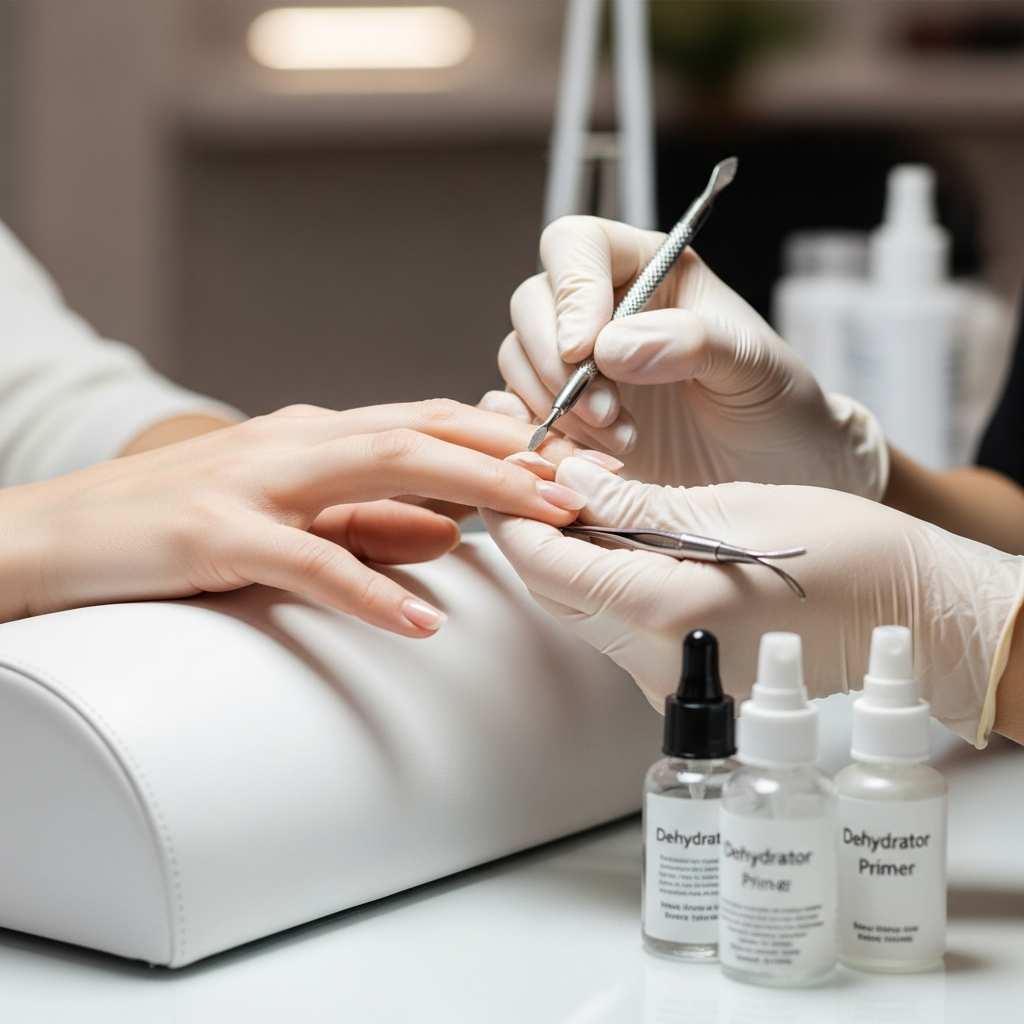
A professional nail service begins with the thorough removal of non-living tissue from the nail plate. Using a high-quality pusher, the technician must gently retract the eponychium to expose the true cuticle.
The technician then uses a nipper or a specific e-file bit to clear the pterygium. This step is vital because product will not bond to skin, and any remaining debris on the nail will lead to premature lifting.
Proper clearing of the lateral folds and the proximal nail fold ensures that the enhancement can be applied closely to the perimeter without flooding. This creates a clean, professional aesthetic and improves durability.
Mechanical and Chemical Dehydration
Mechanical preparation involves using a high-grit file or buffer to remove the natural shine from the nail. This process increases the surface area for the product to grip without thinning the dorsal layer of the nail plate.
Following mechanical prep, a chemical dehydrator is applied to remove residual oils and moisture. In the U.S. nail industry, this step is mandatory for clients with oily nail plates or hyperhidrosis.
A pH balancer may also be used to return the nail surface to an ideal state for bonding. These steps must be performed carefully to avoid re-contaminating the surface with dust or skin oils.
Selecting and Applying Professional Primers
The choice between acid-based and acid-free primers depends on the specific nail type and the enhancement system being used. Acid-based primers work by etching the nail plate for a physical bond.
Acid-free primers act like double-sided tape, creating a chemical link between the natural keratin and the product. These are generally preferred for clients with sensitive or damaged nail plates.
Technicians must apply primer sparingly to avoid skin contact, which can cause irritation or chemical overexposure. The primer should dry or remain tacky according to the manufacturer’s specific instructions.
Common Technical Mistakes in Prep
- Over-filing: Removing too many layers of the nail plate weakens the foundation and causes heat spikes.
- Incomplete Dust Removal: Residual dust acts as a barrier, preventing the gel or acrylic from touching the nail.
- Skin Contact: Allowing prep products or enhancements to touch the sidewalls leads to immediate lifting.
Maintaining Structural Integrity
Consistency in nail prep directly impacts the structural integrity of the final enhancement. A well-prepped nail allows for even product distribution and a balanced apex.
Technicians should always assess the health of the natural nail before beginning. If the plate is severely compromised, the technician may need to adjust the prep technique to maintain safety.
By following a strict prep protocol, professional technicians ensure that every nail service meets industry standards for longevity and client satisfaction.
