Standardizing Nail Salon Operations for Consistent Service
Optimizing nail salon operations involves implementing standardized workflows and service protocols to ensure consistent results across all technicians. Effective management focuses on uniform application techniques, sanitation standards, and time management, which stabilizes revenue and maintains professional service quality throughout the daily business cycle in a competitive market.
Developing Standard Operating Procedures for Nail Services
Consistency is the foundation of a successful nail salon. When every technician follows the same protocol, the client experience remains identical regardless of who performs the service.
Standard Operating Procedures (SOPs) should detail every phase of the appointment. This includes the initial consultation, nail plate preparation, product application, and the finishing steps.
Documenting these steps prevents variations in service quality. It also reduces the likelihood of product lifting or premature chipping, which can negatively impact the salon reputation.
Defining Technical Application Steps
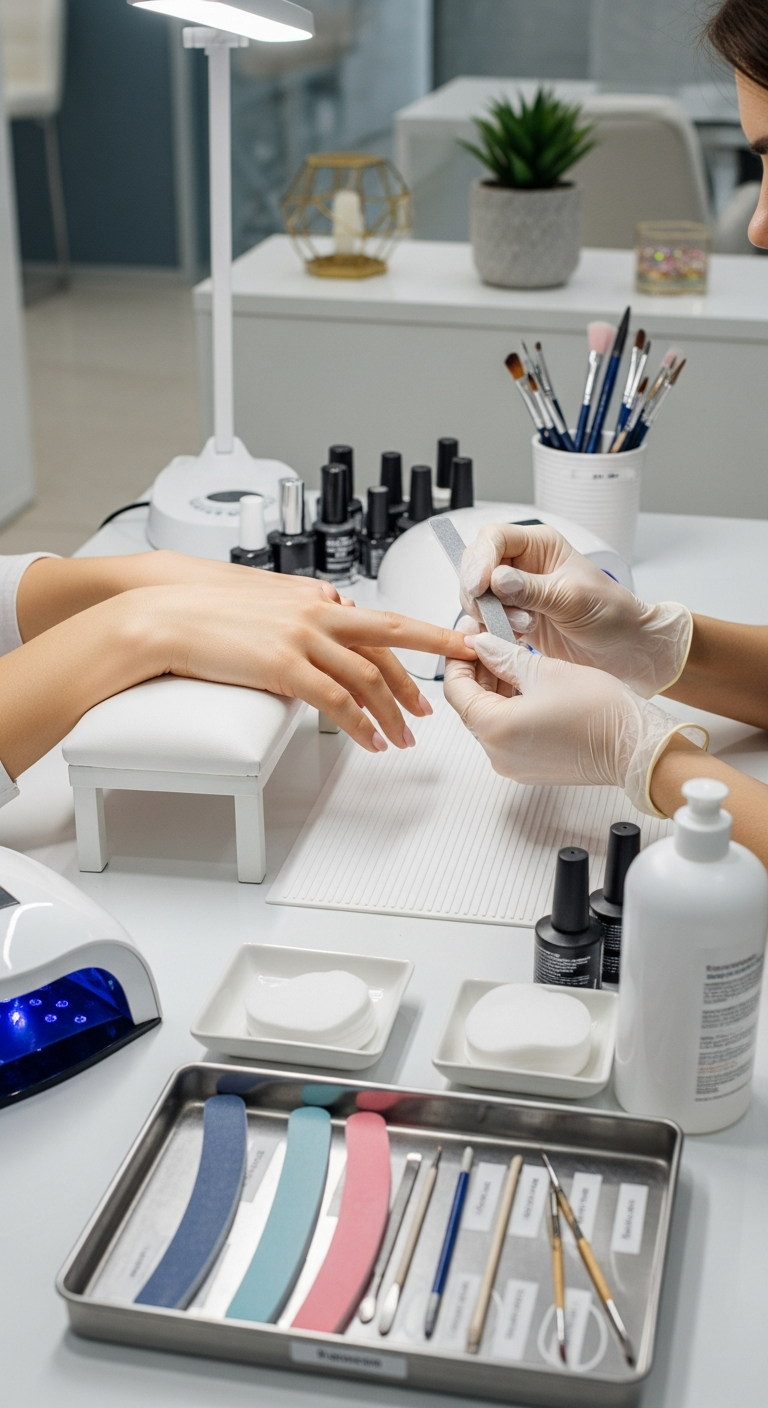
Each nail service requires a specific sequence of technical maneuvers. Management must define the exact grit of files used for natural nails versus enhancements.
Uniformity in product measurement is also essential. For example, specify the exact number of base coat layers or the specific thickness required for acrylic bead placement.
By standardizing these technical details, salon owners can ensure that the structural integrity of the nail work remains high across the entire staff.
Establishing Uniform Sanitation Protocols
Professional nail operations must adhere to strict state board regulations. A standardized cleaning checklist ensures that no steps are skipped between clients.
Management should mandate the use of hospital-grade disinfectants for all non-porous tools. Every technician must follow the same submersion times and storage requirements.
Clear protocols for foot basin disinfection are especially critical. Consistency here protects the health of the public and the legal standing of the business.
Managing Nail Technician Workflows and Scheduling
Effective scheduling balances technician productivity with the physical demands of nail services. Overbooking can lead to rushed work and technician burnout.
Workflows should account for transition times between clients. This includes the time needed to reset the station and perform mandatory sanitation tasks.
Management must monitor individual performance metrics. Tracking the time taken for a full set versus a fill helps in creating realistic daily schedules.
Balancing Service Duration and Quality
Nail services must be timed to ensure profitability without compromising the final result. Management should set time benchmarks for every service on the menu.
If a technician consistently exceeds the allotted time, it indicates a need for technical retraining. Conversely, if a service is too fast, quality may suffer.
Regular audits of technician work help maintain these timing standards. This ensures the salon maintains a steady flow of traffic throughout the day.
Revenue Tracking and Supply Cost Control
Controlling costs is vital for nail salon profitability. Product waste is one of the largest hidden expenses in professional nail environments.
Management should track the usage of high-cost items like monomer, gel polishes, and specialized treatment creams. Excessive consumption often points to improper technique.
Implementing a weekly inventory count allows owners to correlate product usage with the number of services performed. This creates a transparent cost management system.
Monitoring Product Consumption per Service
Professional systems should be in place to measure how much product is used per client. Standardizing the amount of gel or acrylic used prevents unnecessary overhead.
- Audit liquid-to-powder ratios to prevent monomer waste.
- Control the distribution of disposable items like files and buffers.
- Ensure technicians use measured amounts of lotions and oils.
Reducing waste directly improves the bottom line. It allows the salon to reinvest in higher quality tools and ongoing staff education.
