Professional Nail Prep for Long-Term Product Retention
Professional nail preparation is the systematic process of removing non-living tissue from the nail plate and dehydrating the surface to ensure maximum product adhesion. Proper nail prep prevents lifting, bubbles, and premature failure of gel, acrylic, or dip systems by creating a clean, textured surface for chemical bonding.
The Critical Role of Cuticle Removal in Nail Adhesion
Product lifting often originates at the proximal nail fold due to improper cuticle removal.
Technicians must distinguish between the eponychium and the true cuticle, which is the non-living tissue.
Removing this invisible layer from the nail plate is essential for a seamless bond.
Identifying and Clearing the True Cuticle
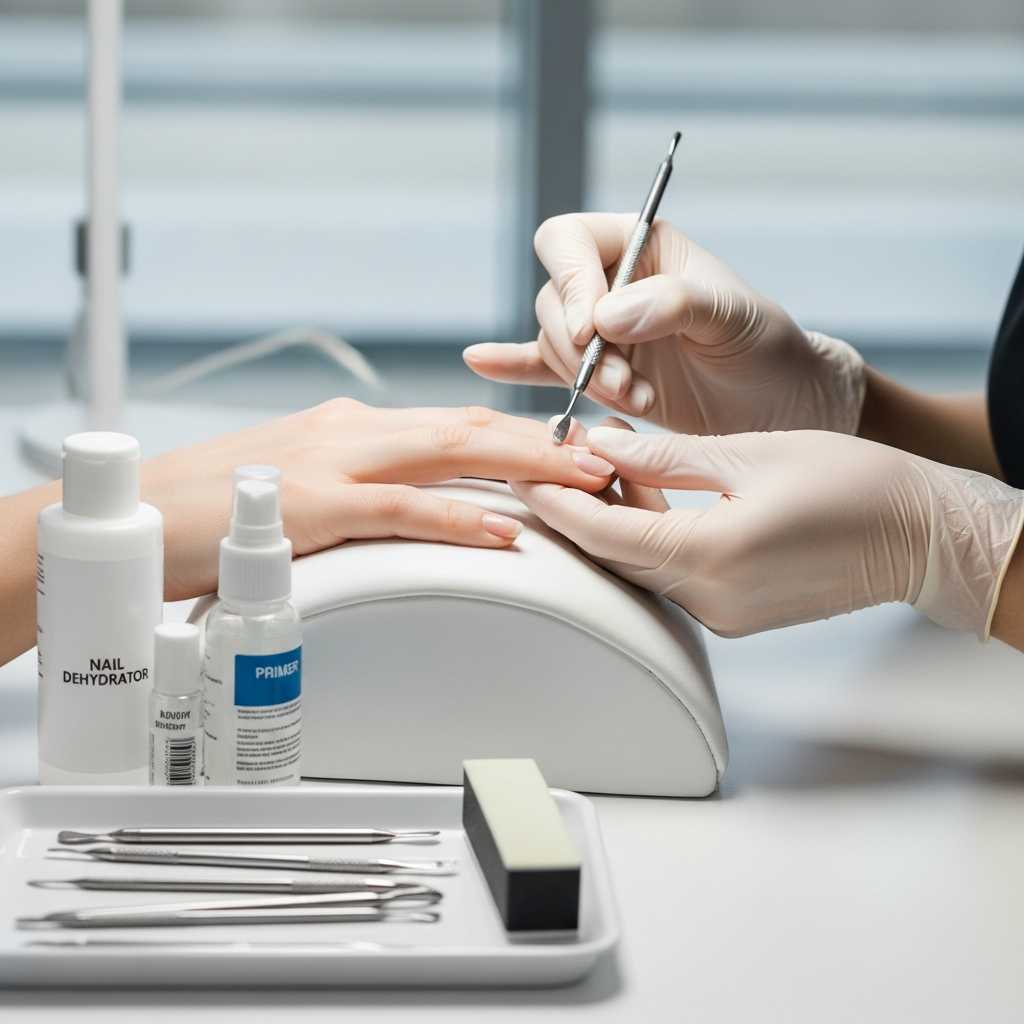
- Use a professional pusher to gently lift the eponychium.
- Employ a curette or electric nail file bit to scrape away dry tissue.
- Ensure the lateral folds are completely free of debris before product application.
Refining the Nail Plate Surface
Creating the correct surface tension requires mechanical etching of the nail plate.
A high-grit buffer or file removes the natural shine and opens the nail cells.
This physical change allows the base coat or primer to anchor effectively.
Balancing Grit for Optimal Surface Tension
Over-filing thins the natural nail and weakens the foundation of the enhancement.
A 180-grit or 240-grit file is typically sufficient for most professional nail services.
Avoid using coarse grits that can cause permanent damage to the nail bed.
Chemical Dehydration and Priming Steps
After mechanical prep, the nail must be chemically cleaned of oils and moisture.
Surface moisture can re-accumulate quickly, so work in small sections if necessary.
Apply a professional-grade dehydrator followed by the appropriate primer for the system.
Choosing Between Acid and Non-Acid Primers
Acid-based primers etch the nail plate chemically and are common for traditional acrylics.
Non-acid primers act like double-sided tape to bond the product to the nail.
Match the primer type to the client’s nail chemistry and the specific product instructions.
Common Technical Mistakes Leading to Nail Lifting
Touching the prepared nail plate with bare fingers reintroduces oils and skin cells.
Incomplete dust removal also creates a barrier that prevents proper product fusion.
Use a stiff nylon brush and 90% isopropyl alcohol to ensure a pristine surface.
- Flooding the Cuticle: Product touching the skin causes immediate lifting.
- Improper De-bulking: Leaving old product pockets traps moisture and bacteria.
- Inconsistent Curing: Weak lamps prevent the product from bonding to the nail.
Structural Integrity and Nail Shape
The apex of the nail enhancement must be positioned correctly to support the stress area.
Proper structure prevents the enhancement from putting leverage on the natural nail tip.
A balanced nail shape ensures even weight distribution and prevents premature breakage.
