Professional Acrylic Nail Application and Structure
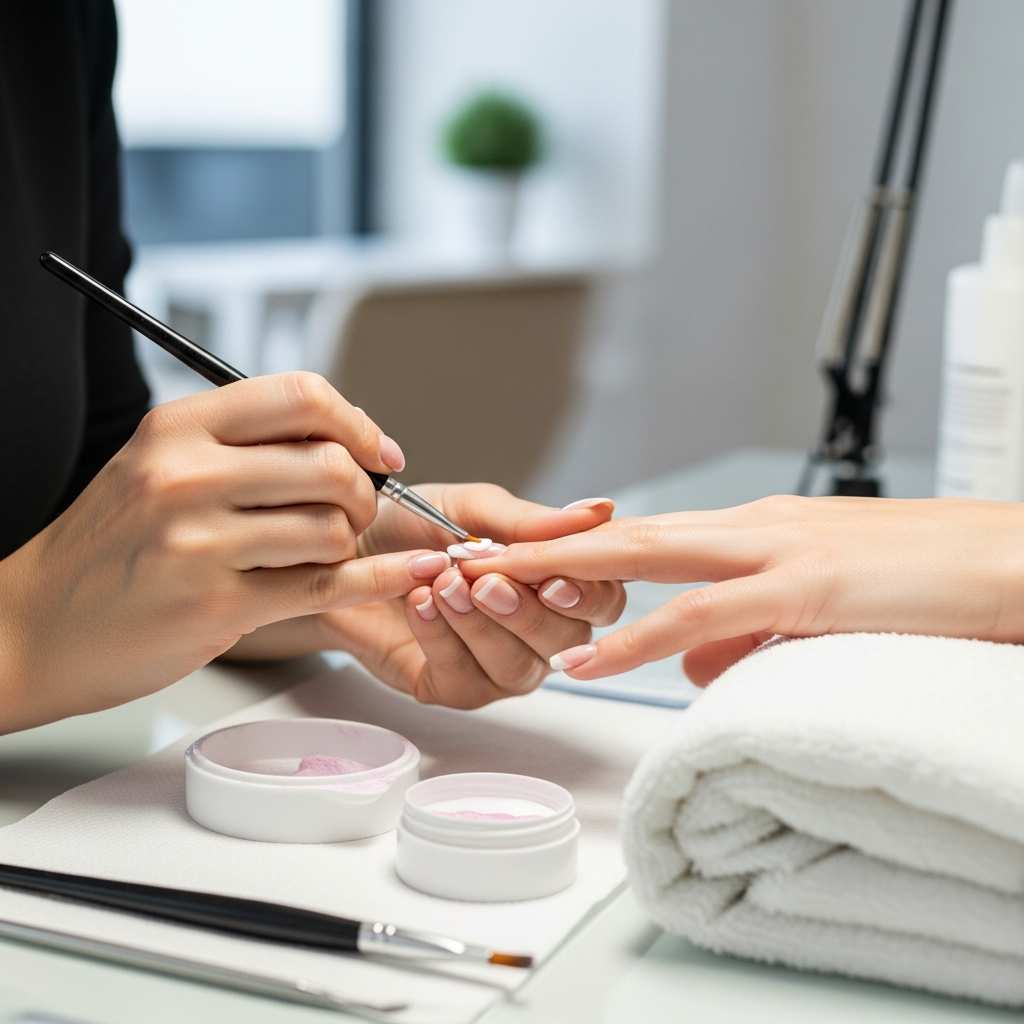
Professional acrylic nail application requires a precise liquid-to-powder ratio to ensure maximum durability and adhesion. By mastering the three-bead method and correct apex placement, a nail technician creates a balanced structure that prevents lifting and protects the natural nail plate from damage during daily wear in a salon environment.
Essential Nail Plate Preparation for Retention
Successful nail enhancement services begin with thorough mechanical and chemical preparation. Technicians must remove the true cuticle from the nail plate using a sterilized pusher or specialized bit.
Dehydrating the nail surface and applying a professional-grade primer is critical for preventing lifting. These steps ensure the acrylic polymer forms a secure bond with the natural nail keratin.
Mastering the Acrylic Liquid-to-Powder Ratio
The strength of an acrylic nail depends on the consistency of the bead. A bead that is too wet will shrink during polymerization, leading to pocket lifting and potential bacterial growth.
Conversely, a dry bead lacks the necessary resin to flow smoothly, resulting in brittle enhancements. Achieving a medium-wet consistency allows for optimal control and a smooth finish.
Identifying the Perfect Bead Consistency
A perfect bead should look like a frosted pearl and hold its shape on the brush. It must be pliable enough to manipulate without running into the lateral nail folds or cuticle area.
Structural Integrity and Apex Placement
The apex is the highest point of the nail enhancement and provides the necessary strength to the stress area. Proper placement prevents the enhancement from snapping under pressure.
In the United States, professional standards dictate that the apex should be positioned over the natural nail’s stress zone. This ensures the weight is balanced as the nail grows out.
Correcting Common Technical Mistakes
Common issues like bulkiness at the free edge or thin sidewalls compromise the nail’s durability. Technicians should use precise filing techniques to maintain a slim but strong profile.
Ensure the product is tapered toward the cuticle and sidewalls to prevent catching. A seamless transition between the enhancement and the natural nail is the hallmark of professional execution.
Ensuring Client Safety and Product Control
Safety is paramount when handling professional chemicals like methacrylate monomers. Technicians must avoid skin contact to prevent the development of allergies or contact dermatitis.
Using high-quality, EMA-based liquids ensures a safe and predictable cure. Maintaining a clean workspace and following strict sanitation protocols protects both the technician and the client.
